

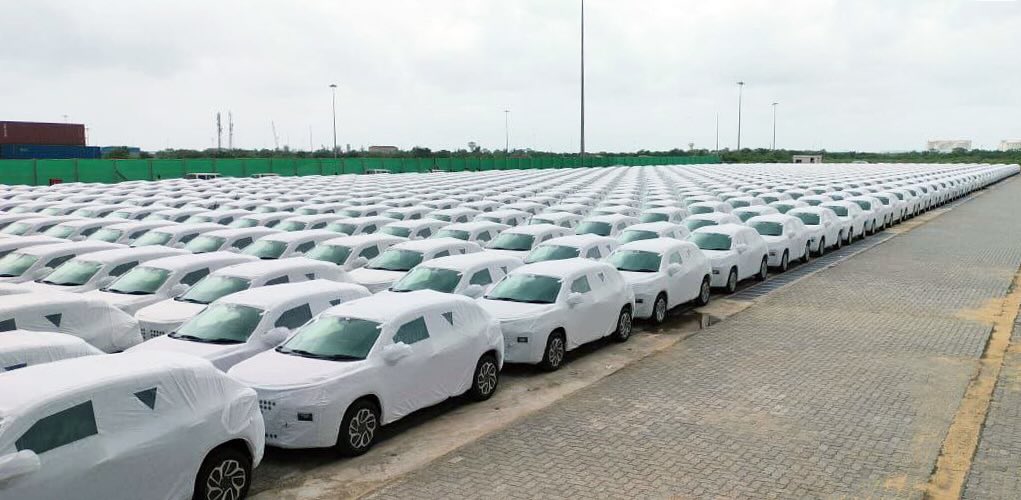

How much has compliance cost us? What forms does it take? There are many examples that can help to quantify this but the best ones are perhaps direct comparisons – of the before and the after.
Case in point: The current (2026) Toyota Highlander vs the 2022 Highlander – which was the same Highlander as the current model, with one big difference. Literally. The 2022 iteration came standard with a much bigger engine. A V6 engine. Toyota’s well-regarded 3.5 liter V6 engine, which is the size and type of engine that used to be a given in a vehicle such as the Highlander, which is a 4,000-lb. mid-sized crossover – because a V6 that size was a size-appropriate engine for a vehicle that size (and weight).
Not to mention the price.

Well, 2022 was the last year the Highlander came standard with – or even offered – a V6. Come 2023, the only engine you could get in a Highlander was – and still is – a 2.4 liter, turbocharged four cylinder engine.
It is a compliance engine, nothing more – and also less. Specifically, it was a compliance measure for dealing with what Toyota expected to be new federal (EPA) fatwas pertaining to the “emissions” of carbon dioxide, which had been framed by the EPA as a pollutant via the so-called endangerment finding, recently kiboshed by Trump’s EPA. This “finding” provided the pretext for regulations requiring car companies to find ways to reduce CO2 “emissions” – eventually to nil – and unlike the actually polluting byproducts of burning gasoline that can be controlled by fine-tuning the burning and chemically (catalytically) treating the exhaust, there is no way to “clean up” CO2 “emissions,” because they are not dirty in the first place.

The only thing that can be done is to “emit” less CO2.
You can do that by burning less gas. And here comes the punchline. A smaller engine – such as a 2.4 liter four – burns less gas than a 3.5 liter V6 because the four has less cylinder volume; i.e., less air (and fuel) in – less gas out (the tailpipe).
This is the only reason the 2023-to-present Highlander has a 2.4 liter turbo four rather than the V6 it previously came standard with. It is certainly not because the 2.4 liter four gives buyers more for their money.
The 2.4 liter four makes less horsepower – even though it is turbo-boosted. Just 265 horsepower vs. 295 for the replaced 3.5 liter V6. That’s a loss of 30 horsepower. The little four does produce more torque (and sooner). This is the consolation prize handed to buyers who used to get a six for the same money.
For less, actually.
The 2022 Highlander with the V6 stickered for $35,855. The 2026 model – basically identical, other than the fact that it no longer comes with a V6 – lists for $45,570. Yes, there has been inflation over the past four (just barely) years. But that does not entirely account for the almost $10k uptick in price in just barely four years for essentially the same vehicle. The turbo four is a more expensive engine because it has more peripherals – such as the turbo and all the related plumbing. The engine is also direct injected (another compliance cost) rather than just fuel injected.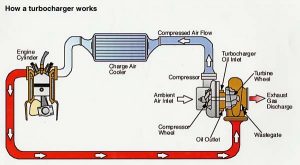
It is particularly interesting to observe that there is no gas mileage advantage.
The 2022 V6-powered Highlander rated 21 city, 29 highway. The 2026 iteration of the same vehicle – with aa turbo 2.4 liter four – touts 21 city, 28 highway. A meaningless difference. The buyer of the ’26 Highlander saves nothing at the pump, but pays more at the Toyota store. Also – probably – down the road, in the form of higher and sooner repair and replacement costs.
Toyota’s 3.5 liter V6 was one of those anvil engines that, if you just changed the oil regularly, could be relied upon to cost you very little else for 200,000-plus miles. But the little 2.4 liter turbo four is under much more pressure – literally, that’s what turbo boost is. Critical wear parts parts such as bearings and pistons rings are subjected to more force as well as heat and that generally translates into a shorter service life.
The buyer will also pay more for insurance, which is based upon the replacement cost of the vehicle. A vehicle such as the ’26 Highlander that costs almost $10k more than its 2022 counterpart will necessarily cost more to “cover,” so the buyer pays for that, too.
Arguably, Toyota pays as well. This diminishment for the sake of compliance is costing Toyota – costing every car company – something hard to quantify but of inestimable value:
The affection of customers.
People generally intuit when they’ve been gypped. They are being gypped – wholesale – on account of the effect of the pressure to comply. Six cylinder engines were – as recently as ten years ago – not just common engines but nice things that ordinary people of modest means got for not much money. V8 engines – an even nicer thing – were within their reach, too.
Look around today.
The six cylinder engine is on the cusp of being out of reach for all but the affluent and even they have been diminished by compliance. The V8 engines that were as common in six figure cars as six cylinder engines were common in $35k cars are now almost as uncommon as V12 engines and increasingly beyond the means of all but the very affluent.
This is what compliance has cost us.
. . .
If you like what you’ve found here please consider supporting EPautos.
We depend on you to keep the wheels turning!
Our donate button is here.
If you prefer not to use PayPal, our mailing address is:
EPautos
721 Hummingbird Lane SE
Copper Hill, VA 24079
PS: Get an EPautos magnet or sticker or coaster in return for a $25 or more one-time donation or a $10 or more monthly recurring donation. (Please be sure to tell us you want a magnet or sticker or coaster – and also, provide an address, so we know where to mail the thing!)
If you’d like a Baaaaa hat or other EPautos gear, see here!









FWIW, Nissan is still offering a 3.5L V6 in their Pathfinder-STANDARD, no less! They offer the V6 in all Pathfinder trims.
I would argue the V6 Highlander will burn less fuel than the turbo 4 in the real world. The published mileage numbers are from the .gov official driving tests. It is simple to optimize the ECU for those conditions. Once an owner is driving normally they need to accelerate into traffic, merge on a busy interstate or other real world scenario.
What happens when you ask a turbo engine for large amounts of torque? It adds fuel. Fuel not included in the .gov mileage test.
Speaking from experience here. I have 2 turbo vehicles, a 2.0T MB Metris service van and a 3.2l turbo toy. The 2.0 was claimed to get 25, real world? 19-20. The 3.2 about 16 average (it is 40 years old), driven hard, 9.
I found the 2.0 scary slow in the eco mode used in the mileage testing.Ross
I’ll second that, Ross –
I have driven hundreds of these vehicles and can attest to the accuracy of what you say. In real-world driving, these little turbo fours offer no meaningful mileage uptick and in some cases actually use more fuel than the V6 engines they replaced.
What did the peasants expect? They didn’t stand up for their rights, they always choose bread and circuses.
They allowed the communist government to tax their income and their property, and they allowed electronic surveillance of everything, creating the most effective slave system ever devised.
They allowed their guns to be banned and taken, without ever firing a shot, and they danced on the graves of the few who resisted.
They allowed their precious liberty, the right to travel on public roads, to be called a privilege, and allowed the overseers to snoop and search at will.
Cowards and knaves don’t deserve liberty.
Indeed. Meanwhile those who are resisting (trying) are demonized, demonetized, and told we cannot participate in society without going-along-to-get-along. Otherwise known as bending over to the government and anything they demand. Like COVID, when the jabbed blamed the un-jabbed for their health problems (due to said “vaccine”), so too, will the deaf, dumb, blind, and stupid masses blame those who are fighting back for why Communism is not working.
‘This diminishment is costing Toyota … the affection of customers.’ — eric
Indeed. I have owned — still own — multiple Toyotas. They are outstanding vehicles.
But now? I look at how Toyota has emasculated the Highlander with a tiny little
memberengine — no thanks!And then there’s Toyota’s disastrous recall of over 127,000 2022–2024 Tundra and Lexus LX/GX vehicles due to manufacturing debris (metal shavings) left in the V35A-FTS twin-turbo V6 engine.
This is a show-stopping screw-up. It tells us that the quality-obsessed Toyota we once knew is gone. What replaced it is not an entity that I would do business with. Toyota can kiss my ass.
Decisions about the 2023 Highlander ending the V6 option would have been made when Impeachment 1.0 started after the 2018 election. Certainly by March 2019, when I saw what I can only imagine was a new Crown Vic prototype rolling around the streets of Chicago, right before the city went full Socialist electing Mayor Beetlejuice.
*electing* Mayor Beetlejuice.
Autocorrect. Grumble grumble grumble.
Fixed, Roscoe!
I look at all those cars with multiple turbocharged engines and CVTs and have less than zero interest in buying one. Almost everything I own and drive is now over 25 years old. Sadly as rust takes hold in a car you are forced to look at progressively newer vehicles which are then massively more complex and harder to repair. Back in the day I had the tranny in my Plymouth rebuilt for only $500. How much is it to rebuild a 3 speed automatic now?
Did anyone else notice this?
Signs of the times, from attorney Steve Lehto: State Getting Rid of All Paper Titles Completely.
https://www.youtube.com/watch?v=7U7Ic6UlWzI
Same. The more complex a system is, the higher the chances of something going wrong.
I’m with you, Landru.
I’ll hang on to my 25-year-old vehicles til the bitter end.
As for Illinois, I shake my boomer head in disbelief.
Paper systems require conscious human beings who can read, write and occasionally think.
Paperless systems require network infrastructure, lots of electricity and zero thinking skills (save for a few contract programmers in India). The billionaires own all the IP and our data.
As Eric puts it, we’re the ones sporting the ear tags.
My poor grandkids…
Morning Mr. Bill
I know paper can be counterfeited but if all you have is digital and the internet goes down, what proof do you have then? The lawyer didn’t say if you even had an option to print out anything.
That should also make it interesting when the Illinois family gets pulled over in Florida and the officer says “License and Registration”.
Speaking of thinking skills, stupidity has evolved as an art form here in WA:
https://www.kiro7.com/news/local/backdoor-dol-system-potentially-exposes-everyones-personal-information/DS65HEEVMRB3DNFW4VWW5KTVEA/
This went on for over SIX YEARS.