



Is there any good reason to buy a diesel-powered vehicle anymore – leaving aside how few diesel egines are even available anymore? It’s hard to come up with one.
Disadvantage number one – 
Diesel fuel used to cost less than gasoline.
This alone was a good reason to buy a diesel powered vehicle because it saved you money at every fill-up. The reason why diesel used to cost less was because it cost less to refine diesel; it was a simpler fuel, so to speak. Then it got more complicated – and expensive. It had to be refined further; it had to be made low (and then ultra low) sulfur content, to comply with the regs requiring this and also to avoid causing problems in “modern” diesel engines that had to be designed to burn low-sulfur diesel, to comply with the regs.
Diesel fuel now costs a lot more than gasoline, eliminating the at-the-pump savings that used to be a very good reason to buy a diesel-powered vehicle.
Disadvantage number two – 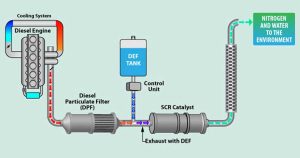
Diesel engines are no longer simpler – and less expensive to maintain – than gas-burning engines. They were, once. They were so simple, in fact, that they didn’t need electronics to run. Once you got them running, they just kept running. You could get them running by roll-starting them down a hill. You could then drive such a vehicle as long as you liked without a battery or a working alternator, even. Other than the (mechanical) injection pump, there was very little a diesel engine needed to work other than . . . diesel. So long as the injector pump worked, the engine would probably work.
All modern passenger vehicle diesel engines are now electronically injected, just like gas engines and dependent on electronics, just like gas engines. They also have particulate traps and diesel exhaust fluid (DEF) injection systems. These encumbrances have made diesel engines a hassle as well as even more expensive to operate and maintain than gas engines and reduced their longevity, too – eliminating what was once another good reason to buy a diesel engine.
Also, most cannot safely burn vegetable oil (let alone used cooking oil) as the old, mechanically injected diesels could. It gunks up their emissions controls. 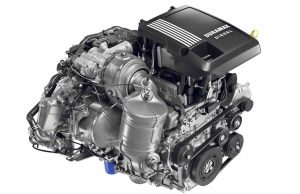
Disadvantage number three –
It is almost impossible to find a diesel engine option in any new (2026 model year) light-duty passenger vehicle – including half-ton trucks. One of the few 2026 models that still does offer a diesel engine option is the Chevy Silverado – and it’s only available in the higher trim/crew cab models such as the Custom Trail Boss, which starts at $52,900. The diesel option adds another $2,390 to the sticker price. The cost might be worth it, if spending the extra to get the diesel got you appreciably better fuel economy, but it doesn’t. The Chevy’s available diesel 3.0 six touts 20 city, 23 highway. The less expensive 2.7 liter turbocharged four that’s standard in the Chevy touts 17 city, 22 highway and makes more horsepower and almost as much torque. 310 horsepower and 430 ft. lbs. of torque. You can also get a less expensive V8 ($1,595) in less expensive trims such as the LT ($47,900) that will cost you less to own because it costs so much less to buy and only costs a little more to fuel. 
None of the above is the fault of the diesel engine. It is the result of the federal regulatory regime systematically undermining the market viability of the diesel engine by rendering it the more expensive and hardly more efficient option. It has effectively outlawed the diesel engine from the passenger car market via the “emissions” requirements that are so extreme as to make complying with them too onerous and expensive to be worth the bother, from the viewpoint of vehicle manufacturers. They know they can’t sell diesels that cost more than gas engines and don’t reduce ownership costs, increase longevity or reduce over-the-road maintenance costs – so they have given up trying to “certify” them for sale in the models they sell here. The italics are there to emphasize the fact that in Europe – where the regulatory regime is a little less onerous – diesel engines are commonly available in passenger vehicles, including SUV such as the ’26 Land Rover Defender I recently reviewed (see here if interested). 
It is almost as if the regulatory regime in the United States doesn’t want diesel engines to be available, even. Especially not the diesel engines that used to be available in under $25k passenger cars such as the VW Jetta and the Chevy Cruze as recently as about ten years ago. These offered a huge mileage advantage – 50-plus MPG on the highway – and did not have the disadvantages (e.g., particulate traps, DEF) that afflict the straggling handful of diesel engines that are still available (and only in big trucks) today.
And that explains why those diesel engines are no longer available today.
. . .
If you like what you’ve found here please consider supporting EPautos.
We depend on you to keep the wheels turning!
Our donate button is here.
If you prefer not to use PayPal, our mailing address is:
EPautos
721 Hummingbird Lane SE
Copper Hill, VA 24079
PS: Get an EPautos magnet or sticker or coaster in return for a $25 or more one-time donation or a $10 or more monthly recurring donation. (Please be sure to tell us you want a magnet or sticker or coaster – and also, provide an address, so we know where to mail the thing!)
If you’d like a Baaaaa hat or other EPautos gear, see here!










[…] https://www.ericpetersautos.com/2026/05/13/diesel-is-dead/ […]
It’s off-topic, but the events in this story would make a good Diaper Report:
https://www.zerohedge.com/medical/parents-sent-prison-after-isolating-kids-four-years-over-covid-fears
Two parents in Spain are about to go to prison for keeping their kids in isolation since December 2021 after they (the parents, not the kids) came down with the Fauci virus. The photo at the top shows the sperm donor (I won’t do him the dignity of calling him the kids’ father) on a porch with his twin girls…all diapered up, of course.
“The isolation, which began in December 2021 and continued until the children were rescued in April 2025, left the youngsters with significant mental and physical conditions, including difficulties walking, bowel and bladder control issues, and delayed development.”
I have one of those rare Ford F-150 3.0L Diesel PowerStroke trucks. I love that thing, but the cost of diesel is making me reconsider owning it.
Diesel may be dead, but who killed it???
The Feral (((Government))) is so much more evil than most people are willing to come to grips with, its sad and stunning.
Go forth and become the Grey Man….
YMMV….
When I purchased my VW T6 (Van) in 2017, I had a choice of the 206PS 2,0 Bi Turbo Diesel or the 206PS 2,0 Turbo Gas with the 6 speed gearbox and 4Motion. The official Volkswagen consumption figures were: Diesel: 6,5-8,5 L/100 Km and Gas: 9-11,5 L/100 Km. In Medieval Measurements, this is ca. Diesel: 27,5-36 MPG vs. Gas: 20,5-24,5 MPG.
I purchased the Diesel and it averaged about 8-8,5 L/100 km (ca. 27,5-29 MPG). This was with all the Euro Emissions intact and mostly driving the Mexican Autopistas at generally 120-160 Km/H (ca. 75-100 MPH). US Interstates speeds were around 120-145 Km/H (ca. 75-90 MPH).
After about a year, I drove the vehicle to California and had a tuner remove the Urea injection and DPF. This dropped my fuel consumption to around 7/100 Km (ca. 33,5 MPG).
“requirements that are so extreme as to make complying with them too onerous and expensive to be worth the bother”
That doesn’t just apply to diesel, it’s starting to apply in every aspect of life. Up in Canuckistan MAiD is a resounding success, about to hit 100,000 dead citizens courtesy of the govcorp.com killing machine. A leading cause of death now.
The people they kill mostly want to die (so far). Not good.
“Up in Canuckistan MAiD is a resounding success, about to hit 100,000 dead citizens.”
This makes my heart ache.
I asked Goolag Ai what should diesel fuel cost in relation to the current price of gold. (Commodities like gold, fuel, lumber are locked in ratio values to each other – they are real things that take energy to extract or produce.)
what should diesel fuel cost if gold is $5000 and ounze?
“If gold is priced at $5,000 per ounce, diesel fuel should cost approximately $11.90 per gallon under normal historical economic relationships”
Take note, when gold went exponential, that was before the war. The fuel crisis started before the war if based on gold/fuel ratio. Ultimately, we are being screwed by huge budget deficits and money printing, with no end in sight.
what will the budget deficit be for years 2020, 2021, 2022, 2023, 2024, 2025, 2026?
Fiscal Year Total Budget Deficit Context & Drivers
2020 $3.13 Trillion All-time historic peak driven by emergency COVID-19 pandemic relief spending.
2021 $2.77 Trillion Continued pandemic outlays via the American Rescue Plan and healthcare response.
2022 $1.37 Trillion Sharp drop due to expired emergency spending and surging post-pandemic tax revenues.
2023 $1.69 Trillion Deficit expansion caused by lower tax receipts and rising interest rates on national debt.
2024 $1.83 Trillion Growth in mandatory spending programs like Social Security, Medicare, and debt interest.
2025 $1.77 Trillion Finalized total; revenue bumps from early 2025 tariff implementation offset program outlays.
2026 (Proj.) $1.90 Trillion Latest baseline projection from CBO’s Economic Outlook; the Treasury warned it could reach $2.0 Trillion.
One of my sons swears by his 1990’s Cummins diesel trucks which you have to cut the fuel off to kill the engine.
“The Dodge Ram pickup trucks equipped with a Cummins diesel engine that require no electronics to run the engine are the model years 1989 to 1998 (specifically up to early 1998)”
Such a truck could survive EMP blast, along with vehicles with carburators. One thing he does is buy his fuel in large quantaties, not sure how he gets it to his remote property though, maybe one of his redneck buddies delivers it.
Those trucks also had some lever thing on the front axle to engage the 4wd drive. Never saw that on any other vehicle. He always makes fun of me when I showed up in my little Geo Metro.
Why do truckers and contractors allow diesel engines to idle so much of the time?
“what is the diesel fuel consumption on a 1995 dodge cummins diesel truck in idle”
A 1995 Dodge 5.9L 12-valve Cummins truck consumes 0.25 to 0.5 gallons per hour (GPH) at idle
————–
I can also add, the fuel cost is charged off on the home owner. (The contractor is not actually the one paying for the fuel.) I can not see diesel trucks going away any time soon. It is just going to cost the consumer a lot more to get your big truck contractor to their place. Better learn to be Bob Vila and do it yourself.
I built whole houses with tiny cars. You have the main lumber load delivered from the yard. If you buy say $10,000 worth of lumber they will usually drop it off for free. Then you make daily runs to the Home Depot to get the fasteners or extra pieces of trim, plumbing, electrical for the job.
I am willing to bet I could build a whole house with a Mitsubishi Mirage once the foundation is in.
BTW the fuel flow at idle for a 5.9 liter Cummins at idle is actually low compared to a gas car (when compared to displacement).
“A 1.0-liter, 3-cylinder Geo Metro engine consumes 0.11 to 0.15 gallons per hour (GPH) at a standard warm idle of 700 to 750 RPM.”
A 1.0 liter Geo Metro idles at .12 gph.
.12 x 5.9 = .708 gph vs. .25 gph diesel
‘They know they can’t sell
dieselsEeeVees that cost more than gas engines and don’t reduce ownership costs, increase longevity or reduce over-the-road maintenance costs.’ — ericChange one word, and Govco obstruction magically flips to subsidies.
Another problem is the reformulation of diesel fuel . I.E. Biodiesel.
Blending diesel with vegetable oils leads to all sorts of problems, poorer cold weather tolerance, algae growth in the fuel, poorer lubricity, etc.
Biodiesel is actually pretty good fuel with better lubricity than natural diesel. But it does have some drawbacks. The ultra low sulfur diesel causes lots of problems because of its poor lubricity. And Waste Vegetable Oil requires special treatment also as normal diesels aren’t designed and set up for it.
Hi Ernie.
It seems like you’re best to run a two tank system. Start it up and shut it down on diesel and run the WVO when the engine is hot and an in tank heater has heated it.
Running a bypass from the diesel line to the WVO tank will serve two purposes; it thins out the WVO a bit and more importantly when GovCo checks the WVO tank it contains taxed diesel fuel with an additive (namely WVO) which probably will prevent you for being charged under some law for running a vehicle without paying a road tax on its fuel.
Useless trivia; the original diesels were designed to run on vegetable oil.
I guess “.GOV Killed the Diesel” as a headline garners fewer clicks than the reactionary: “Diesel is Dead” you decide to go with?
Hi Chaim,
I decided to “go with” the headline because it conveys the essence of the situation.
One of the reasons I like old diesels is the very low hassle of owning one. Before the bad guys started adulterating the fuel, you could literally park one for 20 years with a full tank, put in a fresh battery, and drive it away. I’ve done it with old Mercedes mechanical diesels. The fuel keeps.
Mercedes diesels were getting 50mpg in the 1950s. (Admittedly driven slowly, but they got 40 driven normally.
On a related note, they’ll run on anything combustible, (diesels have been made to run on coal dust and wood gas).
Vs a carburetor car where with old gas you have to go through the fuel pump, carb, maybe lines, and drop and clean the tank. (With gasahol you probably have to replace every part of the fuel system).
Anything modern and electronic will not work like that, if they work at all, and will cost a lot more to make and keep running.
Hi Ernei!
Yup! I have an old tractor with a mechanically injected diesel. The thing just runs, whenever I need it to. I change the oil each season. That’s it. Lately, I have been running it without a battery because I’m trying to save money and don’t want to spend it on a new battery (the old one’s dead). I use my jump box to start it – and I’m good to go!
Very cool video.
https://www.youtube.com/watch?v=mC7YPyEvLxY
They pulled it out of a swamp and it ran. I can’t find the startup video but the old diesel fuel system was sealed and preserved, and the engine wasn’t stuck…
Gasoline used to last, too. My grandpa always bought up his full ration through the war, and dumped the excess into steel barrels in the truck garage. My dad remembered that, but forgot all about it until we started cleaning up after grandpa died in the late ’80s, and the fuel was still fine.
It’s all the garbage that gets added. The petroleum distillates themselves keep.
The ethanol makes things MUCH worse but pure gasoline is still violatile. The short-chain aliphatic hydrocarbons will readily oxidize and evaporate into gum and reduce how easily it ignites. Modern fuel is actually more stable due to the anti-oxidants they put in to it. You can keep pure gas in a sealed container for several years without a problem, though.
Right. Sealed drums, filled to the top. Once the oxygen in the headspace is gone, no more oxidation. Nowhere for the volatiles to go.
But there was one partial drum that had gone to crap.
I think there are a lot of truths in this piece but the overall premise is flawed. Clean diesel was a far better solution to the energy crisis than the hybrids and electric vehicles. Clean diesel posed a direct challenge to the forces that pushed low emission Petro fuel or electric vehicles, in fact the emissions of clean diesel were almost the same as the Toyota Prius. More power than the gas engines with emissions rivaling the hybrids, what’s not to love. That is unless you’re pushing a climate based agenda hell bend on a fixed result, no fossil fuel. VW did not use a DEF aftertreatment, rather faked their emissions results which ultimately caused the death of clean diesel in North America. I can’t help but have a few conspiracy thoughts on that entire debacle. Final note: the American fuel producers were not equipped for a mass switch to diesel and would have had to make substantial production changes to accommodate a switch to clean diesel
Hi Keith,
I agree with you. That was the point of my article!
In Colorado the taxes on diesel are higher than gasoline. Even during the hight of the TDI, ULSD was often cheaper than 85 octane gas in the summer. In 2021, Colorado’s legislature decided to stick it to the coal rollers by jacking up the taxes and fees. The old taxes on diesel (20.5¢/gal) were actually lower than gasoline (22¢/gal), but then they added on a bunch of fees: road usage fees, bridge and tunnel impact fees, ‘sustainability’ fees… Basically brought the tax burden on diesel drivers up to 35¢/gal, and that’s before the extra 6¢ in federal taxes.
12¢ more for diesel, and that’s not counting the premium placed on it becoming a niche fuel after VW pulled the TDI off the market and all that extra stuff that makes owning a diesel extremely difficult.
I watch Dave’s Auto Center, he gets excited when an old Ford 7.3L comes in. “No EGR!”, “No DEF!” And if the cats have been removed, even better.
Diesel vehicles made a lot of sense in the 1970s and 1980s:
-Diesel fuel was cheaper than gasoline.
-Diesel engines were simpler: They had no carburetors, no distributors, no spark plugs, no catalytic converters, or other parts that often went bad.
-Diesel engines had no smog control devices: Diesel engines have lower NOx emissions, combust the fuel more efficiently, and diesel fuel doesn’t evaporate like gasoline.
None of that is true today.
And if Uncle really cared about saving energy and saving the planet, we’d see a lot of EU-spec diesels on the road.
You nailed it Bryce – “ And if Uncle really cared about saving energy and saving the planet, we’d see a lot of EU-spec diesels on the road.”
What Uncle really cares about is forcing us serfs out of our personal transportation so only our overlords can drive, while the rest of us walk.
True dat, Mike. All this climate change business isn’t about trying to control the climate/weather—it’s about controlling YOU.
Along these lines, if Uncle really cared about saving energy and saving the planet:
-We’d embrace telecommuting.
-We’d be building a lot more nuclear power plants.
-We’d have a lot more cheap and user-friendly motorcycles, mopeds, and scooters on the market.
-We’d see a lot more decent small cars
on the market.
-We’d have a better passenger rail system.
Just my 2 cents.
…and as evil as our “overlords” are, they will one day cut our legs at the knees so that even walking will be outlawed.
> the rest of us walk.
Or take the “T”. 🙂
Hey Adi! I actually use the “T” quite a bit, since traffic is miserable and parking is nonexistent or outrageously expensive 😆
I would say this government is going to bring us back to the horse and buggy, but we won’t be allowed to have those neither. Have a good pair of walking shoes.
Nope, no horse and buggy for any of us. It would be animal cruelty. Just like animal rights activists are trying to outlaw dog mushing. Never mind that the dogs love running.
No leather! Hemp shoes only!
You laugh, but despite the (deserved) hippy stigma, hemp has many virtues.
Hemp for Victory
https://www.youtube.com/watch?v=bIxFhYVv_Gk
It’s not just diesel engines…
https://www.soundclick.com/share.cfm?id=150466
They are going to take EVERYTHING.
Oops..
https://www.soundclick.com/share.cfm?id=15046610
GovCo attracts narcissistic authoritarians. It’s reflected in The Outlaw Josie Wales when Capt. “Redlegs” Tyrrell states, “Doin’ right ain’t got no end.” The rapacious losers that run these programs (pogroms?) won’t ever stop until they are thrown in the ashbin of history.
I’m not holding my breath.
I’ve seen videos on youtube where the urea in the DEF (aka government juice) gums up the injectors. Like everything else, the gov has ruined a good thing.
A good ole delete usually fixes most of the problems with modern diesels. Just make sure you live in a state where you can get away with it. You’ll go broke keeping them stock.
“ the urea in the DEF (aka government juice) gums up the injectors.”
FFS
You clearly have no idea what you’re talking about. DEF never touches the fuel injectors nor has anything to do with fuel injectors. It is injected into the exhaust system downstream of the engine.
This is the problem – people have no flipping clue about the things they so boldly proclaim to be true. Cause’ they watched a YouTube. Good grief.
Yep, though DEF does have an injector and it is a frequently clogged maintenance item. Likewise diesel longevity took a big step backwards with the addition of EGR. As clean as diesel is, there is a bit of soot in diesel exhaust, and pumping it back into the intake makes for filthy oil, sludge, and reduced service life.
“ Yep, though DEF does have an injector and it is a frequently clogged maintenance item.”
Not sure what your definition of frequently clogged is.
157k on my vehicle and have never had a clogged DEF injector / nozzle on a 2012 vehicle.
The DPF is approaching the end of its life and will need a cleaning in another year or two. Well beyond its 100,000 mile design life.
Well, since DEF and DPF are both unnecessary and stupid, every failure is excessive. I usually avoid newer diesels, but have seen 4 RAM Ecodiesels have the DEF injector clog and force it into limp mode.
“You clearly have no idea what you’re talking about”
Bless your heart.