


Cars, like dogs, aren’t bad by nature (usually). But it’s easy enough to make either bad – and sometimes, it seems as if it might be on purpose, as far as cars are concerned. Here are some for-instances:
Wet timing belts –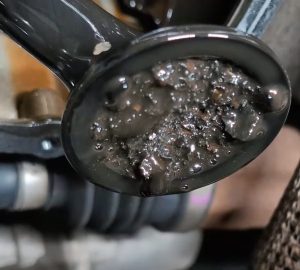
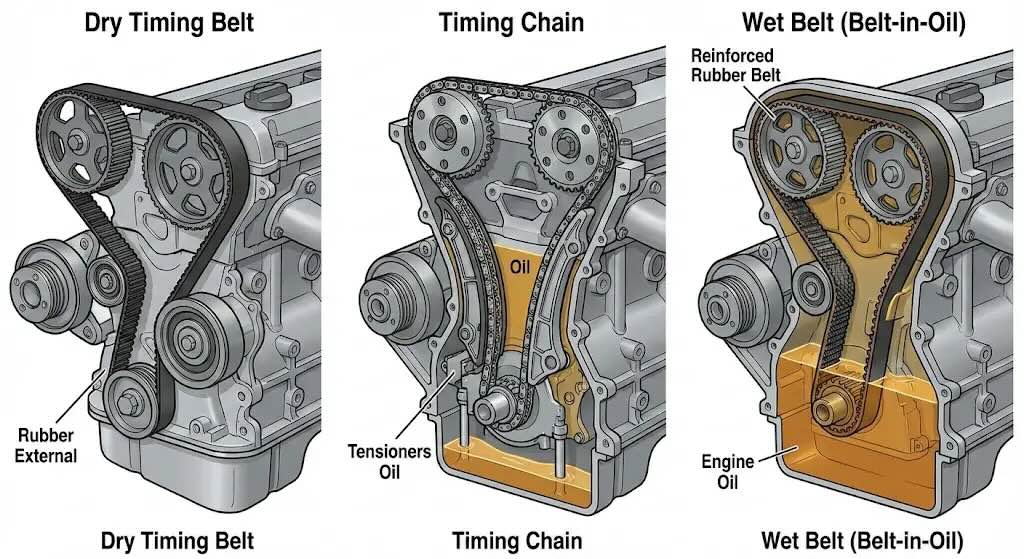
A timing belt is what it sounds like. It is a belt that pairs together the crankshaft and the camshaft(s) to time the engine’s internals so that they move in syncopation. Without a timing belt, the engine won’t run. Just like that. When the timing belt fails, that’s it – you’re not going anywhere. Major engine disassembly is required to replace a timing belt. It is a big (and so, expensive) job. That’s why it’s a good idea to design the belt – and specifically, its environment – such that the belt has a long service life and to minimize the odds of an unexpected and catastrophic failure. Wet belts assault that idea by having the belt immersed in engine oil (hence wet belt).
Usually, the idea is to keep the belt dry, which is done by positioning it on the outside of the engine block, away from the oil that’s inside the engine block.
But why is it a bad idea to immerse the timing belt in oil? Well, because hot oil tends to attack the material timing belts are made of (these include rubber/fibrous materials). The belt sloughs off bits and pieces before it fails, clogging the oil pump pickup, which can starve the engine of oil and lead to catastrophic engine faliure. 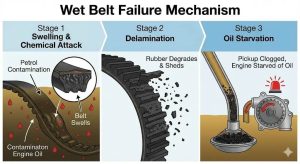
The “solution” is special oil formulated to not disintegrate the belt. The problem is that it’s imperative to use exactly and only this special oil and to change it exactly per the specified recommendations (if not sooner). If the oil gets a little old – or some quick lube place uses not-special oil – the belt is apt to slough off material and then fail.
Even if all the protocols are followed to the letter, the belt will still likely fail right around the time the warranty runs out.
Having to “pair” headlights and other service parts to get them to work – 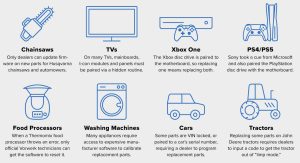
In the dim old days, when a headlight burned out or the windshield wiper motor stopped working, all you had to do was remove the dead headlight (or wiper motor) and replace it with a new (or working) one and it’d work. Today, if you have a late-model car, it may not. You can buy the correct replacement headlight or wiper motor and correctly install it and it won’t work unless you “pair” the new part with the vehicle. “Pairing” means getting the car’s computer controlled nexus to recognize the new part, which is a prerequisite to getting the part to work. The problem is you can’t “pair” the part yourself. It requires a trip to an authorized dealership, where they have the proprietary equipment to “pair” the new parts. Naturally, there’s a charge for this – plus the hassle of having to take your vehicle to a dealer to do something you ought to be able to do yourself.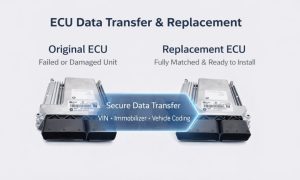
This “pairing” business goes deeper than just headlights (and taillights) and wiper motors. It encompasses most of the parts that make up your vehicle, including things such as power window switches and instrument clusters and audio systems, too. Gone are the days when you could easily just replace the factory stereo with a better aftermarket unit. You have to pay twice now. Once for the part and then again to have it “paired.”
Apps/features that won’t work if the vehicle is moving – 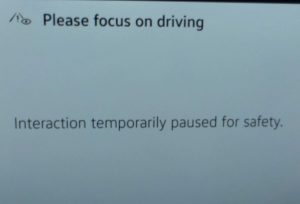
Many new cars come with built-in GPS and some even have the ability to stream Netflix, YouTube and other such. The problem is that – for saaaaaaaaaaaaafety! – some of these systems won’t work unless the vehicle is stopped. Think on that a moment. You’re out driving somewhere and – more to the point – trying to figure out how to get somewhere. So you tap the GPS app and try to input the address so you can use the GPS to get there. But when you try, you get a pop up that says the system is closed down while the vehicle is in motion. It won’t let you enter the address unless you pull off the road and stop first. When you are on the highway this is often not easy and it is aways inconvenient. And what is the point of having a system that can stream Netflix or YouTube videos if you’re not allowed to watch them unless you’re parked? Why not just park – and go inside the house, where the screen is bigger and the sofa’s probably more comfortable?
They say it’s for “safety.” Well, then why bother? Isn’t this like saying: There’s a delicious meal on the counter, but you’re not allowed to eat it?
In-car peddlering –
It used to be we had screens in our living rooms and bedrooms. Now there are screens in all new cars and – just like the screens in our living rooms and bedrooms – the screens in our cars badger us with ads. You may have heard about BMW owners being treated to a preview ad of the latest Spider Man movie, which appeared (unbidden and unwanted) on their in-car screens. A number of brands – including BMW – also use the screen to sales-pitch apps and features that are sold as a subscription, including the seat heaters.
There’s an additional obnoxiousness associated with the in-car peddlering. The screens are also peddlering you. That is to say, your “data” – basically, everything that gets touched/tapped into the screen, such as your music/talk radio preferences as well as the restaurants and gas stations you like. Basically anything the screen (and so, the car’s connected tech) has access to, which includes everything that’s on your phone, if you “pair” your phone with the screen.
Flush-mounted/electric door pulls – 
Tesla was the first to offer this gimmick, which is just what it is. There is little, if any, functional advantage (hence gimmick) to having flush-mounted door pulls that rise when you approach – and numerous actual and potential disadvantages. These include the pulls not rising when you approach, due to a glitch. This literally cannot happen with fixed door pulls, which is a big advantage if you want to be able to open the door. Especially in an emergency when there isn’t time to futz with glitching electronics. Also when it is winter and there’s a glaze of ice coating the car’s exterior. The rising pulls are not powerful enough to bust through the ice, which means you’ll have to chip off the ice to get in the car – and risk chipping the paint in the process.
Some of the rising door pulls also take a moment to fully rise. It is not a long moment, but it is longer than just being able to grab the fixed door pull and open the door. There is also the inherently greater complexity of a system that moves vs. on that does not.
Sometimes, it is better not to reinvent the wheel. Or walk around the block to cross the street.
. . .
If you like what you’ve found here please consider supporting EPautos.
We depend on you to keep the wheels turning!
Our donate button is here.
If you prefer not to use PayPal, our mailing address is: EPautos 721 Hummingbird Lane SE Copper Hill, VA 24079










Wet timing belts aren’t just a worst idea…they’re literally evil personified in how a car maker can & does intentionally create planned obsolescence and functional destruction of a vehicles usefulness.
Imagine the amount of engineering & planning it must have taken to ntentionally create a system that limits the duration of time and milage an engine can run, before literally self-destructing, because a slowly disintegrating wet belt fails at a four to eight year interval, ruining the entire engine, from the crankshaft, bearings, pistons and valves, all through oil starvation.
And this premature engine death is designed to occur shortly after, or even before, the car is paid off, and will require an entire engine replacement, not a rebuild, most likely the most expensive option.
It seems most cars with these engines are also the least expensive cars on the market.
It’s done purposely so that poor folks who can only afford these cars will be kept in perpetual indentured servitude to the auto industry.
Imagine life with an eternal monthly car note/repair bill, for as long as they will own a vehicle, either for the purchase of the car or the replacement engines!
Oy Vey!!!
All our shekels are (((theirs)))!!!
YMMV….
Speaking of timing belts … the 2.0-liter 3S-FE inline-four engine in my first-gen (1997) RAV4 is approaching 200,000 miles. The timing belt has been changed once before, and is due again for a change.
Does it make sense to change the timing belt on an engine with 200,000 miles? Or should I pay up for a remanufactured engine? What to do, what to do …
Hi Jim,
Is the engine in good running order otherwise? Can you do ths job yourself? If it is – and you can – I’d change the belt. A new/remanufactured engine is prolly going to be at least $5k.
Eric,
Also relevant, the body has no rust and can go another 200,000 miles. Whereas the 200,000-mile engine, like most 3S-FE fours, weeps oil through its gaskets and loses about a quart every 3,000 miles. Not a showstopper, but annoying nonetheless.
That’s why I’m considering biting the bullet and starting with a freshly remanufactured engine. In either case, I’m not doing the wrenching myself.
Toyota engines should be good for 500k or more if the oil is changed on a regular basis. Doing the timing belt on a transverse engine is a royal pita. You may want to bite the bullet and have it done unless you have a good variety of tight area wrenches.
Keep that ’97 going until parts become no longer available…imho…