

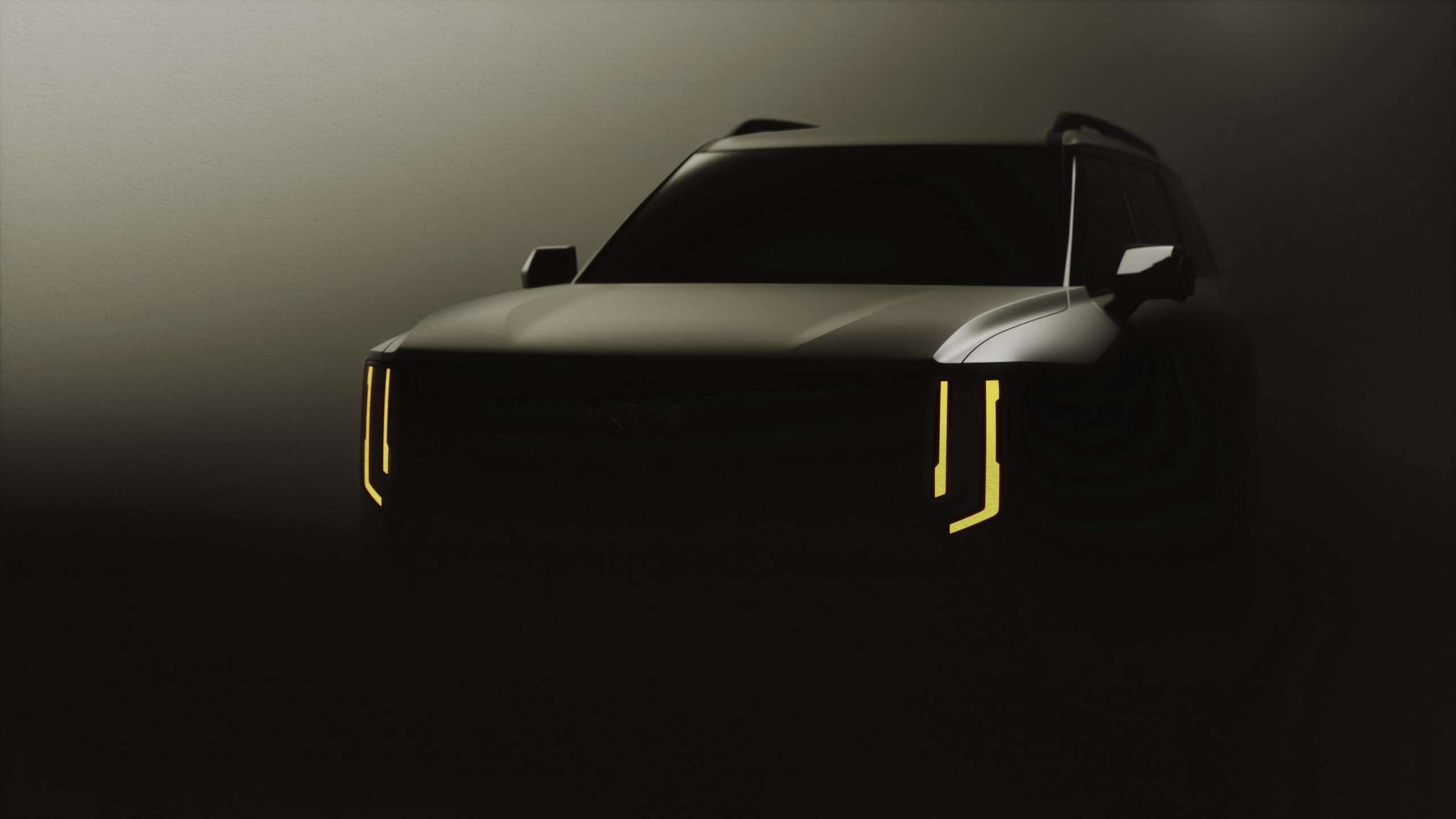

Kia’s very popular Telluride mid-sized crossover was one of the last vehicles of its type to come standard with a V6 engine. Emphasis on was. As in past tense. The 2027 model will – like so many others – come standard with a hybrid-augmented, turbocharged four cylinder engine instead.
Kia touts the increased output of this new drivetrain (329 horsepower out of 2.5 liters of hybrid-augmented/turbo-boosted 2.5 liters vs. 290 horsepower out of 3.8 liters of V6). It would be interesting to see whether people would choose to pay extra for the hybrid-augmented, turbo-boosted drivetrain if it were the ’27 Telluride’s optional drivetrain.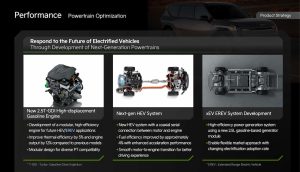
Instead, they will just pay extra.
The 2027 Telluride (which comes out in calendar year 2026) with the new hybrid-augmented, turbo-boosted four cylinder drivetrain will reportedly sticker for $37,815 to start. The current (2025) Telluride with the standard V6 engine stickers for $36,390. So potential buyers of the ’27 Telluride will be paying $1,425 more for the hybrid-augmented, turbo-boosted drivetrain. But they will also be paying in other ways, such as no longer being able to choose a V6 without turbo-hybrid augmentation.
There are many reasons for mourning that loss of choice.
A V6 is not a turbo-hybrid-augmented four being perhaps the chief reason. People are being effectively pushed into buying vehicles with smaller engines contrary to their wishes. There has been no swell of market demand for these small engines or for the added expense that comes along for the ride when you are (effectively) forced to buy the additional drivetrain elements; i.e., a lithium-ion battery pack and electric motor(s).
In fact, the opposite is true – as regards what buyers want.
The Telluride is proof of this. It was the only vehicle in its class that came standard with a V6 and an MSRP of just over $36k. (My review of the current/2025 model is here, if interested.)
Put another way, it was both desirable and affordable – and it was affordable because its V6 drivetrain costs less to manufacture and so Kia could price the Telluride so equipped more attractively.
And competitively.
It cost less than others in its class, such as the Toyota Highlander – MSRP $40,320 – which costs more because it comes standard with a turbo-augmented four. And it was more appealing to potential buyers who wanted a V6 rather than a four.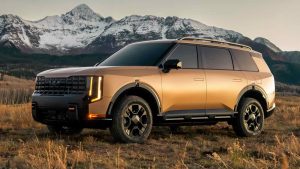
There are some who will deride that wanting a bigger engine “just because” it is bigger – i.e., that the wanting is irrational. They will point out that the turbo/hybrid-augmented fours make the same or even more power (as in the case of the ’27 Telluride) and use less gas, which is a savings. These points are true. But they are also not the whole truth.
One must first acknowledge the higher buy-in cost, which takes away from some of the savings touted. Reportedly, the ’27 Telluride will deliver a “whopping” 13 MPG uptick vs. the current (2025) Telluride. But it will take a long time – on a per tankful basis – to claw back that $1,425 increase in what it costs to buy the ’27 Telluride. Also, that “whopping” 13 MPG difference assumes the driver doesn’t ask the turbo-hybrid-augmented drivetrain to deliver the goods – by pushing down hard on the accelerator pedal.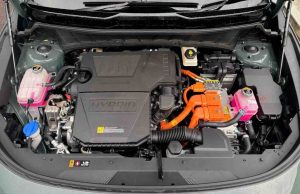
You can get much higher mileage out of a vehicle equipped with a small engine augmented by a turbo (and hybrid) on-demand power, if you do not regularly demand power. This is the catch they’re not telling you about. The manufacturer can tout “whopping” mileage figures because a much smaller engine – 2.5 liters and four cylinder, in this case – is moving less air (and burning less fuel) all else being equal vs. an engine with more cylinders and greater cylinder volume.
But all else is not equal.
If the smaller engine were just that it would move less air and burn less fuel than a larger engine. But it would also make less power – and the vehicle’s performance would suffer. The turbo makes the smaller engine bigger – by pushing more air into its smaller (and fewer) cylinders than would otherwise fill them; this is boost – i.e., the forcing (under pressure) of more air into the engine, so as to create a more powerful explosion inside the cylinders. Of course, this requires more fuel – which means more is burned when the small engine is under boost.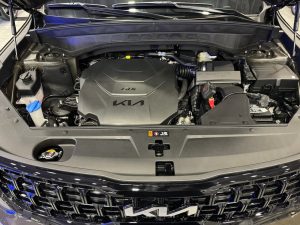
So – yes – you can get noticeably higher mileage out of a turbo-boosted four than from a larger V6 . . . if you do not ask the four to produce the power of a V6. It’s kind of like those TV ads that assure you savings of “up to” 40 percent. Whether actually save 40 percent is another thing.
There is also the hybrid thing.
This entails an EV-like battery pack, though smaller – because it doesn’t have to store as much electricity; just enough to power the hybrid side of the drivetrain (and accessories) when the gas engine isn’t running and provide some supplemental motive force. But it is still an EV-like battery pack that will – eventually – have to be replaced when it can no longer hold a charge. The cost to replace one of these hybrid battery packs is about $1,500 right now.
It will probably be more ten years from now. Check that. It will absolutely be more – unless you think inflation will be zero over the next decade. What costs $1,500 today is apt to cost $3,000 a decade from now. 
That cost also ought to be factored into the equation. It brings the overall cost of the ’27 Telluride to several thousand more than the cost of the ’25 – and we’re not factoring in the almost certainly higher cost of insuring the more expensive ’27 model as well as down-the-road maintenance/repair costs that are apt to be higher (and sooner) because the little 2.5 liter engine is literally under more pressure.
So why is Kia retiring the Telluride’s V6? Didn’t Trump dial back the regs (CAFE) that effectively force car companies to ditch bigger engines in favor of smaller, turbo-hybrid-augmented ones?
Yes, he did. But Kia didn’t know he would three or so years ago. Kia assumed it would have to comply with the regs imposed by the Biden Thing – and began working on the turbo-hybrid-augmented four several years ago. In other words, what we are seeing play out now is the lag-effect of three or four years ago because it takes that long for the decisions made back then to manifest in our present.
The long and short of it being that Kia is bringing out a compliance drivetrain that is misaligned with right now. The same for the others. You are seeing this sudden uptick in hybridizing everything because the car companies assumed they’d have to be in compliance.
Now, they don’t have to be – but we’re all still stuck with the costs.
. . .
If you like what you’ve found here please consider supporting EPautos.
We depend on you to keep the wheels turning!
Our donate button is here.
If you prefer not to use PayPal, our mailing address is:
EPautos
721 Hummingbird Lane SE
Copper Hill, VA 24079
PS: Get an EPautos magnet or sticker or coaster in return for a $25 or more one-time donation or a $10 or more monthly recurring donation. (Please be sure to tell us you want a magnet or sticker or coaster – and also, provide an address, so we know where to mail the thing!)
If you’d like a Baaaaa hat or other EPautos gear, see here!








Somewhat surprised by the anti 4 banger sentiment here. I’ve owned many I4s and 3-5 of them are some of my favorite vehicles of all time (but I do have a thing for small cars). I’m currently driving a VW Turbo 1.8 I4, and with a few mods that little bugger is making some serious power. And is mucho fun. I think the average driver is not that particular or aware. They assume that 6 is > than 4 and 8 is > than 6… thus if I want more then I get more cylinders. But imho the Turbo I4 is an excellent option for the appropriate vehicle.
But just let the freakin market decide! I loathe the EPA. In some ways I feel bad for the Auto MFGs… constantly dancing to meet the EPAs requirements.
I recently rented a ’25 Civic. I was quite unimpressed. It made no power. Floor the accelerator and… it made more noise but barely any more power (makes me wonder if the Rental agency had it de-tuned). Apparently had the 150hp 2.0 I4. It had the ASS, and the more annoying Lane Assist nonsense. You could turn them off… but how long is that gonna last?
BTW I like it here. I am philosophically a Libertarian anyway. Been reading your articles at LewRockwell for years. And have been a car guy since I was 15, my first Mag subscription was Car & Driver. But my favorite Auto mag was Autoweek of the 80’s and 90’s. Cheers!
Kevin
Hi Kong,
The sentiment isn’t “anti four banger” – it is anti the regs that are pushing the car companies to install four bangers in practically everything – including large vehicles that used to come standard with V6s. A four cylinder is a fine engine in a small car, a sports car and as the base engine in mid-sized cars. But there used to be an option to get a six and that’s what’s being taken away and that’s what I and others object to.
And what is the recommended octane for the turbo? 91? 93?
In order to get all the turbo power, you’re gonna have to spend more at the pump – which is usually an ignored footnote in the owners manual.
Instead most people will fill their tanks with 87 and get less usable power than the V6
Until CONgress passes laws banning having CAFE requirements at all, and letting the market determine what vehicles the people want to buy, we will continue to see this insanity of littler, more complex and costly engines.
You’ll know that manufacturers are really serious about meeting these CAFE nonsensical laws when we start seeing diesel/electric hybrid cars, similar to trains, as that’s the most efficient form for the highest MPG, and not gas/electric hybrid.
But passenger vehicles are among the least polluting segment of petroleum usage, in the US, at least. So the true purpose of all this CAFE crap is about controlling people, limiting movement, making life more expensive and difficult.
(((They’re))) slowly turning up the pot of boiling water all us frogs are sitting in….
YMMV…..
‘The EPA endangerment finding has far bigger implications for OEMs’ — Burn It Down
Had to look that up: ‘The finding had its origins in a 2007 case, Massachusetts v. EPA, in which the U.S. Supreme Court ruled that greenhouse gases qualify as pollutants under the Clean Air Act. In 2009, the EPA issued the endangerment finding, singling out six greenhouse gases for the danger they pose to public health and welfare:
· Carbon dioxide
· Methane
· Nitrous oxide
· Hydrofluorocarbons
· Perfluorocarbons
· Sulfur hexafluoride
One of these gases is not like the others: CO₂ is the fundamental building block for life, cycling between plants and animals. Plants absorb CO₂ for photosynthesis to create food (glucose) and release oxygen, while animals eat plants (or other animals) and release CO₂ through respiration, making it a vital part of the Earth’s carbon cycle that sustains all life by circulating carbon.
In summer 2025, the EPA proposed to repeal this insane, misanthropic ukase. Public comments closed on Sep 22, 2025. EPA’s goal is to finalize the rule this year. Then we can all take a deep breath. 🙂
I get the 4 year design cycle, but they still make the v6 today, so why not still offer them?
I won’t buy a 4cyl anything, don’t care if it has 10 turbos.
My current v8’s are ’24s, so I have some time to wait and hope that Dodge and Jeep come out w V8’s again. I looks likely.
“I get the 4 year design cycle, but they still make the v6 today, so why not still offer them?”
Because despite all the talk here of CAFE being relaxed the EPA endangerment finding has far bigger implications to OEMs than CAFE and has yet to be addressed.
There is also the issue that the US vehicle market is not the only market that has CO2 emissions requirements that the OEMs have to comply with. The US is no longer the world’s largest automotive market and the OEMs have to have a global perspective.
And finally despite all the love here for V6 and V8 engines the reality of the passenger car market is that the 4 cylinder engine has always outsold the V6 since the late 80s & 90s. 4 cylinders typically account for 60-80% of sales with the V6 always having been the more expensive, premium option. Trucks, SUVs and CUVs tilted toward V6’s due to weight but Turbo 4’s now challenging that.
This chart, from the 2020 EPA Automotive Trends Report, shows that six-cylinder engines had the highest market share from about 1992 to 2008. From 2009 on, fours took over:
https://ibb.co/rR04Q0PY
Crude oil hit its all time high price of $147/bbl in July 2008. Then a financial crisis broke out in Sep 2008. Those were a couple of factors that helped tilt the market toward cheaper, more economical fours.
‘I won’t buy a 4cyl anything, don’t care if it has 10 turbos.’ — ChrisIN
A chart from the 2020 EPA Automotive Trends Report shows that four-cylinder engines account for most of the proliferation of turbos:
https://ibb.co/bjC4Rpz1
The chart is from five years ago. Turbo fours might be approaching half the market by now. Submit or be assimilated. /sarc
Another problem with not offering the V6. Kia’s V6 is far better than their four.
A six is the minimum cylinder count for a smooth running non annoying engine. 4 is OK for small sports cars manual shift and peasant cars with automatics. Every time I drive the kids Mazda 6 which has a 4 with auto trans, I’m thinking this is a fine car, but would be awesome with a six. 4’s just don’t idle smooth in gear (auto trans) and sound ratty under hard acceleration. Of course a compact V8 would be even better!
They can tout numbers all day long, doesn’t make it an awesome driving experience.
Supposedly, auto makers have coalesced around 500 cc per cylinder as the optimum displacement for a gasoline-fueled, Otto cycle engine. It gives us the ubiquitous, iconic 2-liter four.
But this is lazy thinking. The combustion process can just as well be optimized for 300 cc per cylinder (ask motorcycle engine designers), opening the door to silky-smooth 1.8-liter sixes and 2.4-liter V8s. Or if you’re into serious, stratospheric luxury, 3.6-liter V12s.
None of this is technologically challenging. It’s just a case of conventional-thinker corporate execs, basing their careers on cautious, middle-of-the-road mediocrity. Yeah, I’m talkin’ to you, Lightning Jim. Though you, like ‘Joe Biden,’ are a hopeless, deadwood case.
Automotive design advances, one CEO funeral at a time. 🙁
Yep!
Motor head engineer: “This small displacement 6 will be a delight!”
Bus riding bean counter: “Pay for two more pistons, are you nuts?”
And here we are.
The Mazda 6 was offered with V6, but there were probably not many buyers. Bigger engines mean bigger price tag….
IIRC, the reviews of v6 version were very positive about making it a more enjoyable and pleasant ride.
Japanese vehicles have always had onerous government regulations regarding engine sizes and taxes. I still remember the Mazda V6 that was 2.5L, and was talked about how impressive it was, compared to the 4 bangers.
Add the Alfa Romeo Stelvio Quadrifoglio – Ferrari derived V6 520 horsepower. Amazing engine and car. Now “dead” – killed by its maker even as this car is the ultimate car in the revival of Alfa planned and overseen by Sergio Marchionne, CEO of FCA, who was a true automobile enthusiast and evangelist and sadly, died too soon. His successors are like lightweight bureaucrats taking orders from EU bureaucrats and happily producing cars that no real Alfa customer wants. I got on of these in the final year knowing is was manufacturer discontinued. I wanted to know what is was like to drive one of the final great cars before America and the world embraced total communist insanity.
I’m sticking with my 23 year old Hyundai Elantra that gives me good performance and fuel economy … did I mention it has nearly 400K on it now and STILL going strong ??
I have a 30 yo Chrysler New Yorker. 180K miles and still going strong.
You can have your new pieces of garbage with all their expensive engineered-to-fail gadgets and gizmos.
I will keep my mechanically sound ‘classic’ and it will probably outlast most 2025 models of junkmobiles peddled by the junkmobile industry.
Preach it, Gregory!
I am of the same mind. I will keep my ’02 pick-up for years to come and am hoping to buy a second older vehicle for a backup.
So when are we going to bring back real engines like V8’s and V10’s again? We want real muscle cars and trucks back not these spayed or neutered cars.
The benefits of turbo and superchargers is you do get as much power from a I4 as you would from a larger V6 engine.
There’s minimal improvement in MPG under heavy load, the physics dictates that to make power you have to convert a given amount of fuel. Forced induction allow a smaller displacement to function as if it was larger displacement.
The benefit is that when you do not need the power you can run dump the pressure and atmospheric pressure and improve MPG.
In theory there isn’t a downside. It’s the best of both worlds.
There’s some parasitic drag that limits the overall efficiency. But with a turbo you’re using waste exhaust so it’s substantially low cost power. There’s residual back pressure on the exhaust cycle that work against the engine’s efficiency. There’s the stress of asking a smaller engine to make more power, reducing it’s longevity.
So practically there is a lot of downside, added complexity, more maintenance. Turbos in particular come with a lot of issues dealing with the heat of exhaust. Casting crack, bearings and oil gets cooked.
One benefit for forced induction that some may not immediately understand is how they level terrain. Here in the west we start from 4,000′ or 5,000′ and might gain 6,000′ or more driving across a state. Due to the lower air density the power your engine makes at 10,000′ is 70% of that made at sea level. With forced induction the loss of power is about half, so at 10,000′ you’d have around 85% of the sea level power. If you routinely do high elevation climbing the difference is noticeable.
Hi Garrett,
Yup. And, here’s some real-world admittedly anecdotal info: I test drive these things and have test driven hundreds of them over the years. The actual mileage they return is about the same as a similar vehicle with a larger naturally aspirated engine returns unless you very deliberately “hypermile” to maximize the hypothetical (“on paper”) advantage of the smaller/turbo’d engine. This may be realistic for people who chiefly drive in stop-and-go-traffic. But outside of that environment, your mileage will vary!
On a common sense level: A vehicle like the Telluride weighs around two tons. To get that much weight moving at a reasonable rate requires power and that (in this case) means boost; under boost, that 2.5 four is going to burn up fuel at a rate comparable to a V6 tasked with doing similar work. Right?
There are some applications that have shown mostly benefit over downside. I put a turbo on my old Land Cruiser, a 25-year old BJ42 imported from Australia. It got a naturally aspirated 3B diesel from the factory and while it ran OK it really woke up when I retrofit a turbo from a wrecked Volvo S60 to it. Night and day difference.
And users will really squeal when repair costs with turbo 4 bangers come due, as the European car owners in the US found out in the 80’s and 90’s when they became commonplace.
No thanks!!!
The car companies are not going to change direction again until they are sure that Impeachment 2.0 won’t start in January 2027 with the new Congress.
Even if Congress doesn’t change hands, 38 MPG was a tough enough standard to meet, and a new President in 2029 could move the needle again, either through CAFE or changing Federal speed limit policy which would, in turn, alter the gas mileage testing methodology at the EPA.
Not only is there the time lag of the design process vs. the regulations, The relaxed CAFE standards go away January 20, 2029.
… by executive order of AOC, or Gavin Newsom, or someone like them.
Stroke of an autopen, bitchez!
Gaze upon my EOs, ye mighty, and despair.
As far as the manufactures are concerned hybrids have one major advantage, at around 12 years of age when the car might still look good but is essentially worthless nobody is going to spend thousands of dollars to put in a new hybrid battery.
You could always buy a “rebuilt” battery pack but Jerrod at the Questionable Garage on YouTube just did an episode showing the scams on “rebuilt” battery packs that are going bad shortly after the warranty ends.
I’m actually curious how many people would purchase a Telluride with a non turbo, non hybrid four cylinder if given that choice? Heck make a four cylinder non turbo, non hybrid the base motor.
Yup. I could live with a non-turbo, non-hybrid four cylinder. Toyota makes (made?) a great one they put in the Camry. It’s a 2.5-liter with 203 hp and 184 lb-ft of torque. in the Camry (3,340lbs) it gets 28 mpg city, 39 mpg highway, and 32 mpg combined and will do 0-60 in 7.3 seconds.
That engine something like a Telluride (1,000 more, but the 4 cylinder might be 100lbs less) would probably get it to 60mph on 9.5 seconds and would cruise at 80-90mph no problem. It might get 25-28 mpg combined. This would be perfectly acceptable.
“Underpowered for its size” is the new norm. Great.
‘You can get much higher mileage out of a small engine augmented by a turbo (and hybrid).’ — eric
Eric’s concluding diagnosis is correct — design decisions made during Dementia Joe’s regency now are appearing on the showroom floor, three years later.
At first glance, extracting a ‘whopping’ 329 horsepower out of a 2.5-liter four is amazing. The similar-sized four in my ’98 Nissan Frontier, not boosted or hybridized, produces a feeble 150 hp — par for the course during the Caligula Clinton era.
Very likely, the phenomenal specific output of contemporary engines is a case of ‘designing to the test’ — i.e., the HWFET (Highway Fuel Economy Test) on a chassis dynamometer, simulating speeds over 60 mph. I can’t tell from the published speed profile how much of the test (if any) involves hard acceleration, but it ain’t much. So a small-displacement engine can ace the test without needing to use much turbo boost.
Here’s a question I’ve never seen addressed: how does the weight of the turbo/hybrid four, including its baaaaaattery, compare to the superseded V6? We know for sure that it’s more complex, with more stuff to break. But does it add weight as well?
As a ‘simple is better’ minimalist, I’m deeply impressed by the tripling of specific output since the golden years of the extinct muscle cars, with their big, lazy 7-liter V8s. The revolution was, as ol’ Garet Garrett used to say. But I’m yet to be convinced that I want to own one of these ‘purr softly but carry a big stick’ mighty-mouse fours. Do I need counseling?
What you say begs the question of “designing for the test.” Didn’t VW design for the test when they coded the diesel engines to opertate differently during the EPA test than they did on the highway? That’s what all automakers do and that’s why your “mileage may vary.”
I would bet that the 2.5L hybrid won’t get nearly the gas mileage as advertised. Didn’t Hyundai learn that when it was fined about 15 years ago for inflating their gas mileage numbers?