

Timing matters.
GM introduced the Volt (sold through Chevy stores) back in 2011 – fifteen years ago – which was not the right time to introduce the world’s first mass-produced serial hybrid.
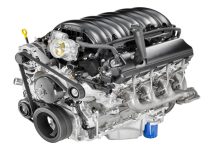
A serial hybrid differs from a parallel hybrid – which is pretty much what every other hybrid is – in that while there’s an engine on board that burns gas, it burns gas to generate electricity, not to turn the wheels that move the vehicle. In a parallel hybrid, the engine is usually primarily and always partially responsible for moving the vehicle. It also generates electricity to charge the hybrid battery – which powers electrical accessories when the engine is not running – and there is usually an electric motor that can help move the vehicle a little bit, usually at low speeds (some plug-in hybrids have more powerful electric motors that allow all-electric driving at normal road speeds if the battery is fully charged up, but only for short distances).
Point being that with a parallel hybrid (especially if it is not a plug-in hybrid) the gas burning engine is doing what it is generally least efficient at doing, which is getting several thousand pounds moving and you’ll have the driving feel of a non-hybrid car, because the engine is turning the wheels indirectly – via a transmission.
A serial hybrid like the Volt has the feel of an electric car, because it’s the electric motors that are turning the wheels. The Volt’s gas engine – which was effectively a generator – came on only when the battery charge got low and this often didn’t happen before you got where you were headed and maybe even back. At which point you could plug it in to recharge its hybird battery pack, just like you would a fully electric car except the wait wasn’t as long (because the Volt’s battery pack was smaller) and also because you didn’t have to. If you needed to go somewhere, just get in and go. The Volt’s engine/generator automatically came on to feed electricity to the battery, which kept the electric motor(s) turning, keeping you rolling.
Since many people do not need to drive more than about 50 miles a day (this was the Volt’s electric-only range) they could often go days or even weeks without burning very little or even no gas. The gas in the tank going bad after months of not being burned was a fairly common issue with these cars.
So how come it didn’t catch on?
Timing.
Back in 2011, gas wasn’t expensive enough to overcome the expense of the Volt, itself – which was $41,000. Even today, $41k is a lot to pay for a small car, gas-sippy hybrid or not. Adjusted for devaluation – which is a more accurate term for the thing they insist on calling “inflation,” which implies it is things that have gotten more expensive when it’s actually money that’s gotten less valuable – a 2011 Volt would sticker for a bit over $62k today. So even though gas was about $3 per gallon back then, the Volt was still much too expensive back then. Also, while gas wasn’t exactly inexpensive, many other things still were – including non-hybrid cars. For example, back in 2011, you could have bought a brand-new Chevy Cruze – which was very similar to the Volt except for its engine-only drivetrain – for $16,525 to start or less than half the base price of a new Volt.
Now you know why the Volt didn’t sell.
The 2027 Nissan Rogue – which is also a serial hybrid – probably will. It has much better timing. Not only is gas $4 a gallon (if you’re lucky; it’s more in many places) but the hybrid Rogue costs much less than the 2011 Volt did – both in terms of the stated MSRP and the devaluation-adjusted MSRP.
Base price for the ’27 Rogue hybrid is $35,490 – which is about half the devaluation-adjusted cost of the 2011 Volt. It is also impossible to find any other new (non-hybrid) vehicle for less than about $22k today and for that all you’ll get is a very small crossover such as the Hyundai Venue, which is a fine little commuter car but too small to serve realistically as a family car.
Back in 2011, you’d have had to claw back $24,475 in gas “savings” to make up for what it cost to buy a new Volt vs. a new Cruze. Today, the disparity between a new Rogue and a $22k Hyundai Venue is $13,490. It will still take a few years to claw back the savings in what you didn’t spend on gas at current prices – but mark the italics.
What if gas goes up to $5 – or $10 per gallon?
Regardless, you’ll reach break even a lot sooner than you would have in a Volt.
One thing about the new Rogue hybrid that’s different vs. the old Volt is that the Nissan cannot be driven without burning at least a little gas – because its 1.5 liter, three-cylinder engine/generator is designed to run continuously, to make the electricity needed to power the electric motors that turn the wheels. However, because the engine doesn’t have to actually (directly) move the Rogue, it runs continuously in the most efficient spot in is powerband, which is how the Rogue hybrid – which (unlike the Venue) is big enough to serve as a primary family vehicle – can achieve close to 50 MPG.
It might be just the right thing at the right time.
. . .
If you like what you’ve found here please consider supporting EPautos.
We depend on you to keep the wheels turning!
Our donate button is here.
If you prefer not to use PayPal, our mailing address is: EPautos 721 Hummingbird Lane SE Copper Hill, VA 24079