

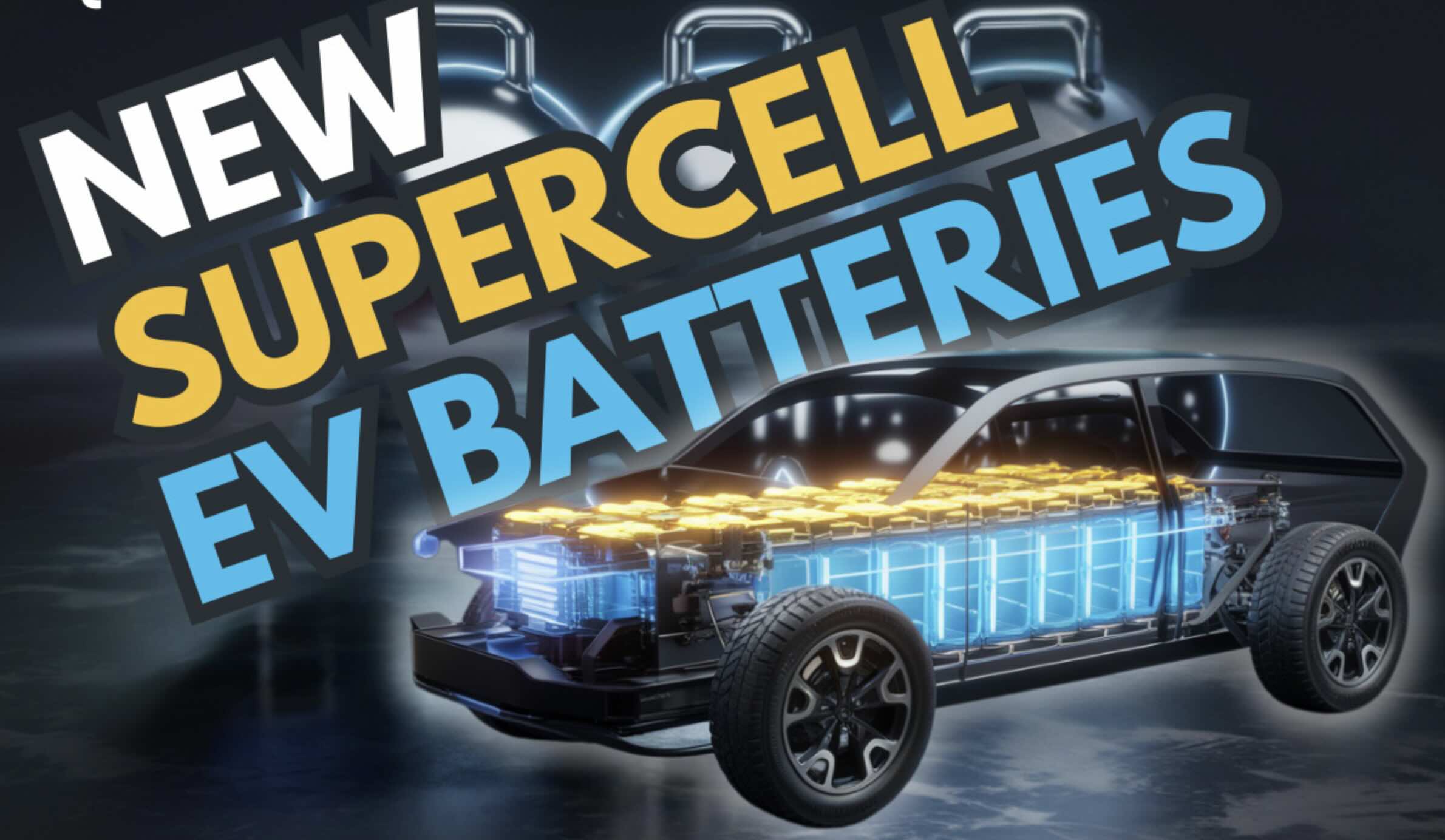

You have probably heard or read about the Chinese EVs that supposedly have the ability – more finely, the capacity – to fully recharge in about 5 minutes, which would if true eliminate one of the greatest advantages vehicles with gas tanks have over those with batteries.
Italics used to emphasize that it’s not true. More finely, it’s a partial truth – as seems to be the pattern with so many things about EVs and pretty much everything else the government insists is true.
It is one thing to put an 800 volt battery pack in a vehicle; it is another to transfer the electricity into the battery – and also to generate and distribute it. That latter is the part they’re not telling you about. Yes, it is feasible to design a battery pack that is capable of being charged in minutes; the problem is the infrastructure needed to make that possible does not exist – and is unlikely to exist (if it ever does) because it would entail building out a whole new infrastructure to replace/supplant the existing one.
Current so-called “fast” charging infrastructure – such that exists – is wholly inadequate because there is literally not enough power available at the charge point (i.e., the places where there are places to plug in several EVs) to impart that kind of power – the power needed to “fill up” say six 800 volt EV battery packs – in five or so minutes. Or even one, for that matter. That kind of power could run a small town. Now scale that up nationally, which would be necessary to power up the thousands of EV “fast” charging stations, in order to allow millions of EVs to draw very high voltage electricity at the same time, in just minutes. There isn’t enough generating capacity to provide that kind of power – even if the physical infrastructure (high voltage substations, transformers, etc.) existed to transmit it.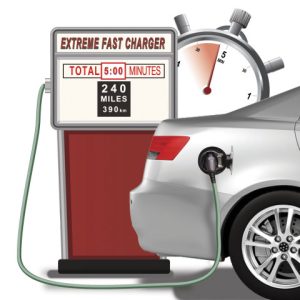
So where is it going to come from?
The question is hardly ever asked. (Like is our children learning?)
That explains why it is hardly ever answered. Instead, the hypothesis seems to be that it will just sort-of happen. A “breakthrough” will occur – no set date – that will enable these 800 volt battery packs to be fully recharged in mere minutes. So they build the battery packs – and tout what they could do – even though they can’t actually do it in the real world and may never be able to do it.
Just another example of the dishonest way EVs have been presented to people. They are like those ads that assure the mark he will save “up to” 50 percent on the cost of whatever it is . . . the actual savings been closer to nil. That’s how EV driving range is presented also. A certain figure is touted. But when you actually drive the thing, you discover that it does not go as far as they said if it is very cold (or hot) outside and you use necessary accessories such as the heater (or the AC).
Vehicles with engines are not allowed to get away with such shenanigans. If it were discovered that a given make/model only delivered the mileage it advertised when the heat (and AC) were not used and only on days that were not very hot or very cold, there would be Hell to pay. The government would go after the manufacturer and probably require the latter to pay hefty fines and perhaps even buy back the “affected” models on account of emissions being higher than stated/allowed (because the vehicles burned more fuel than was claimed).
Something like this actually happened back in 2012, when a number of Hyundai owners complained that the cars they’d bought did not deliver the touted “40 miles per gallon.” Hyundai was looked into by the EPA – the regulatory apparat that concerns itself with mileage and emissions – and the result was a $300 million penalty; Hyundai was forced to withdraw its mileage claims. Civil litigation over compensation for owners continues to elaborate.
This was over a roughly 6 MPG discrepancy in actual vs. touted mileage. EVs routinely fall 20 percent short of their touted range claims in other than ideal driving conditions (for the EV) and if the electrically powered accessories (AC and heat especially) are used but those caveats are never affixed to the range figures touted, even via an asterisk and fine print below.
Why?
Well, for essentially the same reason people are not told that while it’s true extremely high voltage battery packs have been developed that are capable of being fully recharged in minutes, the capability to recharge them fully in minutes effectively doesn’t exist. Which means the battery packs’ capability is a pie-in-the-sky irrelevance except as a demonstration of what might be possible at some indeterminate point in the future.
That is not what people are told, of course. Because it’s important to get them to believe in things that aren’t true. Think “weapons of mass destruction.” Think “safe and effective.” Think “I will end the war with one phone call.”
You’d think by now people would stop buying the things government keeps trying to sell them.
. . .
If you like what you’ve found here please consider supporting EPautos.
We depend on you to keep the wheels turning!
Our donate button is here.
If you prefer not to use PayPal, our mailing address is:
EPautos
721 Hummingbird Lane SE
Copper Hill, VA 24079
PS: Get an EPautos magnet or sticker or coaster in return for a $25 or more one-time donation or a $10 or more monthly recurring donation. (Please be sure to tell us you want a magnet or sticker or coaster – and also, provide an address, so we know where to mail the thing!)
If you’d like a Baaaaa hat or other EPautos gear, see here!










doing a little math in my head so I might not be exact, but a standard EV battery. I used 150kwh t make the math easy.
That charge would require 1.8MW! or at 800vdc about 2200-2300amps.
Good luck getting that through a charge cable at Buckees, assuming that they could pay the demand charges on a dozen 2MW charging stations.
Slightly off topic but anyone see the just under 500 KMPH run by the chinese electric car ? Thing is…. this company just started making cars and they take out Bugatti, and make it for about 200K usd (like 5% the price of a base Bugatti whatever it’s called these days)….. It is amazing
I have a feeling the great car reviewers of the next generation will be spending more time in China than the west….
Hi Nasir,
Yes, I saw it (coverage). Of course, it’s a non sequitur of sorts in that such speed is both obviously grossly illegal and essentially impossible to reach on any public road. It annoys me endlessly that the focus of EVs is on anything but practicality and affordability.
There is barely enough power and infrastructure for what we are using now. A hot summer day and we are very close to brownouts and blackouts. I am surprised that doesn’t happen more to be honest.
If anything we should be moving away from electric for everything, not towards it.
I am glad I have natural gas to my house. It powers the clothes dryer, furnace, water heater, and I would like to change out my electric stove and oven when I do the kitchen over. Since the electric is getting less reliable lately, probably a NG backup generator too.
I am wondering if the current precarious state of the grid has been caused by the adoption of EVs that represent approximately 8 percent of car sales annually.
In certain parts of the country like Texas, we have had extended power outages by ostensibly small storms. In addition, electricity rates have been headed up over the last 15 years.
The power supply issue has always been the Achilles heel of EV’s, no way could the present infrastructure handle that size load. Now with all the AI/Big Brother data centers being built everywhere electrical power is going to be even more scarce and expensive. Rock, meet hard place; be fun to watch.
If we had a market based energy sector, versus a centrally planned one whose goals aren’t to deliver lots of affordable power, we would just build more power plants. Where there’s profit, things will get built. It’s sad to see the US regulate itself out of relevance.
Yeah, and just in time, Trump removes the energy tax credits for solar and wind power, someting not great, but something that can get people partially off the grid. And now, tariffs on solar panels (biden did that).
Yes, well if we wanted to recharge a 60kWh battery pack, which is modest for modern EVs, in 5 minutes, the quick math would be 60kWh/(1/12h) = 720 kW.
So it’s true. 720 kW might as well be 1.21 gigawatts!
Eric! All we need is a little plutonium!
Or maybe a lot of plutonium. That said, if these cars somehow prompted construction of micro-nuclear power plants all over the country, I’d consider that a win, especially if there were paid for by EV owners. Not holding by breath, of course, especially after hitting the crack pipe necessary to think *that* might happen.
Hi BaDnOn.
If you consider the staff at a gas station is barely capable of keeping the toilets clean; I’m very much afraid of what will happen when they check if a fusion reactor is operating with specs…….
“She canna take anymore Tyrone, she’s gonna blow ”
“Shaniqua, eject the fusion core!”
I was thinking something more like a neighborhood reactor, Landru. 🙂 Some gas stations can scarcely keep their pumps functioning.
I could envision a solution involving a lot of really big capacitors and rectifiers where the recharging station has a bus (accumulator) which charges constantly until it’s full and when a BEV is hooked up to it the delivered charge is faster than the supply lines will apparently permit.
BUT- battery charging is limited by the chemistry and the materials of the battery- there is an absolute maximum in the speed at which they may be recharged.
AND this only cheats the fact that it is difficult to get enough power to the charger to do a fast charge of a high voltage battery
AND none of that addresses the fact that we simply don’t have the generation capacity or transmission and distribution capacity to waste our vital grid electricity on electric toy cars.
Now if a few homeowners wanted to do such a bus based charger, that could help them much like a solar array makes sense for limited applications.
Hey Ernie,
Yes, I too have hypothesized that maybe a bank of ultracapacitors that would accumulate energy while no one was charging their cars for distribution when they do. Of course, this would necessitate the rarity of EVs arriving for a charge.
This *might* be practicable IF people only use these chargers on road trips and there were a balance of supply and demand. I’m not sure how profitable it would be, but I would expect a quick charge to cost handsomely. Probably as much as a comparable tank of gas or more. Ultracapacitors aren’t cheap.
As far as our vital grid electricity, look at the projects being initiated simply to facilitate AI:
https://www.technologyreview.com/2025/05/20/1116327/ai-energy-usage-climate-footprint-big-tech/
“SoftBank, OpenAI, Oracle, and the Emirati investment firm MGX intend to spend $500 billion in the next four years on new data centers in the US. The first has started construction in Abilene, Texas, and includes eight buildings that are each the size of a baseball stadium. In response to a White House request for information, Anthropic suggested that the US build an additional 50 gigawatts of dedicated power by 2027.”
We are no longer in Kansas.
God has a chosen purpose for plutonium soon as someone sacks up and cleans out the filth.
Based on the lack of power and infrastructure a better use for this technology might be for use in cordless power tools or backup power systems. Think of the benefits to a construction worker if his batteries could get all charged up during his coffee break or your backup power system’s batteries get charged up in minutes instead of hours.
This may be feasible in China, because they are building infrastructure faster than the world has ever seen. They’re bringing more than 50 power plants online every single year!
In the US, it’ll take decades in permits and environmental impact studies before the plans are even approved, while China just stamps them out, coal at first, but as time goes on, they replace the heat source with gas or nuclear.
The Chinese have figured out how to refuel thorium reactors. Look out, West. You’re about to fall waaaaaay behind.
Just when you thought EV’s could not get more deadly
“A Chinese group has invented a James Bond style ejector for EVs to solve those embarrassing moments when the battery reaches thermal runaway, and there are no handy swimming pools to park the car in.
It seems like a great idea for all the times the EV starts to smoke while you idle next to a pit of fire retardant foam. Otherwise, it seems a bit tough on pedestrians. This could not only kill school children walking down the road, but take out their bus too.
Imagine if a hostile power had remote control over 500 kilogram covert bomb launchers, and they infiltrated our cities?”
https://joannenova.com.au/2025/09/finally-a-burning-battery-ejector-to-save-evs-and-kill-pedestrians/
Hi John.
While I didn’t read the article, I believe it’s NIO that has removable batteries designed for a quick replacement and they could be designed such that they dropped on the ground and the car moved away from them using a small lead acid battery to power the motor.
Sadly this would not solve the problem of lack of minerals or power to charge these batteries. Another problem appears to be significantly higher electromagnetic field exposure in EV’s. ICE cars are safe from these hazards and reasonably long lasting for minimal expense.
It does appear that too many Americans think that government is looking out for them, particularly when their political party is in charge. It’s laughable (and not in a “Ha ha” way) how many Americans STILL think that the Democratic party is looking out for the working class and the poor.
P.S. And if their political party is in office, they tend to ignore criminal or unconstitutional behavior that they’d savage the opposition party for.
Here’s another reason why five-minute EeeVee charging is still a failure: rising power costs.
During 2015-2020, the Consumer Price Subindex for electricity was barely advancing. Then, as the high tide of EeeVee Fever approached in 2021, power costs launched like a Saturn V rocket. Behold:
https://cms.zerohedge.com/s3/files/inline-images/electricity%20cpi%20tchir.jpg?itok=6a-ED8mj
In the naive, carefree days of the ‘Biden’ regime, the sales spiel was how much money you’ll save by filling her up with electric power instead of gasoline. Now EeeVee mongers have gone silent about the money savings — because there aren’t any.
When EeeVees aren’t cheaper to run than an IC vehicle, victims are left with a wheeled appliance that weighs 1,000 to 2,000 pounds more than it needs to, and can catch fire besides. Such a deal!
Even if there was infrastructure to charge one of these devices in 5 minutes, I still wouldn’t want one. It’s a device, not a car. Even taking out the actual power plant, I wouldn’t buy an internal combustion car made after, say about 2016. They are pall part of the IOT and therefore connected to everyone else. Screw that.
All that aside, the EPA “cheating” has been going on for decades. It is not really cheating, since you are talking about meeting politically determined arbitrary EPA targets.
In the early days of CAFE, cars weren’t achieving EPA figures, so they revised them in 1984 by multiplying city mileage by .78 and highway mileage by .9. The typical EPA test included a cycle of city driving that did not include turning on electrical accessories and the highway figure was achieved by driving no more than 60 mph for about 30 seconds.
In 2008, the government tested gas mileage by adding the use of accessories and by running the highway tests at more realistic speeds. I believe that the vehicles achieve 80 mph in the test. Those are the numbers reported on teh window sticker.
The original dyno test is still the test that the automaker use to achieve the EPA gas mileage requirements du jour.
The upshot? No matter what the test, in the real world, cars often underperform. Are they “cheating” to achieve these figures? Maybe. Why are only certain carmakers being singled out?
the whole situation is arbitrary and capricious. In a better universe, the EPA would be defunded, stripped and put in a landfill.
FYI, Swampy, I just completed a trip out west in a rented Hyundai Elantra. (Thankfully it didn’t have ASS or lane keep) The trip setting resulted in:
4021 miles
64 hour 46 Minutes driving time
40.9 mpg
My calculations gave be and average of 62.1 mph.
Not bad. And, a great stereo.
Not too bad. With Direct Injection and cylinder deactivation, 40.9 is still good. If we didn’t have FMVSS that makes cars porky, if it was 300 lb lighter, gas mileage would be even better.
Did you drive that at a steady state 62 mph? Or was 75 closer to the cruising speed?
85 was more like it. I’d probably still be in Oklahoma if I was driving 62…had I not been run over.
It was all miles/time the car was running. So, driving through downtown Roswell I was doing about 20-25…and of course there were the parking lots at the hotels.
““breakthrough” will occur – no set date”
Kind of like practical fusion reactors have always been 10 years and a billion dollars away.
“You’d think by now people would stop buying the things government keeps trying to sell them.” – Eric
Well, actually, no.
I base this on my interactions with liberal/leftists I know. For the most part they seem to operate on the level of an eighth grade civics class. Their extent of understanding of Congressional and bureaucratic action does not exceed that of the School House Rock video of how legislation is created.
When it comes to GovCo they think of it as a loveable little puppy, here to make you happy. They don’t see the seething, rabid pit bull it actually is. They can’t conceive that GovCo is nothing but a gun on the negotiation table.
That’s why so many are willing to eat the cow pie sandwich that GovCo presents them.
School House Rock video:
https://www.youtube.com/watch?v=tyeJ55o3El0
And then I rolled over to LRC and found this at the top of the list…
https://www.lewrockwell.com/2025/09/ryan-mcmaken/why-the-government-is-so-loved-by-so-many/