

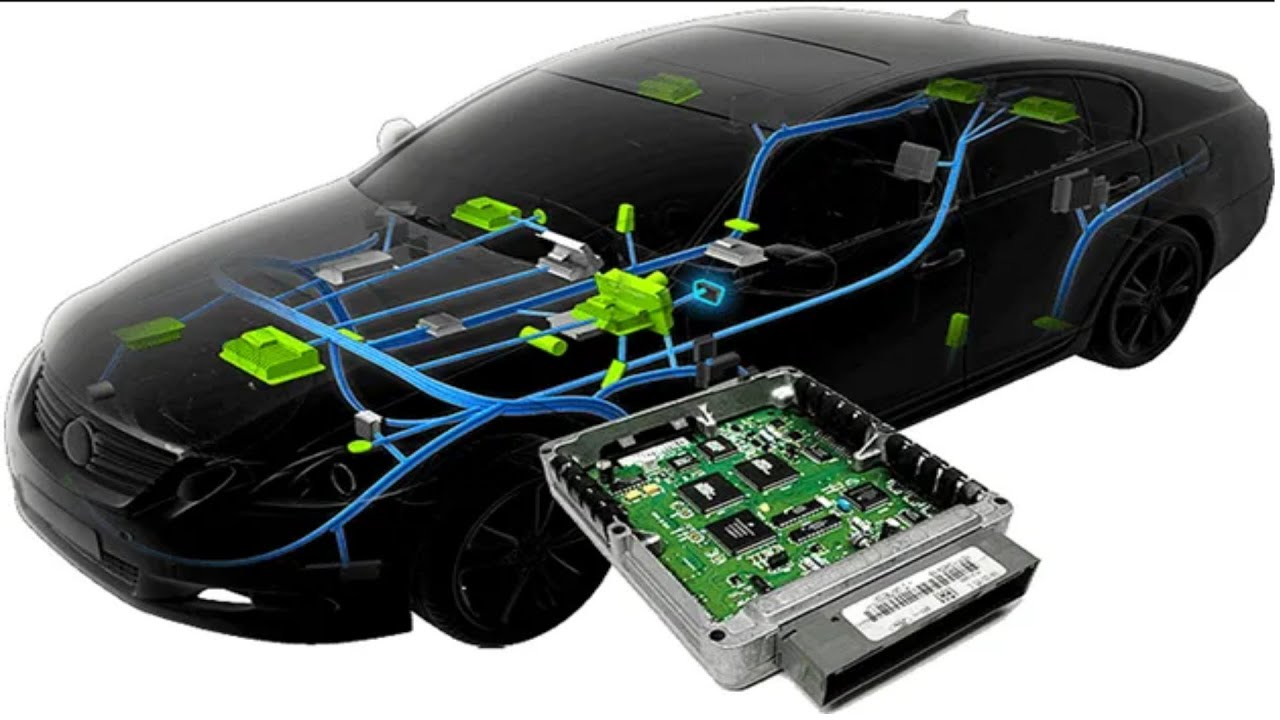

New cars have so many computers controlling so many things they have become computers and only incidentally machines. There are a number of problems with this that go beyond the subjective dislike some people (me among them) have for excessive computerism, to coin a neologism. (They’re putting little computers in toothbrushes. It is out-of-hand.)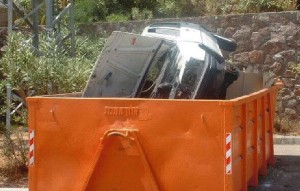
As regards cars, the problem with too much computerism is that computers are comparatively short-lived things. A mechanical thing can easily last decades because it can be fixed along the way and even rebuilt, if need be. You throw old computers away. That is ok if the computer is small and relatively inexpensive, as for example a smartphone or a desktop/laptop computer. The buy-in cost isn’t much – maybe $2,000 or so for a high-end desktop/laptop or the latest iPhone. If you get say six years of service out of such computers, you’ve gotten what you paid for it and now it’s time for a new one, which makes sense financially as well as functionally since after six years have passed the hardware and software in your old desktop/laptop or iPhone is outdated and can no longer be updated. So you toss it and get a new one.
It is much less easy – financially – to toss a vehicle you paid $50,000 for (the average price paid for a new vehicle) after six years, which is how long it typically takes to pay off the loan you bought in order to drive the car off the dealer’s lot. Because if you do toss it, you’ll be needing another vehicle and something equivalent will cost you another $50,000. More than that, actually – because what costs $50k today is apt to cost $60k six years from now due to currency debasement (“inflation”). In order for that $50k “investment” (ha!) to make any kind of sense, the vehicle must serve its purpose for at least twice as long (about 12 years) it took to pay it off and even then, it still ought to be worth something, as for example, a hand-me-down to a teenaged driver.
The problem with computer-festooned vehicles is that while the mechanical components will generally last 12-plus years and are generally repairable, the computers (plural) new and recently-made vehicles are festooned with are not. They work until – one day and usually suddenly – they no longer work. The problem then is that a new replacement computer may not be available or the cost is prohibitive – at which point the otherwise still-sound (mechanically) vehicle becomes a throw-away.
None of this is necessary – let alone sensible.
A computer to run the electronic fuel injection system is just that. And that’s how it was, for most of the modern era – until (roughly) around 2005 or so, which was around the time that additional computers began to be embedded in new vehicles, to control the operation of such things as the power windows and door locks and pretty much everything else that’s electronic in a vehicle. These computers (plural) are called body control modules and they are not just embedded but integrated with the vehicle’s other computers. It has reached a kind of ne plus ultra of absurdity – from the point of view of necessity and reasonableness. It is not necessary – or reasonable – to put a computer in charge of opening and closing the windows or locking/unlocking the doors. A cable mechanism is sensible for moving an automatic transmission out of Park and into Drive. If you get behind the wheel of a car with an automatic transmission that was made 50 years ago, it is just as easy to put the transmission in Drive (or Park) as it is to do the same today. The power windows and locks in a 50-year-old car go up and down just as well, too.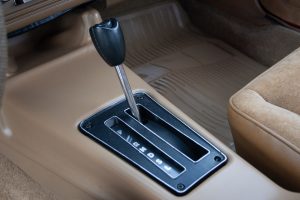
The difference is that when they don’t, it’s much easier – and a lot less expensive – to figure out what’s wrong and fix it. The electric motor that works the power windows either works or it doesn’t. A simple test of its function will determine yes or no. A continuity test is all you need to do to check the wiring. It’s essentially the same with all the other switches and control in pre-computer-enfuxated vehicles, which aren’t necessarily antiques. They’re just mostly machines rather than computer-controlled machines.
There’s really no good reason why new vehicles can’t be made without all the extraneous computerization. Modern electronic fuel injection does require a computer and fuel injection is both necessary – for reasonable and reliable emissions control – as well as desirable, since it is a huge everyday drivability improvement over mechanical fuel delivery (i.e., carburetors). But everything else is unnecessary from any reasonable/sensible point-of-view. If you are in doubt, go drive a car made in the early 2000s and see whether it starts/runs/drives any differently than a brand-new computer-encrusted car. Do the power windows/locks work any worse? Is the cruise control primitive feeling? Is it a chore to move the gear selector from Park to Drive?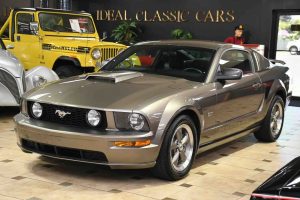
A car made in 2005 drives like a car made last month. Better, in some ways – because it probably its computer controls aren’t constantly trying to “assist” you. If circa 2005 model year cars could be made again, all would be well.
. . .
If you like what you’ve found here please consider supporting EPautos.
We depend on you to keep the wheels turning!
Our donate button is here.
If you prefer not to use PayPal, our mailing address is:
EPautos
721 Hummingbird Lane SE
Copper Hill, VA 24079
PS: Get an EPautos magnet or sticker or coaster in return for a $25 or more one-time donation or a $10 or more monthly recurring donation. (Please be sure to tell us you want a magnet or sticker or coaster – and also, provide an address, so we know where to mail the thing!)
If you’d like a Baaaaa hat or other EPautos gear, see here!










consider a computer to be a confuser
a guy who has great mechanical skills to fix a car
gets confused when there is an electronics problem
some of those confused mechanics
work at auto dealerships
two times i have had to place these confused mechanics
in touch with ford engineers who designed electronics
to figure out what was going wrong.
both cars were expensive lincolns
less than one year old
“Consider a computer to be a confused” – lol. One of my first jobs at f was testing cooling systems in the DPG climate wind tunnels. My first day on the job in 1994 and one of the test technicians referred to the pc as the “confuser” as opposed to the “computer”, it stuck with me ever since. That was the time when vehicle prototypes were tested extensively.
We have the zee Germans to thanks for all of this CRAP. Bosch released can-bus in 1986.First installed on 1991 benz S class….The rest as they is history.
Opps for got… say .. Need edit button
And as anyone who has the misfortune of using SAP at work can tell you, the Germans are soooooo good at software.
/S
I use SAP at work. I so, so hate it so much.
Vehicles manufactured in recent years
generally last longer and reach higher mileage
than cars built 20 years ago
significantly more cars and trucks reach 200,000 lifetime miles today than they did 20 years ago. Two decades ago, hitting 100,000 miles was considered the traditional benchmark for a vehicle being “over the hill,”
Modern vehicles feature superior rust prevention, anti-corrosion coatings, and galvanized steels. Cars rarely “rust out” before their engines fail anymore
But technology ages rapidly: a 12-year-old modern car might retain very little market value. Owners are more likely to scrap a mechanically sound vehicle because the cost of fixing a infotainment system or an advanced driver-assistance sensor outweighs the value of the car.
Consumer Reports has consistently tracked a steady rise in in-car electronics and infotainment issues across all vehicles, including internal combustion engine (ICE) cars, over the last two decades.
Good luck trying to diagnose and fix these electronic problems yourself. Mechanics too often don’t waste time diagnosing electronic problems on a car, so they just replace parts. This “parts cannon” approach is costly and unnecessary, but it’s driven by a mix of time pressure and skill gaps.
i had a 2005 toyota camry that i sold after 215,000 miles
That the car had no rust after 17 years in michigan was a miracle
On average, between 1% and 1.5% of 2005 American brand vehicles reach the 200,000-mile mark.
i discussed these electronic problems with ford engineers during the 27 years that i worked in ford product development. i asked why couldn’t cars have one reliable computer instead of computers all over the place == more parts that could break down. the answer was safety. If a single car computer crashes at 70 mph, you could instantly lose braking, steering, airbag deployment, and throttle control simultaneously.
Hmmm, if you think that 100K miles is considered over the hill in a 20 year old vehicle….
Please explain why did the Ford engineers who designed my 2004 Excursion, tell me 250K is the minimum service life to be expected, as long as its did all the required maintenance at the recommended intervals?
And yes, cars from the 60’s & 70’s and earlier had roughly a 100K life expectancy, but if you did the required & recommended maintenance, I saw plenty of cars with over 200K from those decades. But repacking bearing twice yearly, and points & plugs and oil changes at 3K were a nuisance, and tiresome, bit still cheaper than a new car then, too.
YMMV….
i was talking about cars
body on frame trucks last longer than cars
2004 ford excursion:
ford engineer could be biased when telling you how long a ford product would last but 200,000 to 250,000 miles is common. 6.0L Power Stroke (Turbo Diesel) &6.8L Triton V10 (Gasoline) should last longer
automotive research studies by iSeeCars consistently show that pickup trucks are nearly three times more likely to surpass 250,000 miles than standard passenger cars
cars depreciate much faster than a truck so it’s not worth repairing if there are any major repairs after 100k. . Cars are more likely to be totaled in crashes than large pickup trucks
car owners are more concerned with old fashioned styling. rust and and dull paint than truck buyers
An average of 2.6% of mid-2000s pickup trucks (including the 2005 model year) were actually driven past the 200,000-mile mark. While this seems low, it is nearly double the industry average for standard passenger cars, as trucks are built on heavier-duty frames and frequently undergo fleet maintenance
At Ford, most of the testing done was to a 10 year/ 150k estimate. These are the numbers written in the old “design manuals”. The durability testing for most components and small assemblies is very harsh. Much of the time vehicle testing has gone to computer simulations. For a given vehicle launch, there used to be many hundreds of prototypes with these cobbled together vehicles costing 200k – 300k for development. Mostly computer simulation now also. A notable exception to the 150k design rule was the PS Diesel engine with a b10 life curve that went well beyond 250k, even with aluminum cylinder heads.
Sorry bud, maybe in the ‘60s but by the ‘70s oil quality was much improved as was automated machining of engine blocks. ‘No lead heads’ with hardened valve seats very early ‘70s pretty well needed the 80k valve job.
Here is Sparkey’s success list, all these very normal maintenance schedules:
‘71 Nova 305 V8, bought used in ‘75 45k miles. Sold in ‘89 with 205k miles zero engine or transmission work again other than maintenance. Ran perfect the day we bought it, and when sold.
‘79 Gran Prix 301 V8 bought used ‘84 with 66k miles. Went to save the veterans in 2007 after years of zero engine work but at close to 300k a massive transmission leak and the AC finally gave up. Engine ran fine.
‘91 Silverado 350 V8 bought new. Now at 186k runs perfectly fine.
None of these were oil burners, the Nova used a quart in 1800 miles in ‘75 and the same in ‘89 at 205k.
needed = ended valve jobs
I can understand computers to manage the engine and perhaps the tranny; they make sense. However, having computers to open windows and all that is going overboard. Why fix something that’s not broken?
Absolutely! Trying to wire a Brake Light Cutoff on my 2017 Audi A1 took over 2 days to figure out how to wire, purchase the part and install. Instead of a simple switch operated by the brake pedal with a single wire, the Audi switch is actuated by a magnet, two resisters and battery/ground wires.
‘enfuxated’
Hmmm… Vive le (or is it la) neologism. Thanks for reminding me to disenturbate my vocabulator.
Vid on disabling the tracking devices on some modern cars: https://www.youtube.com/watch?v=vK-Y9BxBGus
I’d like to get the discussion going on this with all the smart people in this chat.
Diagnosis can be a real headache too. Daughters ‘09 MDX, the battery would drain & after 3 days too low to start. ??? Thanks to Internet forums turns out the ‘module’ that kept the Bluetooth active after turning off the car for a few minutes (so you didn’t interrupt a phone call) would fail to on all the time. Yes, those magical Japanese cut corners too. That module had a cheap capacitor that goes bad, timer circuit then fails to on all the time. Unhooked that module no more dead battery.
The ‘91 Silverado has one main computer & like Eric says it’s one job is engine management. There is another little fella inside the distributor (remember those?) for getting the coil to fire. 35 years in and it all works dandy. The computer related wiring and connectors have survived well, one sensor for ‘water temperature info’ for the computer has been replaced. I think GM had the right idea for placement, the main engine computer sits on a support inside the dash behind the glove box where it stays clean and dry.
Took the ‘18 Jeep on a long drive yesterday. Key fob acting up again, and the XM radio station is again changing randomly. Thanks to Internet forums diagnosis the random station problem is the display screen not the ‘radio module’. Time to install the new better designed aftermarket screen.
Hey without that body control module you’d be missing out on that vital feature, ‘opera lighting’ slow fade to black when you close the door! Jesus.
I dont know what causes this, but in my 2013 Grand Cherokee, if I have the stereo loud with a lot of bass, all sound cuts out after about 10-15 minutes. And it wont come back without turning the vehicle off and opening a door to cut the power, then restarting it. Nothing works, not the radio, not mp3. These shouldn’t be through the same computer- Radio is radio but it’s gone too. Its super annoying on a highway because basically you get no radio till the next gas station unless you stop on the side.
This is the pisser when odd stuff like your problem crops up. Hopefully some Jeep forum will have a solution! The prospect of going around and around with a dealer, not a welcome prospect.
turned down the bass and see if the music lasts
much longer than 15 minutes
the bass frequencies require most of the power
and generate most of the heat of the amplifier
to overcome the road noise at highway speeds
the bass often gets turned up loud
amplifier safety devices usually shut down the amplifier
instantaneously when getting too hot
i don’t know where the 15 minute lag comes from
Be thankful the shut down isn’t permanent
Yes, with treble heavy music, it stays on. Thats probably the case
There are many problems with OEM stereo systems. First and foremost is the “roll-off” that all factory stereo systems are equipped (hobbled) with – when the volume goes above a certain level, the stereo system will automatically reduce the bass output so people don’t blow the cheap paper-cone speakers manufacturers put in their cars. And, of course, there’s the problem you ran into – thermal cutoff of the amp when the listening level gets too “spirited”.
The #1 way to fix this, pretty much for eternity, is to add a subwoofer system to your car. The main thing is to ensure you get a proper signal to your power amp, and neither a “high-level input” nor an “RCA converter” will do the job correctly, as both will be at the mercy of the factory stereo’s bass roll-off. You need a way to correct the bass reduction from the factory stereo. The most common method is with something like the Audio Control LC2i (what I personally use), which converts the high-level from your rear speakers into an RCA output, but which also automatically increases the bass level when it detects the factory stereo start to roll off the bass.
You don’t have to go wild with a subwoofer system, either. Personally, I have 2 Alpine Type R 12″ subs in my Lincoln being fed by a Kicker KXA 1600.1 amp. This is probably overboard for most folks, though. Most folks will be perfectly happy with a single well-tuned 10″ sub and a modest amp.
Replacing the factory speakers with high quality aftermarket units can pay decent dividends, too, mainly in overall sound quality, but that won’t get the bass for you that clearly you’re after.
I’ve thought about that, but I don’t listen to bass heavy stuff often enough to justify it. Mostly Viking tribal music that does it in when I want to hear it with the windows open on the highway. Modification on a new car seems a big pain in the ass that’s not worth the time. My 86 blazer however will probably get an upgrade
A decent car stereo is a waste here in WA, the freeways are so worn road noise is all you will hear, seriously.
‘The problem with too much computerism is that computers are comparatively short-lived things.’ — eric
Yes and no: military-grade computers can be designed with extensive, costly cooling and shock resistance to survive for awhile. But just because it’s possible doesn’t mean it should be done.
Applying consumer electronics technology to vehicles is a category error. It is driven by human foibles such as automotive engineers’ envy of their richer counterparts in Siliclown Valley … and designing vehicles to cater to the whims of Govco regulators rather than actual, you know, buyers.
Important design objectives such as simplicity and maintainability have been casually tossed out, though no one asked for this.
Contemporary cars are ill-conceived, poorly-executed, over-teched and overpriced products. One sincerely hopes that these shitty vehicles, and the brain-dead clowns who make them, will go out of business.
People forget that the modern digital electronic computer is only one kind of computer. There were analog electronic computers used for things like targeting bombs and naval guns.
There there is the mechanical computer, like the Antikythera mechanism (a 2000 year old navigational computer), the mechanical fuel injection system, and the carburetor. The carburetor was a simple device to vaporize fuel in the correct proportion to air for a ICE to run efficiently. As the 20th century developed, various upgrades came in, from manually adjustable mixture, to accelerator pumps, to power valves and various metering systems like the Qjet and the SU.
It’s not the computer per se, it’s the grossly over complicated programming and networking which the modern digital electronic computer lends itself. The Antikythera mechanism used a series of gears and levers to create a map of the sky for navigation, and it worked. 2000 years ago it was an improvement on a piece of crystal or handed down secret knowledge.
My profession for the last 30 years has been automation design and programming. My systems are as simple as I can make them, and I’ve watched in dismay as clever kids have made everything horribly, ridiculously, Rube Goldberg levels of complicated.
The 49 Ford F1 I just sold was a very functional transportation device and working pickup. With a flathead V8, a simple 2 barrel carb, and a 12 volt conversion with alternator.
Cars jumped the shark after 1996 and started to use rocket packs over that shark about 2010.
The Norden bombsight:
https://en.wikipedia.org/wiki/Norden_bombsight
was a type of mechanical analog computer.
There is a disease afoot. One my 50+ year old son has. Must have the newest and “best” computer device/operating system.
That mentality is a holdover from the era when newer things were getting better, which was true for decades
Much better bet – buy 1 to 1.5 steps below the latest tech. Half the price, 90% of the performance, which you won’t use anyway unless you’re a bleeding edge gamer or developer.
Bingo. I buy 2 year old top of the line smart phones for my business at about 80% off. Computers same way, though I’m not interested in anything Windows 11, Microsux peaked with XP for my purposes
I’ll ditto your bingo, so to speak! I got a two generations back IPhone (13 I think it is) when the 3g went away. I’m years in on this phone and see absolutely no reason to switch up. It also is the small size ‘form factor’ that easily fits in my shirt pocket. So cheap compared to the newest they offered, works fine on my cheap ass old man service plan $25 a month.
Yup, XP Service Pack 3 was the last Windows that really worked well and showed at least some respect for my ownership. I’m on (heavily throttled) W10 Pro right now, but won’t be switching to W11. Have already converted one of my work computers to Linux.
IMO, it is not just the “computer” aspect, but “power” everything. Parked next to a guy @ Home Depot a couple days ago who had a “modern” F150. Power side mirrors which fold up flat when parked. Power “slide out” running boards. Well, that’s nice, until the motors fail.
My ’89 doesn’t need running boards, and I am perfectly capable of rolling the windows up and down, and adjusting the side mirrors, without electrical assistance. Simpler is better, IMO.
‘Power “slide out” running boards.’ — Adi Heidler
I snigger in derision. Why not a “slide out” cylinder in the front grille, shaped like a pink dog’s dick? And an aftermarket codpiece to cover it, for distaff owners?
Such bold zoomorphism is the least these pickup victims can do to compensate for having a tiny 2.5-liter four up front. 🙁
Truck nuts as a factory option?
“Male” and “female” pickup trucks?
Who knows?
well, there is such a thing as a receiver hitch. Just saying…
‘A computer to run the electronic fuel injection system is just that.’
And the ignition system. Spark timing control is highly integrated with the computerized fuel injection system. No distributor, rotor, points, or serpentine spark plug wires (an ignition coil at every plug), and no centrifugal or vacuum timing advance apparatus. Computerized ignition control requires several sensors — crankshaft and camshaft angle, throttle position, temperature, air flow, etc. — but most of these are pretty easy to replace, and don’t require any adjustment.
True, Strait –
But it’s not necessary. I could replace the TA’s Quadrajet carb with a stand-alone TBI system and the result would be a 50-year-old car that starts as quickly, that never bucks or bogs – and so on – as any “modern” car with PFI and DI.
Just for a lot less coin – and hassle.
>Fuel injection does require a computer
Actually, mechanical fuel injection was a thing, back in the Before Times.
Corvettes, for example:
https://corvettewarehouse.com/fuelie-corvette
Also Mercedes-Benz 300 SL (1955) and Pontiac 455 (some versions).
There were also after market (several manufacturers) mechanical fuel injectors for the hot rod crowd.
My brother Keith once owned a gasoline powered fuel injected altered.
I.B. Lovin’ my ’89 F150 mit der computer controlled port f.i.
Intel chip still quietly doing its job.
Uh, WWII aircraft had fuel injection! Fuel injection is hardly a new technology.
Aircraft fuel injection is rock simple, a pressure pump and a lever to adjust the flow valve. It’s controlled with wetware 1.0 between the pilots ears. At least in the birds I’ve flown up to the 1970s.
Rochester injection on the fuelie Vettes was actually similar. More impressive was the mechanical injection on diesels and such. Ak Miller put a Mercedes injection on a Ford Maverick six in the early 70s, as a little kid I thought it was cool as hell.
The mechanical injection on my ‘69 Alfa if remember was a gasoline version of a truck diesel system. Variable pump via swashplate which was rod linked to the throttle, worked dandy.
More computers = more complexity = more expensive to own.
Go price the repair and tuning of a Bosch MFI pump.
I’ll wait.
Damn right! My 2007 Sonata still going strong, bought 6 years ago used, not a single problem since.
Eric: “They’re putting little computers in toothbrushes. It is out-of-hand.”
Part of the reason everyday consumer items are electronically controlled now is probably due to it being cheaper to build, sadly it doesn’t last as long. When by 4 month toaster wouldn’t stay down I pulled the cover off and discovered it had what looked like a potentiometer that inputted to a timing chip that then actuated an electromagnet to hold it in place whereas my 60 year old toaster has a bimetallic spring and still works. The bastards don’t want you to keep using the same item for decades.
As for over computerized cars; it’s some of the above and a lot of GovCo regulations that force this happening.