

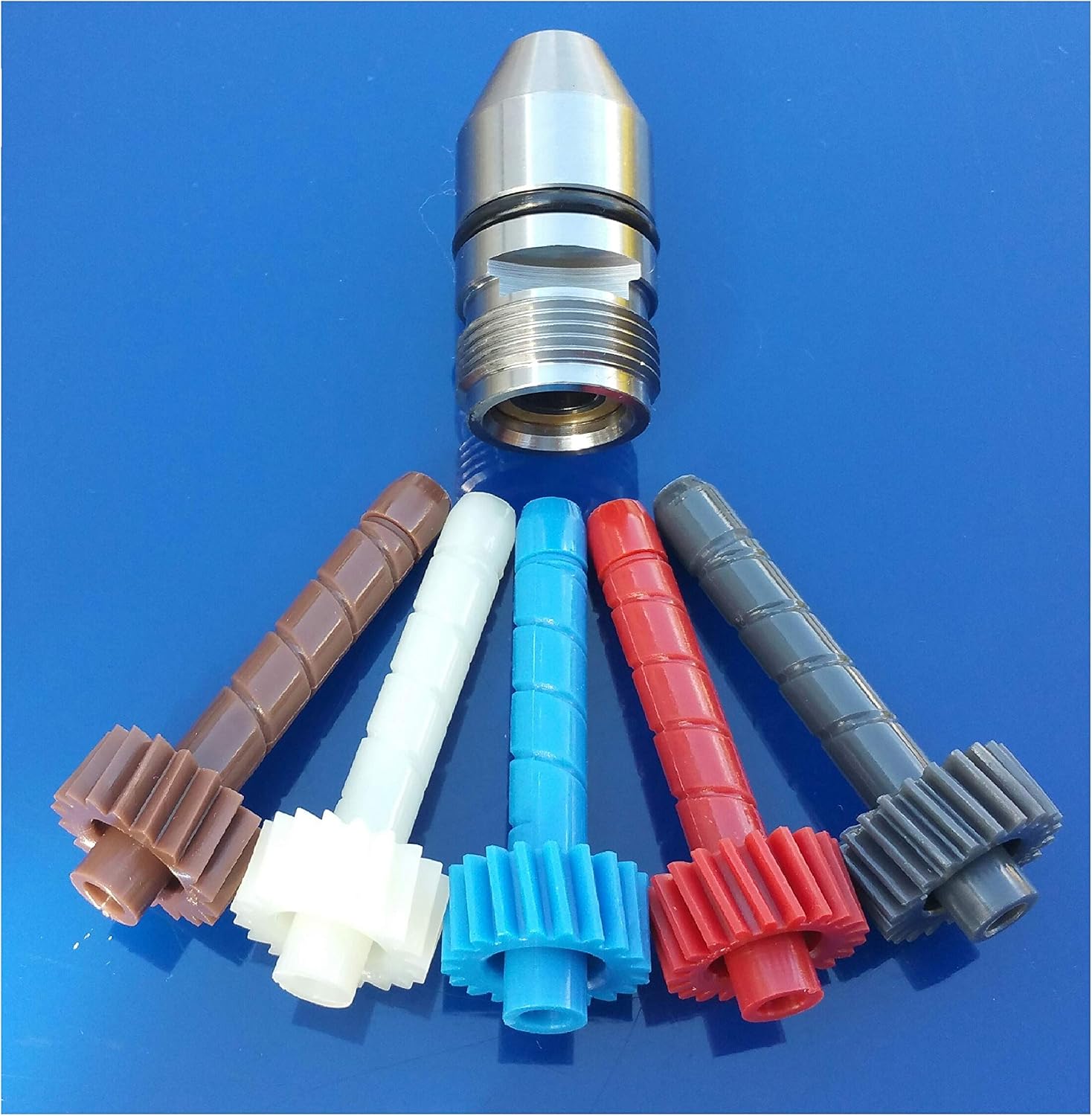

One of the fun things about working on old cars is making fine adjustments. For instance, getting the speedometer to read sort-of accurately after changing the final drive ratio.
Or changing transmissions.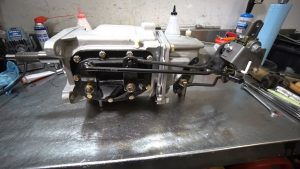
I recently converted my ’76 Trans-Am from automatic to manual (four speed, Super T-10 without overdrive). I had previously converted it from factory-equipped automatic (THM 350 three speed, no overdrive) to four speed automatic with overdrive (TH2004R), which I did because I had previously changed the final drive ratio – the gears in the rear axle – from the factory 2.41 to 3.90. I did that before I converted from three speed automatic to four speed automatic, because I wanted the car to accelerate more forcefully. The gear change accomplished that. But it also resulted in the engine RPM at speeds above 55 MPH increasing uncomfortably. For me and (probably) the engine. Instead of the engine turning at around 2,500 RPM at 65-70, it was turning closer to 3,000 RPM at 55-60 with the 3.90 rearset. This increases wear and tear on the engine, generates excessive engine noise at relatively low road speeds and causes an already gas-hoggy old muscle car to really hog gas.
This was the either-or back in the day. Before there were (commonly available) overdrive transmissions, most cars came with a compromise final drive ratio that balanced off-the-line acceleration with acceptable highway cruise engine RPM. Muscle cars back then typically had final drive ratios that were more aggressive than those used in daily drivers, because a muscle car was supposed to light up the tires when you floored it and push you back in the seat; performance was measured by 0-60 and quarter-miles times and an aggressive final drive ratio (e.g., a 3.42 or 3.73 or even a 4.11 ratio) helped with that. At the cost of top speed as well as gas mileage and high cruise RPM. It is a not well-known fact that most of the muscle cars of the ’60s and ’70s weren’t particularly fast – at least not by today’s standards. Most were mechanically limited – by their final drive ratio – to around 125 MPH. By the time the car was moving that fast, the engine was spinning close its redline – its mechanical limit – and that’s as fast you could go.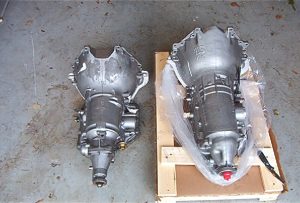
So I replaced the original TH350 three speed automatic with a four speed that had overdrive. Even with the 3.90 final drive ratio, the Trans-Am’s cruise RPM at 65-70 was only about 2,200 RPM. It was a great combo, except for the lack of a clutch and a Hurst shifter to play with – which I fixed this past winter. The car now has a four speed again, but not one with overdrive. Fourth is 1:1 as opposed to the .67 in fourth with the old four speed automatic overdrive. It makes a huge difference – the other way – in engine RPM at highway speeds, which are now back up to around 3,000 RPM at 55-60 because of the 3.90 rear gears and the no-overdrive.
Something else changed, too.
After the tranny swap, the speedometer read about 15 MPH faster than the car was actually moving. I’ve been through this before. After I swapped out the factory-installed TH350 three speed in favor of the TH2004R four speed overdrive automatic, the speedometer had to be recalibrated. More precisely, I had to swap out the little plastic gear that drives the cable that causes the speedometer to register speed. Old cars like mine have mechanical speedometers. A cable attached to the back of the speedo and runs behind the dash to under the car and then screws onto a fitting that plugs into the side of the transmission case. Inside that fitting is the driven gear; the number of teeth determine how fast the cable turns and that (in turn) determines how fast the speedo says you’re moving. When you change the mechanical relationship of the transmission’s rotation relative to the rotation of the rear wheels, you change what the speedo says. In my case, it now said the car was moving much faster than it actually was moving – because the speedo gear was turning much faster inside the Super T1- four speed without overdrive than it was turning inside the 2004R with overdrive.
Correcting this entailed getting under the car and loosening the 3/8 hold-down bolt that secures the fitting that holds the speedometer’s driven gear. It pops right out. Once out, you can easily remove the plastic driven gear and replace it with one that has either fewer (or more) teeth, depending on whether you need to get the speedometer to read faster – or slower. The idea being to get it as close as possible to accurately registering road speed.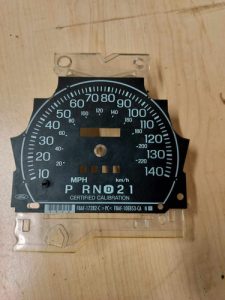
I italicize the word because if your combination isn’t exactly “factory,” you may not be able to get it to read precisely – and even then it probably won’t. Not exactly.
My ’76 TA was available from the factory with a variety of different final drive ratios, but not 3.90 – which is what I have in my car’s rear axle. The next closest factory combo is 3.73 with the Super T-10 four speed manual. I used the correct driven gear for that combo and now my speedometer only reads about 8 MPH fast. In time, I plan to replace the 3.90s with 3.23s, which is what was factory for 1976 with the 455/four-speed combination and once that’s done, the speedometer ought to be displaying roughly how fast I’m going.
The italics are there to emphasize that speedometer readings back in the day were usually close – but not exact. It’s why – back in the day – one of the ways you could sometimes get out of a speeding ticket was to present the judge with a mechanic’s invoice attesting that your car’s speedometer was off – i.e., not reading exactly right. It was also why – back in the day – cop cars had “calibrated” or “certified” speedometers, so that they could testify as to how fast you were actually going when they paced you prior to stopping you.
It was fun while it lasted!
. . .
If you like what you’ve found here please consider supporting EPautos.
We depend on you to keep the wheels turning!
Our donate button is here.
If you prefer not to use PayPal, our mailing address is:
EPautos
721 Hummingbird Lane SE
Copper Hill, VA 24079
PS: Get an EPautos magnet or sticker or coaster in return for a $25 or more one-time donation or a $10 or more monthly recurring donation. (Please be sure to tell us you want a magnet or sticker or coaster – and also, provide an address, so we know where to mail the thing!)
If you’d like a Baaaaa hat or other EPautos gear, see here!








Luckily my Camaro’s tranny swap wound up being in the close enough category.
As for your car Eric potential solutions include GPS based speedometers, a Craigslist Garmin to display your speed or one of those tiny GPS speed indicators from Amazon. Of course if you’re driving in a tunnel the GPS probably won’t work.
https://www.amazon.com/Speedometer-Automatic-Brightness-Adjustment-Vehicles/dp/B0GSMN1CM8/
Morning, Landru!
Yup – but I’m not worried about accuracy; close enough is good enough. I intend, by the way, to go back to the 3:23 rear gears (what the car would have come with from the factory with the four speed) because it’s the right balance. My previous TA had this combo and it was a very pleasant car to drive all-around.