



The duration of the average new vehicle loan has gone from three or four years to six years over the past 40 years, which when you think about it is a much better way to gauge the effects of what’s styled “inflation” than using the usual method of adjusting what a dollar buys today vs. what a dollar bought in the past. That method implies that the cost of things hasn’t really gone up; we’re just paying more dollars for things.
The hair in that soup is most of us have fewer dollars relative to what things cost. Put another way, things (most thing) really do cost more. Cars are a prime example. If it were just “inflation,” new car loans would still be three-or-four-years long, as they typically were back in the ’80s – when the average price paid for a new cars was about $7,500. But it isn’t just “inflation,” as testified to by the government’s own inflation calculator. That $7,500 – which bought an average new car back in 1980 – is about $20,000 dollars shy of the number of dollars it takes to buy an average new vehicle today (about $52,000). That’s why it takes six years to pay off the loan. More accurately, it’s why it is necessary to stretch out the payments for six years, in order to make the monthly payments affordable. A $52,000 purchase factored over five years will cost you about $850 per month to pay off. This assumes zero interest, by the way – so in actuality, the payment would be considerably higher. If you extend the loan by another 12 months, you can get those monthly payments down to about $700. This is the way the finance guy at the dealership makes an otherwise unaffordable new car “affordable.”
Of course, you’re still paying more. It just feels like a little less.
So now the solution – the bigger Band Aid, to cover up the larger wound – is to push loans out to seven years (84 months). This may sound like a not-bad idea. Home loans are routinely 30 (and even 40) years long long, which is necessary because lots of people cannot deal with the payments on a $400,000 loan (the average cost of an average new home) factored out over just 15 years. Put another way, it is the only way most people can afford a home. So why not extend the average new vehicle loan out to seven rather than six years? Why not eight years – or even longer? A new vehicle that goes for $52,000 would be a lot more affordable if that cost were factored out over a decade rather than six years.
Well, the problem is that a vehicle – unlike a house – rapidly loses value. On average, whatever it is you buy today will be worth less than half what you paid for it by the time you make that final payment on the six year loan you took out. Usually, whatever you paid for your house, it will be worth substantially more than whatever you paid for it by the time it’s paid off. That’s why a home is generally considered an investment while a new car isn’t. (Car salesman often use the word “investment” when trying to sell a new car, but it’s something like the way the COVID shots were sold as “vaccines.”)
It’s actually a liability – from the standpoint of a lender.
A $52,000 car financed for seven years probably won’t be worth half what it sold for after five years. But the monthly payments doe the remainder of the loan are still based on what the car sold for when it was new. This serves as an incentive for the person who took out the loan to stop making payments once they are under water.
Dumping the car and cutting one’s losses seems cheaper than continuing to make payments. The car is then repossessed and re-sold (and re-financed, probably). But it will probably have to be sold/financed at whatever its depreciated value is. The balance due on the original loan will have to be written off, which doesn’t mean no one pays for it. The financing shylocks will get their pound of flesh, one way or another. Regardless, the take-home point here is that loans beyond six years are fundamentally untenable. The implication is that $52k-plus average new car transaction prices are also untenable. Something is going to break. Something is already breaking. You can hear the cracking sounds portending what’s going to happens sooner or later.
Probably sooner rather than later.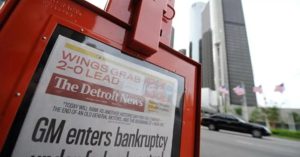
When it does happen, expect probably a third (maybe half) of the car brands currently selling cars to go bankrupt. This happened back in ’08. It is going to happen again – only it’s probably going to be deeper and harder this time, when it does. Why? Because the government hasn’t got the money to “bail out” the foundering car companies; it could just print more, of course. Or it could tax more. But that will only exacerbate the problem of most Americans having fewer dollars to buy things that cost more dollars.
A way out of this percolating shit-storm would be to remove all the regulatory barriers that make it impossible to import and sell new cars that cost $15k or less (such as the $10,000 Mazda Flair I wrote about recently). Cars like that could be financed over three years – or even bought outright, cash on the table. There would no longer be any worries about being under water – holding the bag (the loan balance) on a massively depreciated $52k car that’s only worth $25k when you’re still making $700 per month payments on the thing.
Trump could make it so – he (like He Man) has the power. But he hasn’t – and probably won’t. Which makes you wonder why.
. . .
If you like what you’ve found here please consider supporting EPautos.
We depend on you to keep the wheels turning!
Our donate button is here.
If you prefer not to use PayPal, our mailing address is:
EPautos
721 Hummingbird Lane SE
Copper Hill, VA 24079
PS: Get an EPautos magnet or sticker or coaster in return for a $25 or more one-time donation or a $10 or more monthly recurring donation. (Please be sure to tell us you want a magnet or sticker or coaster – and also, provide an address, so we know where to mail the thing!)
If you’d like a Baaaaa hat or other EPautos gear, see here!









I read through the comments, and the lively exchange between Eric and Richard, and I would like to bring up several points not being discussed that readers may find revealing.
Trump’s endless Iran war may have huge consequences for the auto market. Bond yields are going up. As others have mentioned, car loans are set off the 10 year T-Bond.
The very point of US Treasuries started a new wave up was on the day of Trump’s war, Feb 28th, 2026. Click on time span of 6 months:
https://www.barchart.com/stocks/quotes/$TNX/interactive-chart
As interest rates continue upward, home prices are going to have to come down, this will greatly affect home owners from buying expensive cars, if the real estate market crashes, which is very likely because they are in the biggest bubble of all time, car sales will be crushed also. Many auto makers will not survive.
I expect west coast states to abandon car import restrictions soon. Car’s made in Mexico could soon be coming across the border to be sold in Los Angeles. Why can’t a Mexican in California drive a car a Mexican in Mexico drives?
Goolag Ai – “Why Aren’t They Sold in the United States?Vehicles like the Renault Kwid and Nissan March can be sold in Mexico at significantly lower prices because they do not have to absorb the manufacturing costs of the complex crash-absorption designs, extensive electronic safety sensors, and strict emissions hardware mandated by U.S. federal safety standards.”
“Renault Kwid: Marketed heavily as an ultra-affordable city car, this compact crossover hatchback has an entry price under 200,000 pesos. Its featherweight design delivers highly competitive gas mileage”
“A brand new, entry-level Renault Kwid costs between $11,350 USD based on current brand pricing in Mexico”
————–
Another big trend is coming. The US Government is run by Zionist loons who are making terrible decisions. Nutjobyahoo, the biggest Talmudic psycho on the planet, is the puppet master of Orange shit-talking-head. Thus Trump is guaranteed to keep making bad decisions. Attacking Iran again and again is going to make oil very expensive. Trump keeps doubling down on his original bad decision to attack Iran for Israel.
Eric’s ideas to allowing cheap cars to flood the US market may come sooner than he thinks. When push comes to shove, consumers are going to revolt against all these Federal mandates. They are made by unelected officials in the huge Federal bureaucracy driving us to financial ruin. We can no longer afford to follow rules made by safety control freaks. I am in charge of my own safety, not some other person.
Here in Oregon everyone broke marijuana laws until one day the state caved and made smoking and growing weed legal. Same will happen to small cars being sold, Trump is currently putting Amerikan consumers into a transportation emergency if gasoline doubles.
IMO Trump will soon be removed from office, this Robert DeNiro speech is the public iosing all respect for Orange Caligula, everyone yells “shut the fuck up” in unison to Trump’s insensitive proclamations.
Robert De Niro Unloads on Trump in Explosive Speech
https://www.youtube.com/watch?v=h94IlZMog
The “orange Hamburglar” recently talked up 50 YEAR mortgages as the (((solution))) to high home prices.
Perhaps 30 and even 15 year notes will become a memory of the “before times”?
No, its just another naked attempt by the (((khazarian mafia))) who control the USGOV and dollar to bleed the.US citizenry of our blood and treasure.
Patrick Henry said once “Give me Liberty or give me death…” and many patriots responded appropriately…
What should we say to (((them))) today???
YMMV….
Morning, Saxons –
Yes. The ideal scenario – from their point of view – is lifetime debt serfdom. It is what’s meant by you will own nothing and be happy. Excepting the happy part. The income and property tax assure that no almost one will ever be free of the burden of having to work to pay bills. The system is predatory and extractive. We are – to them – like the people in the pods in the Matrix movies.
I bought brand new, my now 7 year old Dacia, by swiping my debit card. A pension I took out 30 years ago and was convinced I hadn’t paid into enough before the factory closed down, came good. A godsend.
It gave me enough to buy a £8000 car and gives me 100 a month on top of my UK state pension. When the car dies I’m getting a rack and bags for one of my bikes for shopping and keep the car running costs in my pocket. We can get by in Scotland with no car, maybes not convenient but doable. In USA, ymmv. I couldn’t do it if I still lived in Caldwell County NC, you need a car for anything there.
I tell my friends and family to pay themselves first (save) to get out of the loan game.
It may take a couple of cycles. For me, when I was driving 50Km/yr, it took about 2-3 cycles which was every 2-3 yrs for me. I finally did it, and have paid cash for cars for over 20yrs.
I estimate I have saved $30K in loan costs.
Today, I can own a late model $50-60K car for well under $500/m.
It only works if the car you are selling/trading can be put back on the dealers lot (retail) and not wholesale.
Geez.. for that kind of money who even wants to buy a car?
Especially with all the nanny features, spyware and goofy clown-screens.
Wouldn’t it be cheaper and much easier to just rent a ride whenever we need one??? 🙄
The other problem is if you’re still making payments that’s less cash on hand available for maintenance. Sure the drivetrain will last 100,000 miles without breaking a sweat, but what about all that other stuff? That $1200 windshield that cracked after the first winter. Those too small brake pads that grind into the discs every 30,000 miles? That transmission intercooler line that got scraped along the speed bump in the parking lot? The odd “software updates” that fix all the bugs that the vehicle shipped with?
That stuff ain’t free, and increasingly costs an arm and a leg at the dealership, because no one else will touch them (or can’t get the parts). If you’re still making payments on the loan your transportation budget keeps climbing.
I have to chuckle when you mentioned cracked windshields, RK. Lord, drivers would be up in arms if they had to replace a windshield every time a rock chip, or new line (from said chip) started running across the window. A friend of mine from the lower 48 said that such windshield conditions, you could never get away with anywhere else. But in these parts, it is a part of Winter. And just when you think to yourself, “Hey, maybe I will replace the windshield”, you get a new rock chip. It is the replacing of struts and shocks that will soak your finances, due to the road conditions. I surmise that is the maintenance trade-off.
Trumps joo war is back on. Gas went up $.25 yesterday and will go through the roof since the SPR is depleted.
Diesel runs out first, apparently. Refineries have been running sour crude from the Strategic Petroleum Reserve, which produces a good yield of diesel. But when the SPR is used up, sour crude supplies will dwindle. Then Trumpstein will need a new song-and-dance vaudeville schtick, to explain why America’s not truckin’ no more.
Got food? Little Israel may be putting us all on a diet.
Venezuelan crude is very heavy and sour. Which is why the Madura coup happened first.
Noticed today that shelves are getting thinner in motor oil and DEF, too.
‘Why not eight years, or even longer?’ — eric
Problem is, auto loans — like every other kind of credit — key off of US Treasury borrowing rates, which typically rise with increasing maturity.
With 7-year auto loans, the payment reduction from a longer loan term begins to be offset by the higher interest rate charged on a longer-term loan, which means more risk for the lender.
This well is tapped out. Soon, auto makers facing their own demise will be clamoring to Big Gov for ‘help,’ whether in the form of cash for clunkers, tax credits or subsidized loans.
Our senile auto biz, 125 years old, has no future but bankruptcy, consolidation and merger with Big Gov. I have lost all interest in their shitty, over-teched
applianceswhite goods. Away with them!I have never, ever had a car payment so I am not necessarily defending 84-month loans here. But I will say that, in fairness to the automakers, cars last much longer today and have much longer warranties than they did back in the day. I remember Malaise Era cars starting to rust through in as little as 2-3 years in the 1970s. Sure, three year payments were considered long-term loans back then, but if I recall correctly warranties were only 1 year, 12,000 miles. Plenty of Vega owners got burned with shitty engines that didn’t make it to 50,000 — IF that.
For a lot of cars back then, if they made it to 100k at all it was time for the scrap heap — or a major rebuild. Today’s cars routinely last to 200,000 and warranties are often 100,000 miles.
Yes, car prices have become obscene when you take purchasing power and the Consumer Price Index into account, there is no doubt about that. And when many newer vehicles are out of warranty they are often not worth fixing because of the electronics.
But overall they DO last longer than cars of fifty years ago.
Frankly I think the higher prices and longer payments are a way for the manufacturers to push people into actual leasing or de facto leasing — you are always making payments whether you technically “own” the car or not.
Continual payments of course increase the profits on the financial side rather than the manufacturing side of the business.
Hi X,
It seems to me that automobile manufacturers today have subscribed to the WEF vision of “You’ll Own Nothing and Be Happy.”, effectively meaning that if these super wealthy elitists get their way, the masses will be perpetual renters, while the elite will be OWNERS. In the case of the GMs and Fords of the world, THEY’D be the owners of the new automobiles that people are leasing for however many years.
It also appeared that Big Pharma wanted to get in on that scheme a few years ago via the mRNA COVID vaxxes….sort of “Immunity as a service from mRNA jabs made by Big Pharma.” instead of you keeping healthy and relying on your own immune system to handle exposure to various things like a certain virus that the establishment and corporate media wanted everyone to be VERY AFRAID of just 6 years ago.
The wealthy don’t own them in the traditional sense either. It’s why they don’t blink at loan terms. They have LLCs and holding companies so their cars are part of a corporate fleet and any business owner knows how manage cash and debt or use leases for assets such as vehicles.
The middle class gets the shaft. They want a nice car that is safe for the kids, reliable for the Mrs. and gets you to Disneyworld for summer vacation. They used to be able to buy a decent car outright or with a reasonable length loan that allowed them to own the car for a while before it was worn out.
Even if it’s nominal value depreciates the utility value outweighed this over a 3 or 4 year loan and then if the car goes 7, 8, 10 years without a ton of upkeep financially you claw back some of that ground. You can’t view any vehicle as an investment, even if you pay cash. The value is in the utility. What you need to get from the car is for every $1 lost in market value you gain $1 in time saved driving instead of walking.
If you view a car in any other way than strictly utility then it’s vanity. Which is fine. We all have hobbies. If you want to spend your accumulated wealth on a fun car that’s not all about practicality, that’s great. Others might buy a nice guitar or camera. That money is almost always sunk without any benefit as viewed by a CPA but it’s has personal value to you.
It was only in the second half of the 20th century where the idea of working for more than just survival really bloomed, where you could enjoy the fruits of your labor with indulgences. That rising middle class was going to completely overwhelm the oligarchs, so that’s why the system is trying to push everyone back into poverty.
It’s not just automobiles that are suffering right now. I mentioned guitars and companies like Fender that only exists because of a flourishing middle class are hurting now. Who’s got money and time to do that? All music is kind of in a tail spin, only a few mainstream musicians are selling records or getting people into venues well enough to make a living. You can find the signs of stress in recreation like RVs, backpacking, cycling. The rich have it. Those $500K+ RVs are still selling but the normal stuff, who’s got money for a new camper trailer or time to really use it? The economy is sputtering along and is going to throw a rod soon. Maybe Trump re-igniting the Iran debacle will be the accelerant.
Moderna is currently running trials on a messenger RNA flu shot. And had read elsewhere (not sure if true, but who knows) that one day, all vaccines will be messenger RNA. Lord, can you imagine as a kid getting injected with now-upward of 80 vaccines (to get indoctrinated in public school), with 80 doses of such RNA and spike protein? Oh, but it will keep the kid “healthy”. Uh huh…
My old man had a red Chevy Vega. You took me back with that one. Now you got me thinking about the days when we got HBO after the folks said they’d never get it and Convoy was on the cover of the HBO guide. Vega-era America was way, way, way, way, way better. Wanna go back.
The car with the underwater loan is also facing very expensive repairs of the unnecessary, unneeded, unwanted whiz bang gadgetry. No doubt young people will walk away.
The entry-level 2026 Corolla LE starts at $23,920, which includes a $1,195 destination charge
Only about 4.7% of new vehicles sold in the US go for $25,000 or less, down drastically from nearly 21% in 2019.
Removing all safety features and emissions requirements could cut the cost of a new car by 10%, meaning they would still be very expensive
Toyota Corolla (2019–2022):
The champion of low-cost ownership. You can frequently find these with under 45,000 miles for less than $20,000.
Richard writes:
“Removing all safety features and emissions requirements could cut the cost of a new car by 10%, meaning they would still be very expensive.”
Bullshit. Proof of that being the fact that there are dozens of brand-new cars (that have emissions controls) available for less than $15,000 because they did not have to be designed around around bags or to be in compliance with U.S. roof crush/side impact standards. I have pointed out this fact to you on multiple occasions, so you are not merely ignorant. You are deliberately evading the fact.
The Mazda Flair I wrote about just a few days ago is a case in point. It is a $10,000 brand-new car with AC and enough power to be viable as a commuter car. It can get to 60 as quickly as a ten-year-old Prius and how many tens of thousands of people are driving ten-year-old Priuses in this country? So – spare us your cant about how a car such as this is too slow to be viable and your unsubstantiated assertions that there is no market for $10,000 new cars.
The Mazda Flair
$10,000 in Japan
+ 2,250 tariff (assume $9,000 wholesale price)
+1,000 to 2,000 destination charge
= $13,250 to $14,250
The buyer will get a 48 horsepower, slow, tiny car with right hand drive
There is no historical or current market indication that a significant number of Americans want to buy a car that slow. “Because i say so”, stated by EP, is not data.
Consumer Reports has a strict rule where they will not recommend any vehicle that takes longer than 14 seconds to accelerate from 0 to 60 mph. The organization considers vehicles slower than this benchmark to be a highway merging safety hazard. Consumer Reports has a lot more influence than an EP opinion
Inflation and rising vehicle costs have triggered a strong demand for cheaper, smaller, and simpler vehicles, a 0-to-60 mph time of 16 to 18 seconds crosses a threshold that the vast majority of American buyers reject due to safety, infrastructure, and geographical realities
The average 0-to-60 time for a new Daily Commuters & Compact SUV vehicle in the U.S. is 8 to 9.5 seconds.
The slowest mainstream cars sold in America—such as the Nissan Versa—clocks in at around 9.5 seconds.
A car taking 16 to 18 seconds would struggle dangerously to merge onto American highways, where ramp speeds frequently require accelerating to 60–70 mph in short distances
0 to 60 The Mazda Flair real-world testing and performance estimates place it around 16 to 18 seconds for the naturally aspirated model
2016 toyota prius 0 to 60 time
10 seconds is much faster acceleration than 16 to 18 seconds
“It can get to 60 as quickly as a ten-year-old Prius”
EP
This EP claim is not even close to being true
Richard,
Who gives a shit what Consumer Reports says? Its an elitist publication that is totally out of touch with ordinary realities. They tout saaaaaaaaaaaaaafety and “assistance technology” as the duck’s guts.
You have no idea whether a car like the Flair would sell and to be fair neither do I. What I do know is that we’re not allowed to find out. Why not let’s find out?
Also, I think it’s hilarious that a self-confessed Clover such as you who loves speed limits and dislikes “speeders” is so hung up on 0-60 stats. Do you live in the real world? Where I live, when the red light turns green, most drivers take a moment to notice and then creep forward at a pace that an ’84 Aries K-car could easily keep pace with. So could this Flair and cars like it. I have mentioned many times previously that I am usually the fastest vehicle in the pack – when I am driving my ’02 Nissan truck. It is not quick and yet I find I am almost always ahead of all these “sporty” new vehicles that have much more power that could get to 60 in less than 10 seconds but rarely every actually do. I routinely lose these “sporty” vehicles on roads with curves, too. Because most drivers do not have the skill to make use of the capabilities their vehicle possesses. I suspect you’re one of them.
You are an affluent retiree who collects a pension and SS and so you can afford things that many Americans cannot. The difference between us is I’d like to see alternatives allowed while you appear to not want that.
Indeed, Consumer Reports is the politically correct car buying guide, unless it has drastically changed in the 40+ years since I looked at one.
Consumer Reports? Teehee…
This is the group of folks that said the Dodge Omni/Plymouth Horizon were “unsafe”.
Why?
Because they couldn’t pass their “test”. The Omni/Horizon used the steering wheel to comply with GovCo’s crash testing. It was designed to collapse upon impact at a controlled rate. As such it was a pretty heavy deep dish wheel. What CR did was crank the wheel full lock at about 15 mph and drive in a circle. They then released the wheel and let physics take its course. The wheel oscillated back and forth and the car went out of control. This was their “test”. They failed the car.
Another test they did was on the Fiat x-1/9 and they rated the handling as “unacceptable”.
Those idiots probably didn’t know what end of a screwdriver to hold. Spare me.
I used to follow Consumer Reports until a few years back when they rated Tesla as the best car they ever tested, that’s when I realized they were full of it. Glad I found Eric’s site
Between 34% and 54% of Americans trust and use consumer reports and independent data as a source of information when buying a car. It doesn’t matter what we think about consumer reports == a lot of people trust their auto reviews
“The difference between us is I’d like to see alternatives allowed while you appear to not want that.” EP
WRONG
i only said the 48hp Mazda Flair was not the alternative many americans would want, and the main reason == it’s as slow as molasses, unless you compare it to a 1.6L 1970s era Volkswagen Beetle.
There is no credible evidence that Americans would choose to buy a car without seat belts or front airbags, if given the option.
“You have no idea whether a car like the Flair would sell and to be fair neither do I.” EP
since neither of us can predict the future, I say we should compare who has posted the best insults
Richard writes:
“There is no credible evidence that Americans would choose to buy a car without seat belts or front airbags, if given the option.”
The point is they haven’t got the option. The option was taken away from them. Not by the market – and that says a lot. When air bags were optional, they failed miserably. Not enough people (to make it profitable) were willing to pay extra for air bags. Let that sink in. Based on the response I get to my articles criticizing air bags, there are a lot of people who’d love to be able to buy a car without air bags (and not be forced to wear seat belts). Not everyone is afraid of cars and driving them. The problem is that those who are have somehow managed to impose their fears on all of us. Kind of like the “masks work” people.
There was a time – it was not all that long ago – when new cars were affordable. Because there were economy cars. Millions of people bought Vegas and Pintos and Beetles and Datsun 210s and Honda Civics. None of these cars got to 60 in less than 12-13 seconds and people were just fine with that.
Again: I think it’s hilarious that you fixate on 0-60 times. It’s like a eunuch admiring codpieces.
“It’s like a eunuch admiring codpieces”
EP
You win the creative insult spelled wrong contest. The correct spelling is “codpieces”.
Zero to 60 is a standard measure of acceleration since the 1940s. A quick 0–60 time reflects a car’s ability to gain speed rapidly from a standstill, which is useful for merging because it allows you to reach freeway speeds faster
Zero to sixty is the best data available. If there were better data, i’d use them. But imperfect data are better than an opinion based on no data at all.
Richard,
You seem unable to grasp the distinction between capability and whether it’s used. When you are out driving in traffic and stopped at a red light, what happens when it turns green? Does the car ahead of you or beside you generally rocket off, using the full extent of its capabilities? Or is it generally true that – for the most part – the cars gradually, tepidly get going? A quick car is only as quick as its driver; most drivers aren’t. A car such as the Fiat we’ve been discussing is quick enough to be realistically drivable on American roads – just as VW Beetles, Geo Metros and Ford Aspires were.
PS: I got the spelling right. “Codpiece”
“PS: I got the spelling right. “Codpiece”” EP
Not in your first comment
Based on market research, consumer expectations have changed about cars since the 1970s.
Thousands of daily drivers sit in bumper-to-bumper traffic where zero-to-60 mph times are completely irrelevant
a $20,000 slow car with modern safety and emissions standards would be highly desired today.
SUVs, trucks, and electric vehicles tend to have much higher profit margins than subcompacts. Automakers often prioritize these higher-margin segments, even if they’re larger or less fuel-efficient
Richard,
Your pedantry is almost as insufferable as your superciliousness. In the original comment, I inadvertently left out the “d” – an obvious missed key rather than a spelling error. Oy vey!
You write: “a $20,000 slow car with modern safety and emissions standards would be highly desired today.”
That Fiat and others like it have “modern emissions” systems – EFI, O2 sensors, cats. They do not “pollute” in any meaningful sense. I have pointed this out to you multiple times. Are you senile? Or just deliberately refusing to acknowledge the fact?
As far as “safety” – the fact (again) is that when things like air bags were optional, they were rejected. They had to be forced – by mandate – on people. A fact.
Again.
Must be pretty embarrassing, trying to quote a misspelled word [“copiece”], only to have your spelling correcter ‘fix’ it in the quote, this vitiating your entire point.
Typical bot mistake. Maybe this evening’s OTA update, as you stand in the closet blindly facing the wall with your red eyes glowing in the dark, will eliminate this ‘dumb robot’ error.
p.s. Your codpiece needs washing — getting stinky. Too bad doing laundry isn’t in your sex doll’s limited repertoire. 🙁
Ohh my, CR has been BS for decades. The pearl clutching panty twisters have bad mouthed US brand cars for decades.
Early on their “unbiased” car ratings failed to catch the Japanese car brands ‘70s-80s clockwork head gasket failures.
My brothers Datsun B210, friends Mazda, coworkers Toyota. The little rascals had not figured out iron block/aluminum head gasket longevity.
Their exterior house paint rating are another farce.
You and I don’t care about Consumer Reports but he makes a point worth arguing in terms of market.
Consumer Reports has about 600 employees with an annual revenue about $250 million. They own their own test track in Connecticut. The magazine has a monthly print circulation of 3.8 million and the website is ranked 6,000th globally for traffic and gets 9 million monthly hits, average about 4 page view per visit.
ericpetersautos.com by my analysis gets 170K views per month with 2.6 pages/view.
His point about influence isn’t without merit. If CR says a Kei car isn’t “safe” or “a good buy” then it’ll never sell in enough numbers to get a car company to bite. It’s the same with IIHS or any other “consumer watchdog” types. Their positions may have no basis in scientific or logical reality but what part of our world does pass the rational sniff test at this point? How can FOX, NBC or CNN still be on the air? How can the New York Times still be in business?
It’s ’cause people still believe their tripe.
The Consumer Reports official website averages roughly 10 million monthly unique visitors. They boast over 5 million active paying members.
EP has written here that he gets 50,000 page views per month. A pageview is recorded every time a single page loads in a browser.
i would trust an EP car review much more than a consumer reports car review. But consumer reports has useful reliability data filled out by its members about their own cars
Consumer reports emphasizes reliability and safety (for boring) family cars
Consumer Reports did recommend the 1986 Ford Taurus and i bought one, which turned out to be most unreliable car i ever owned after the first year. Consumer Reports broke its own strict protocol and recommended the 1986 Ford Taurus when it was brand new in early 1986, despite having absolutely zero long-term reliability data
Consumer Reports also appears to have bought in to the cliiiiiiiiiiiiiiiiiiimate change narratives, which is ironic given the BIGGEST pushers of climate change hysteria tend to be super wealthy elitists who constantly claim THE MASSES need to drastically reduce THEIR lifestyles, while the ELITE continue living extravagant lifestyles that put out FAR MORE CARBON FOOTPRINTS than an ordinary person does in a LIFETIME.
“There is no historical or current market indication that a significant number of Americans want to buy a car that slow.”
But they may be able to afford a car that slow, which is the first hurdle any new vehicle has to clear
Richard seems not to recall that VW sold literally millions of Beetles and those took 15-20 seconds to reach 60. The Geo Metro was also a hot seller for years.
By today’s standards, where a standard family SUV hits 60 mph in under 10 seconds, a classic Beetle feels dangerously slow on a modern highway on-ramp.
A stock 1970 Volkswagen Beetle dual-port 1.6L engine produces 57 horsepower, resulting in a 0–60 mph time of nearly 20 seconds (manual trans)
The 0–60 mph time for a 1970 Volkswagen Beetle 1.6L “Automatic Stick Shift” transmission is 27.5 seconds
The Mazda Flair has a driver airbag but no passenger airbag — that would turn off some buyers
Richard writes:
“By today’s standards, where a standard family SUV hits 60 mph in under 10 seconds, a classic Beetle feels dangerously slow on a modern highway on-ramp.”
Italics added. “Feels.” To whom?
I personally drove a Beetle (’74 Super Beetle) in DC traffic in the early-mid-1990s and it had enough power to keep pace with traffic – if you knew how to drive. That meant being ready for the green, modulating your speed so as to reduce the need to come to a dead stop – and so on.
The absence of air bags would also turn on some buyers.
I drove a 67 Beetle all through commuter college in the late 70s, and a 1980 Pinto in SoCal in the early 80s. Freeway driving for both required some forethought. The accelerator pedal was mashed to the floor most of the time. It helped a lot entering the on-ramp with a ~30mph head start.
I’ll top that, in high school and college I drove a 61 Mercedes 190D. Great car, had about 500k miles on it last I checked, got up to 60mpg, but navigating traffic required foresight, tactics, and strategy. Passing and merging were possible but flooring it wasn’t an option when it was always floored.
My ’87 Trabant’s 0-100Km/h Tested (62MPH) time is 21 Seconds and Top Speed is 105Km/h (65MPH). Longest drive made was from Nogales AZ to Los Angeles CA (13 Hours). As of last Weekend, no problems on any Interstates, 2 Lane Highways or in the city.
I had a Geo Metro, Eric, and it was the most reliable vehicle I had owned. I heard later on (not sure if true, maybe you know?) that, although a Chevy brand, had a Toyota engine in it? I got great gas mileage with that thing, and put 135K on that three-cylinder engine. I could keep up with traffic, albeit, I was not shooting off the now-green light like a cannon (ha ha). Manual transmission, no safety crap. Hmm, and I think it also had a cassette player, as well (ha ha).
Suzuki, it was a collaboration with Suzuki. The first gen was pretty much a Japanese-made Suzuki with different badges while the 2nd generation was made in Canada and involved some GM design input.
What replaced it was essentially a rebadged Korean Daewoo in the Chevy Aveo.
Hi Shadow!
Yup. But tell it to Richard. The guy who loves speed limits and bemoans “speeders” but thinks it’s necessary to be able to get to 60 MPH in 10 seconds or less.
You’re both stubborn in your positions. It’s not 1993 anymore no matter how much we want it to be. The reason people were wiling to drive cars like the Beetle back then was because we understood value and were fine with the austerity of saving until we could afford. But we had that option because the cost of money hadn’t gone parabolic.
There’s been two generations who’ve grown up thinking that running nonstop on a debt treadmill is wealth creation. Inflation is devious and evil but it’s reality and no matter how much you tap your heels and wish to go home it’ll never happen. You didn’t ask to play the inflation game but you can’t win nor can you get out of it unless you are 100% self-sufficient (I mean EVERY SINGLE morsel of food, water, energy you use requiring no interchange with the dollar world). If you’re not hedging with things that track inflation you’re done. We’re already like Weimar but there’s not going to be physical wheelbarrows. People just swipe cards, they don’t feel the costs.
The vast majority of people around you are go along to get along morons. What is going to make cheap cars marketable is a true money crash, which will render the point moot because we’ll all be scrambling to get food so it won’t matter what a new car costs. Maybe in a generation or two the cycle will have completed, flushed the mal-investment, shunted the government regulators, freed the market. I wouldn’t hold my breath.
Hi Anon,
You may be right. Still, I’d like to know. If $10k new cars were available, would they sell? I’d like to think they would. It is difficult to imagine that a 20-year-old who needs a basic new car would not want one. The Fiat I profiled is vastly more civilized (it has AC!) than my ’74 Beetle was…
It’s a good question. Maybe they’d sell but not in the numbers to make them viable. I presume the market can’t support the volume to make cheap profitable so companies chase high trim margins or fleets and government contracts. You ought to do a deep dive into the market. Maybe look at annual sales by trim for various models. Does Toyota sell more TRD than SR5 or SR? I don’t know but I should think it might be indicative or market sentiment.
CPI adjustment that can be deceptive:
When the government mandates new safety or emissions features on vehicles, the U.S. Bureau of Labor Statistics (BLS) usually treats these mandatory additions as quality improvements rather than price inflation.
The Bureau of Labor Statistics (BLS) uses hedonic regression models to estimate the value of each product’s characteristics (e.g., screen size, processor speed, storage capacity) and how much consumers value them
Vehicle markets were the subject of the first hedonic analyses in economic history (dating back to Andrew Court in 1939)
How about your mattress?
It may have been ten years ago I saw a press release that stated mattresses needed to be replaced every 8 years. How this was calculated wasn’t disclosed. About five years ago I saw a teevee ad that touted new mattresses that could be financed for 84 months. So, you have a one year gap of no payments.
You are correct to point out the fact that the length of a loan is a better gauge of what we can afford. My first car loan in ’74 was for 2 years. Little did I know that a Fiat in Ohio will rust back to the Earth in 2-1/2 years. You could check the tread depth of the tires by looking through the tops of the fenders of my x-1/9.
Thankfully, we’ve got several paid off vehicles, none newer than ’07. Not having payments is real freedom.
You know this country (and everything else) is going to hell in a hand cart when one has to take out a loan to finance a mattress.
Best article & chart i ever found on auto price inflation in the 43 years i wrote an economics and finance newsletter
“New Vehicle Inflation: the “WOLF STREET Ford F-150 XLT & Toyota Camry LE Price Index” Going back to 1990 v. CPI”
The article:
https://wolfstreet.com/2025/11/28/new-vehicle-inflation-the-wolf-street-ford-f-150-xlt-toyota-camry-le-price-index-going-back-to-1990-v-cpi/
The chart:
https://wolfstreet.com/wp-content/uploads/2025/11/US-F-150-Campry-prices.png
“Trump could make it so – he (like He Man) has the power. But he hasn’t – and probably won’t. “
We really do get the Goverment we deserve.
Enjoy your orange turd and your desires for a dictator that can act unilaterally.
Hi Bob,
It’s not dictatorial to rescind dictatorial regulatory edicts; at least, not in a bad way.
Eric, that reality is the crux of so much vitriol here, we have allowed our sovereign power as individuals to be usurped and smothered by accumulations of power.
So now we are at the point where it takes “OUR” tyrant to stand up to “their” tyrant. And once a people allow that to happen it has to die out on its own, and it is usually just subsumed by a newer power or an external power.
Our founding revolutionaries knew this, they had studied history and classical thought, and they took great pains to limit “democracy”. They also knew it would never last. It started to go to hell as soon as power concentrated, and what freedom there was existed on the frontiers. It still exists if you live out of the way and fight for it.
People seem to forget that these regulatory agencies were conjured up out of thin air by dictatorial administrations of the past.
Hi Philo,
Something I’ve noticed about these regulatory agencies the past several years is that when they were established decades ago, they were framed as something like “Looking out for the public interest against industry”. However, just over the past 10 years or so, it increasingly appeared these regulatory agencies were looking out NOT for the “Public interest”, but rather the interests of the industry they were purportedly established to regulate. A blatantly obvious example would be the CDC & FDA during COVID, but your average propagandized American voter who watches Democrat shill/ corporate media might think this thing known as regulatory capture just started with Donald Trump becoming president.
84 months is completely necessary, since the buyer must also roll the negative equity from their POS trade-in into the new loan, as well as the extended warranty, wheel insurance, ceramic coating, paint protection film and the most important…GAP insurance.
These borrowers aren’t merely buying a car, but rather purchasing a lifestyle.
It is ironic, really. That the “You will own nothing and be happy” crowd has succeeded in doing this where our vehicles are concerned, via the forever, perpetual monthly car payment, as you talk about, Eric. That means one will never being able to enjoy the payment-free years on a still-reliable vehicle. I am not sure where the “…be happy” part is? Do not forget to mention the monthly payments to enjoy features of a new vehicle, whether it is heated seats, what have you. Even more ironic, is that most do not want this safety crap and technology in our vehicles. I did not ask, nor want a computer-on-wheels, but we got them anyway. Add to that it may one day be illegal to fix an older vehicle, and well, the end result: No vehicle ownership for anyone unless you are in the top, 1-percent considered too important to follow the rules they force on the rest of us.