


Given that fixing a problem that crops up with a late-model vehicle can be catastrophically expensive, it’s sound policy to do what you can to avoid the need to fix problems. Or at least, delay the inevitability of having to.
Many late-model vehicles have CVT automatic transmissions; these have proliferated chiefly because their design helps vehicle manufacturers eke out small but significant (in terms of regulatory compliance) fuel economy increases and emissions reductions. CVTs also have a smoothness advantage because they lack what’s styled “shift shock” – the slight (and sometimes, abrupt) moment when a transmission with speeds (e.g., a six speed automatic) shifts up (or down) from one speed to another. CVTs eliminate that because they don’t shift up or down. They have a set of pulleys that with a belt in between and this continuously varies the range (rather than the speed or gear) you’re in.
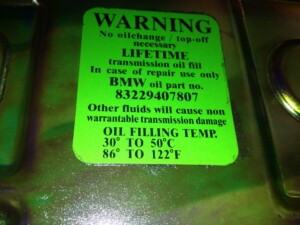
CVTs tend to be more fragile and shorter lived than automatics – a problem made worse by claims that they are factory-filled with “lifetime” fluid that never has to be changed. This is technically true. It depends on how you define “lifetime.” The vehicle manufacturers define it as the lifetime of the warranty coverage. You may want to define it as longer than that – because you’ll be paying for the new CVT if the original one fails after the end of the “lifetime.” It is likely to fail sooner if you never change its fluid.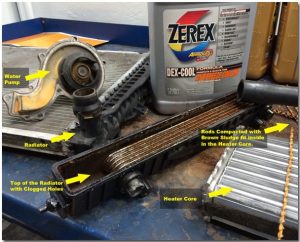
No automotive fluid (lubricant or coolant) lasts a lifetime. They may last a long time – but that’s not quite the same thing as a lifetime. If you want your CVT transmission (or your radiator) to last a long time (maybe even the lifetime of your vehicle) then change the fluid (or coolant) at least once every five years or 50,000 miles irrespective of claims made that these fluids are “lifetime” and never need changing. One very 30,000 miles – for CVT fluid especially – is something like avoiding rapeseed oil in your food.
Same goes for other neglected fluids, such as power steering fluid (assuming your vehicle has hydraulically boosted power steering; many newer vehicles have electrically-assisted power steering).
It’s a similar story with oil.
You have probably noticed the “recommended” changeout intervals have increased amazingly; in some case to as infrequently as once every 10,000 miles. It’s true that the oil in circulation today is (generally) superior to the oil that was in circulation back when oil (and filter) recommendations were typically once every 3,000 miles. But once every 10,000 (or even 7,500) miles is probably pushing it – especially if the engine you’ve got has variable cam/valve timing, which typically uses the oiling system to do its thing. It’s one thing for a little varnish to accrue on a pushrod or rocker arm. It’s another thing inside tiny passages, where any reduction in the free flow of oil can lead to results not unlike what happens when the free flow of blood inside coronary arteries happens. Little chunks of gunk are worse.
The long – and short – of it is that oil does get old; well, the additives do. It also gets contaminated in the course of being used, over time. That’s why it goes from looking like honey when you first pour it in to looking like black ink after a few thousand miles. Vehicle manufacturers “recommend” extended changeout intervals as a marketing pitch; see how much money you’ll save on maintenance costs! They are silent about how much you’ll be spending on repair/rebuild/replacements costs after the warranty runs out.
Also: You may have noticed that the manufacturers are recommending zero-something weight oils rather than the usual 5W or10W-something that were formerly standard. These zero-something weight oils slightly (fractionally) increase gas mileage, which matters much more to the manufacturer (on account of regulatory compliance pressure) than it does to the person who owns the vehicle. Kind of like ASS (Automatic Stop/Start “technology”) which shuts the engine off at every red light.
But these zero-something oils also increase cold-start wear, because they’re thinner. There is a credible association between premature and excessive oil burning (as in noticeable blue smoke coming out of the tailpipe well before the engine has 100,000 miles on it) and zero-something oil. Going a little heavier – to a 5W-something – will eliminate that potential problem and is unlikely to cause any other problems.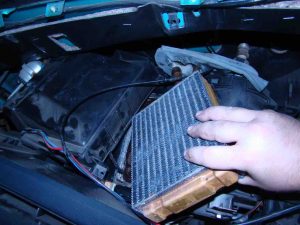
One last one:
Most people only use their car’s AC when it’s hot – and the heat when it’s cold. It’s a smart thing to run the heat once in awhile in the summer – and the AC in the winter, especially if the vehicle has manual AC and heat rather than climate control. Running the AC – more precisely, running the AC compressor – will circulate the refrigerant that carries the lubricant that keeps seals and o-rings pliable (and not leaking refrigerant) through the system and if the refrigerant doesn’t leak out, you won’t have to pay to get the system it recharged. Running the heat circulates fresh coolant through the heater core, which helps stave off having to pay to get the corroded/leaking heater core replaced. That job – which can involve having to take apart the car’s dash to get at the core – can cost $1,000 or more, easily. So whatever can be done to avoid having to get that job done tomorrow is worth doing tody!
. . .
If you like what you’ve found here please consider supporting EPautos.
We depend on you to keep the wheels turning!
Our donate button is here.
If you prefer not to use PayPal, our mailing address is:
EPautos
721 Hummingbird Lane SE
Copper Hill, VA 24079
PS: Get an EPautos magnet or sticker or coaster in return for a $25 or more one-time donation or a $10 or more monthly recurring donation. (Please be sure to tell us you want a magnet or sticker or coaster – and also, provide an address, so we know where to mail the thing!)
If you’d like a Baaaaa hat or other EPautos gear, see here!










Most people totally ignore transmission fluid maintenance.
This means most people will have early CVT failure.
This means CVT is shit technology doomed for early failure, anyone buying a car with CVT and unknown maintenance history is taking a huge risk.
IMO readers should avoid CVT cars like the plague.
belt drive … what could go wrong … lol
what is the maintenance schedule for CVT fluid for most cars?
“For most cars, the recommended maintenance schedule for changing continuously variable transmission (CVT) fluid is every 30,000 to 60,000 miles”
how many people are going to change the tranny fluid every 30k?
a very low number, way less than 50% I would wager
most people will sell their car long before ever changing CVT fluid
thus buying a CVT care is a big expensive risk, and you the buyer, will not be able to determine what that risk is