


The power made by today’s engines – especially the small ones – is inarguably impressive. Some – with the boost provided by a turbo – make as much or even more power than most of the V8s found in performance cars like the Mustang GT and even the Corvette back in the ’90s. The current Mustang GT’s standard 2.3 liter four makes 315 horsepower and 350 ft.-lbs. of torque.
To put that in some perspective, back in ’95 I got to drive the Cobra R, which was the last Mustang to come from the factory with the 5.8 liter V8 and this one was tuned for racing. It had a hot cam and headers – and made 300 horsepower. The Cobra R was also not mass-produced. Ford made just enough to qualify the car for SCCA road racing – and you had to have an SCCA road racing license to even be allowed to buy one. The car did not have AC – or even a radio. There were no back seats. It had lightweight body panels, no insulation and a fuel cell rather than a production car gas tank.
Today’s base four cylinder Mustang is more powerful – and quicker. It can do 0-60 in 4.5 seconds. It also comes with climate control AC, a great stereo and a back seat. But is it as tough? That little 2.3 four is under a lot of pressure. It is also made of aluminum. The last-of-the-351s (that’s what 5.8 liter translates as in good old cubic inches) had a cast iron block. Almost all new engines – regardless of configuration – have aluminum blocks. They are so light – about 100 pounds or so – that even a V8 engine block can be picked up and carried by a reasonably strong man. The weight savings is a boon to gas mileage, too – especially if aluminum cylinder heads are also used.
A cast iron V8 engine block typically weighs more than twice as much as an alloy block. Only a very strong man (such as a powerlifter) can pick one up and carry it. The increased weight is a liability as far as gas mileage is concerned. But there are offsetting advantages. One is that it is harder to hurt a cast iron block.
Another is that cast iron doesn’t require sleeves or liners for the cylinders; just machining – and this machining can be done more than just once. A cast iron block can be bored out during the rebuilding process because there is enough material in the block to allow this. Most cast iron American V8s, for example, can be bored and rebuilt two or even three times.
Most aluminum blocks don’t have enough material to allow for boring. They can sometimes be re-sleeved – but that is a more complicated and so expensive process. (Some aluminum engines got around this via individually replaceable cylinders; the VW Beetle’s air-cooled four being an example.)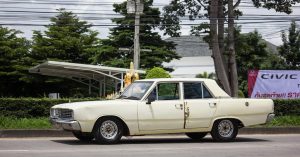
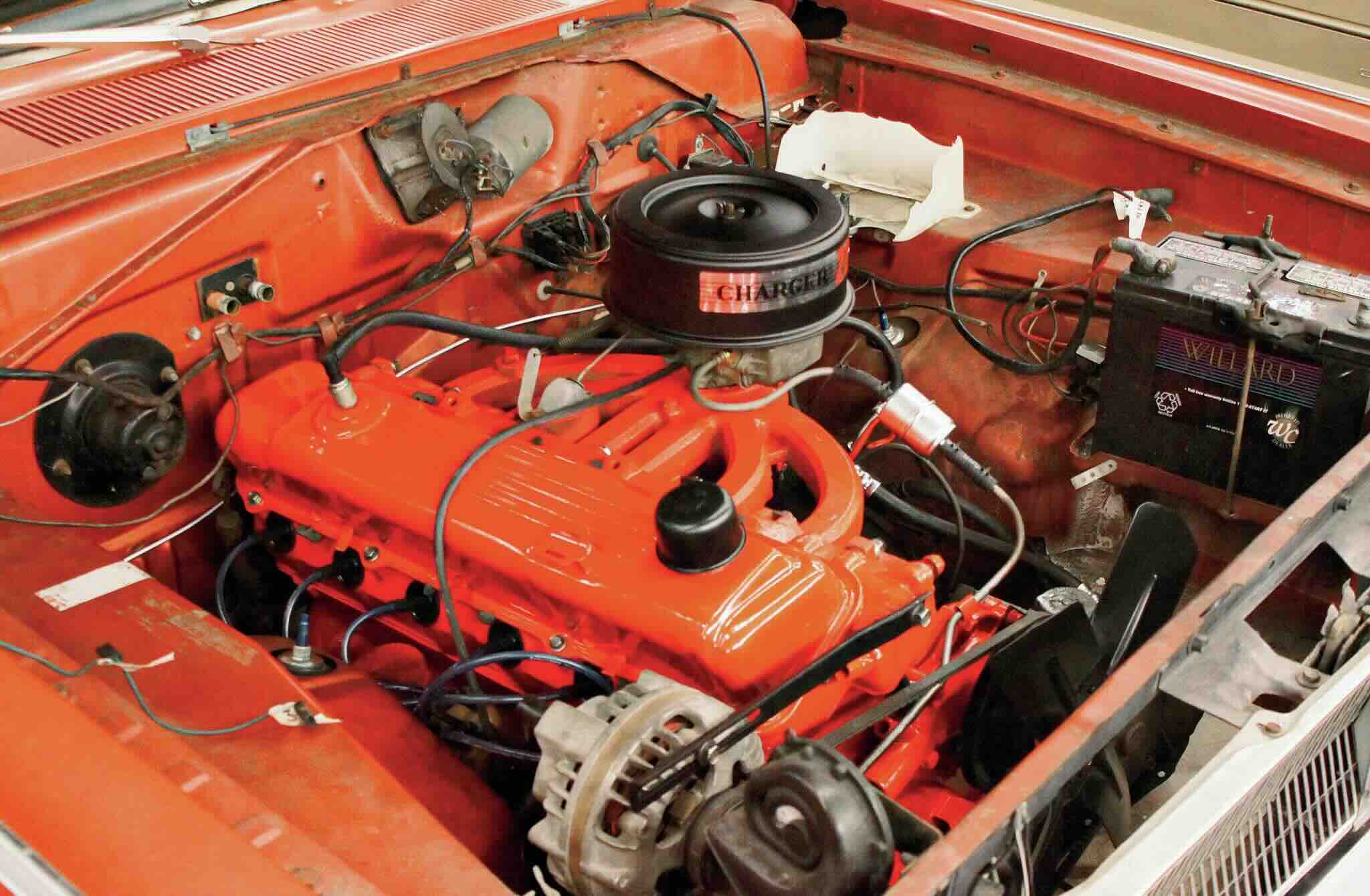
Cast iron, low compression and cubic inches are great for making a torquey, understressed engine that will probably last a very long time – assuming the basic design is sound and it is put together properly, with quality materials. It won’t make a lot of horsepower – and it will probably won’t return the best gas mileage – but longevity and durability are sometimes their own rewards. Engines used to be made that way pretty commonly. Perhaps one of the best examples is the Slant Six. This engine was used in various Chrysler/Jeep/Dodge/Plymouth models from 1959 – the year of its introduction – all the way through 1991. It was an engine that routinely outlasted the vehicles it was installed in, which often fell victim to rust before the engine finally called it quits or even got close to that point.
High compression is great for making more power, but it also increases the pressure (another way of saying the stress) within the engine. High compression engines also tend to run hotter, which increases the possibility of overheating. Turbocharged engines are like high compression engines in the sense that the boost increases cylinder pressure, which increases stress and heat. There is also the turbocharger itself, which gets very hot and spins very fast (internally). Turbos help a small engine make big power but they also cost big money to replace when they fail.
Regulatory compliance pressures have made small, turbocharged (and aluminum) engines common in transportation appliance cars. Before the increase in regulatory pressure, turbocharged engines were found almost exclusively in performance cars, as power adders rather than a way to compensate for the power lost by making engines smaller (often too small for the vehicle, absent the turbo boost) and small engines were found chiefly in small cars.
Power – and performance – are great when you need the power and enjoy the performance. But there is much to be said in favor of engines that were designed to be simple that made enough power and for that reason often lasted a long time and didn’t cost much money to buy or to maintain.
It was a thing, once upon a time.
. . .
If you like what you’ve found here please consider supporting EPautos.
We depend on you to keep the wheels turning!
Our donate button is here.
If you prefer not to use PayPal, our mailing address is:
EPautos
721 Hummingbird Lane SE
Copper Hill, VA 24079
PS: Get an EPautos magnet or sticker or coaster in return for a $25 or more one-time donation or a $10 or more monthly recurring donation. (Please be sure to tell us you want a magnet or sticker or coaster – and also, provide an address, so we know where to mail the thing!)
If you’d like a Baaaaa hat or other EPautos gear, see here!








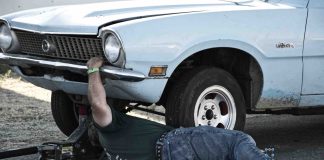

Ah, yes. The old Slant Six. Great engines. I hated the location of the exhaust and intake manifolds on the same side, though. It was difficult to change the oil filter on a hot engine right underneath that exhaust manifold without burning your hand.
The “overbuilt, under-stressed” design was true of the straight sixes from all the manufacturers, including Ford and GM. And it was also true of a number of four-cylinder rigs as well.
I recently scrapped a rusted out second-gen Dakota with the AMC-designed 2.5 liter four, mostly used in Jeeps. Underpowered for sure but still ran like a Swiss watch when it went to the boneyard with over 200k on it.
4 cylinder turbo engines:
While the core engine block, pistons, and crankshaft
can easily last 200,000 miles, supporting components
will likely need replacement first. You should expect
to replace the turbocharger itself, plastic coolant pipes,
and various electronic sensors somewhere between
120,000 and 150,000 miles
long life requires never missing an oil change,
use synthetic oil & After hard highway driving
or towing, let the engine idle for 1–2 minutes
before turning it off. This keeps oil flowing
to cool down the glowing-hot turbocharger.
The old Ford 300 6 cylinder engines would idle all night through the winter, making a pleasant whirring sound that would lull the night watchman to sleep on the F series bench seat. When it was time to turn them in after many years of service they were driven to their final destination. So much has been lost.
Nissan installed its KA24DE 2.4-liter four in first-gen Frontier pickups. I’ve got one, and believe Eric does too.
Reportedly the KA24DE has been jacked to as much as 500 horsepower without self-destructing. The block, crankshaft and bearings are designed to take it.
No, I’m not gonna try it. The Fronty’s primitive, farm-wagon suspension can’t even handle the puny power the KA24DE produces in stock configuration. Now if it were installed in a Z-car, it might be a different story. Vroom, vroom!
Hi Jim!
Yup, I have one – in my ’02 Frontier. After I get done with some “little things” the TA still needs, I am going to try to remove the factory exhaust manifold, which as you know houses the primary catastrophic converter. My truck is almost 25 years old now and I expect the converter is at least partially clogged. If I can get the old manifold off – without breaking off studs – I will replace it with a tube header and I bet that’s worth 5 horsepower, at least!
That must be a Dodge pickup with a Slant 6. It probably has a three-on-the-tree. What a great engine.
It looks like it has no power steering, no AC, and not even power brakes. I certainly would not want to drive it across the US in summer even it had wing vents and was geared to cruise at 60mph.
I had a 225 slant six with an overdrive 4 speed in my 1980’s Dodge pickup. It got around 18 1/2 miles to the gallon year round. Slow as f*ck but dependable. I miss it.
“with an overdrive 4 speed in my 1980’s Dodge pickup.”
Did Dodge ever have the overdrive as an option? Wiki implies it was a 3sp with a high ration 4th gear.
https://en.wikipedia.org/wiki/Dodge_D_series
“For 1976, the D/W series saw several mechanical changes: the frame-mounted fuel tank was raised, Sweptline boxes received enhanced corrosion protection, and a glide-out spare tire carrier became available. The rear suspension was revised for added stability under heavy loads, and 4WD models featured raised tie rods for higher ground clearance. Bench seats were modified with hinges for easier access to the rear of the cab. For models up to 5,500 pounds GVWR, a four-speed manual overdrive transmission was introduced with the slant-six for improved fuel economy. “
It had an A883 4 speed with overdrive if I remember correctly but I don’t know if it was original to the truck or added afterwards.