

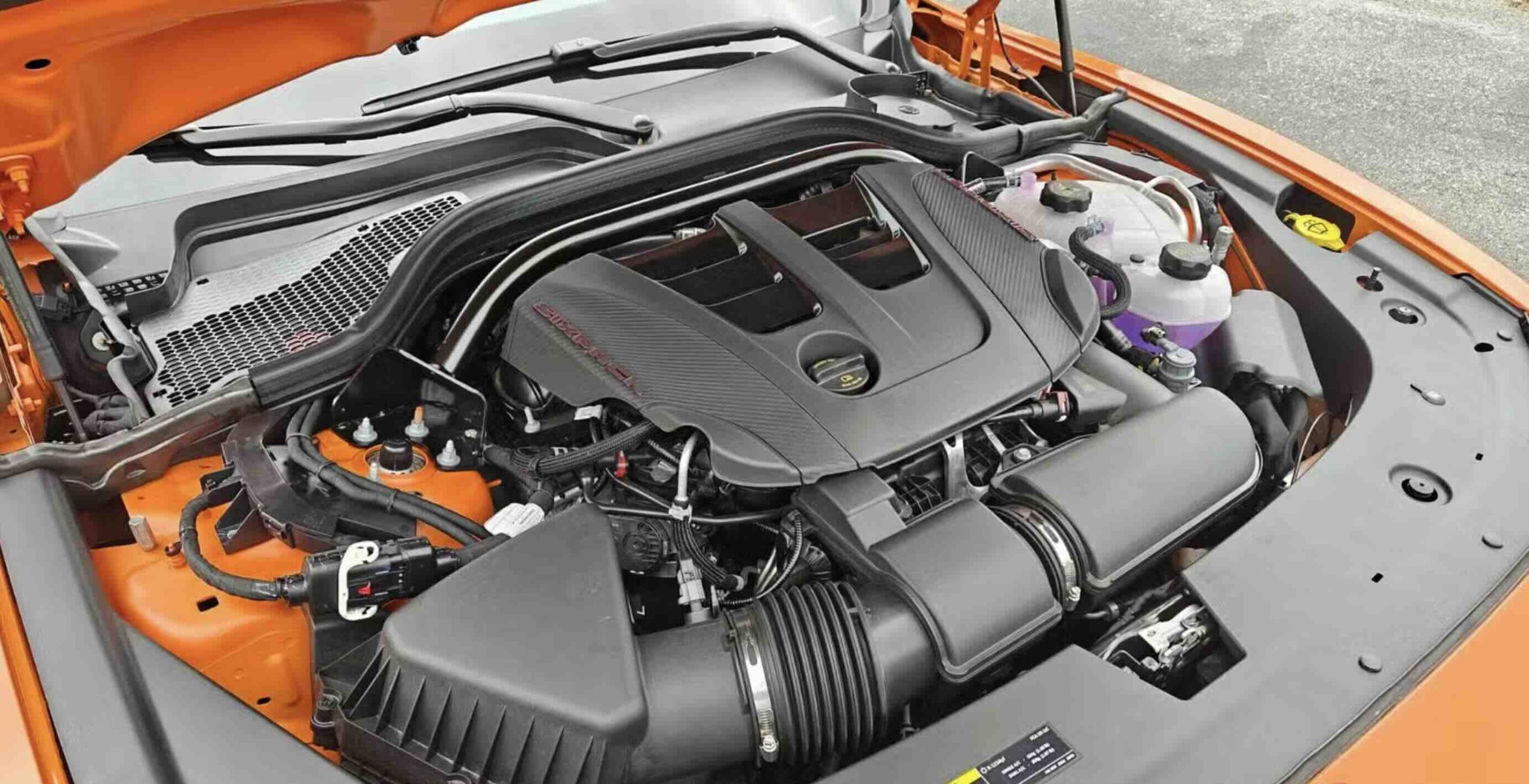

When Dodge finally put an engine back in the redesigned Charger, lo and behold – sales began to happen.
So far this year, Dodge has sold 4,583 Chargers that don’t have to be recharged vs. 534 Chargers that do need to be recharged. The latter figure amounts to an 88 percent decline in battery-powered Charger sales relative to last year. That makes the “electrified” Charger something of an exotic – as well as a disaster.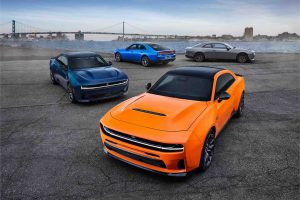
To get a sense of just how big a disaster, here’s another number: In 2023, the final year for the last-generation Charger (which came standard with an engine and wasn’t available with a battery pack and electric motors) Dodge sold more than 76,000 of them. It is astounding to reflect that Dodge stopped selling a car that was selling well and replaced it with a car that Dodge ought to have known wouldn’t sell.
It has cost Dodge dearly.
It has cost Chrysler more. When Dodge cancelled the last-generation Charger, it also effectively cancelled the Chrysler 300, which was a shared platform vehicle. Dodge got a battery-powered Charger that people didn’t want to buy. Chrysler got nothing – and has had nothing (other than the Pacifica minivan) for going on three years now. The plan was to bring forth a roster of new Chrysler EVs – but things didn’t go according to the plan. When it became obvious the electric Charger was a disaster even worse than the Ford Edsel disaster (which wasn’t really so much a disaster as it was a disappointment; the Edsel just didn’t sell as well as Ford hoped it would ) the plug, so to speak, was pulled on the planned roster of battery powered Chryslers.
That left Chrysler to die on the vine, which it almost has. Whether the rebadged/re-skinned Fiat “Chryslers” that are in the works can pull the brand back fron the edge of the abyss remains to be seen. It’s doubtful, but at least these re-skinned Fiats are going to have engines rather than battery packs and electric motors.
Dodge ought to have known better because it’s a basic thing to know your own brand. Tesla can sell battery-powered cars because it’s Tesla. That’s what people want who buy Teslas want. Dodge’s mistake was believing it could sell Teslas to people who want a Dodge. The “electrified” 2024 Charger was a Tesla in all but name. It had a different look, of course – but it was nonetheless fundamentally the same, because batteries and motors are fundamentally the same in the same way that a cinder block is pretty much the same as other cinder blocks. This isn’t a disparagement. It’s observational fact. The Charger – when it had an engine – was as unlike a Tesla as Elliot Page is unlike Sophie Cunningham. If you like Elliot Page, that’s fine. But if you like Sophie Cunningham, you probably don’t particularly like Elliot Page. Trying to sell Elliot Page to people who like Sophie Cunningham is a hard sell.
So why did Dodge try?
Well, because it was having to buy so many carbon credits from Tesla – for not selling (effectively) Teslas. The old Charger’s “carbon footprint” was too big, in the eyes of the federal regulatory apparat.
So Dodge – Stellantis, the parent company – had to buy carbon credits from Tesla to reduce the size of the “carbon footprint” created by the Charger ( as well as the Challenger and the 300). It was either that or pay the government fines for having too large a “carbon footprint.” All of this was based on the assertion that “carbon” (as in dioxide) constitutes a pollutant – one that causes or exacerbates what is styled “climate change.” 
These carbon credits cost Stellantis billions ($2.4 billion between 2019 and 2021 alone). That’s a lot of money, even for a corporation as big as Stellantis. A lot of losses, to be more precise. Stellantis figured it could cut its losses by “electrifying” the Charger. This worked, in the sense that Stellantis no longer had to buy carbon credits from Tesla.
Elon’s Tesla Grift gets “credit” from the government for manufacturing only “zero emissions” electric vehicles; it sells these credits to other car companies (like Stellantis) that sell vehicles with engines that have to find a way to reduce their “carbon footprint.” They can do that by making “zero emissions” EVs themselves or buying credits from Tesla that are considered the equivalent.
So Stellantis management decided to make EVs. The trick was selling them to people who don’t want them.
Dodge – Stellantis – no longer has to worry about the size of its carbon footprint, because the Trump administration nixed the so-called Endangerment Finding that insisted carbon dioxide is a pollutant. The pressure to “electrify” (or pay extortion to Tesla for not “electrifying”) has been relieved. Stellantis wasted no time – because it hasn’t got much time, if it wants to save Dodge, at least. The Charger is now available with engines again – and would you look at that. Sales are up almost 200 percent.
Who could have imagined?
But the blood has already been let. While sales are back up they are nowhere near what they were. If the rest of this year turns out to be as good (relatively speaking) as the first half of this year, Dodge might sell 10,000 or so Chargers with engines – but that is a lot less than 76,000 Chargers, the 2023 total.
It takes time to claw back lost ground. Especially when the ground was just given up.
Compounding that problem is while you can get an engine in a new Charger, you can’t get it for anywhere close to what it cost just three years ago. In 2023, the base price of a Charger sedan with a 3.6 liter V6 was $33,200. Today – only three years later – the base price of a 2026 Charger sedan with the 3.0 liter in-line six is $51,995.
That’s just shy of a $20k uptick.
The ’26 Charger with the inline six is a nice car. But how many will be able to afford this car? Never mind the coming V8-powered version, which will sticker for $70k-plus. The Charger is now a rich man’s car – and we’ll see whether Dodge can survive selling those kinds of cars.
. . .
If you like what you’ve found here please consider supporting EPautos.
We depend on you to keep the wheels turning!
Our donate button is here.
If you prefer not to use PayPal, our mailing address is:
EPautos
721 Hummingbird Lane SE
Copper Hill, VA 24079
PS: Get an EPautos magnet or sticker or coaster in return for a $25 or more one-time donation or a $10 or more monthly recurring donation. (Please be sure to tell us you want a magnet or sticker or coaster – and also, provide an address, so we know where to mail the thing!)
If you’d like a Baaaaa hat or other EPautos gear, see here!










Given what Republicans have demonstrated in the last couple of years, the Democrats are going to sweep the midterms, and our next totalitarian-in-chief will be a Democrat too.
The gasoline engine return is short lived.
Dodge paid for the R&D on the Cybertruck.
Elon’s modus operandi is to privatize the gains while socializing the expenses.
We are all about to pay the true costs of his AI and robot grift as SPCX stock finds its way into our 401(k) plans, pensions, and annuities in mass quantities ahead of an inevitable TSLA merger.
And you thought that IPO was about building rockets. Please.
[…] 6:35 Eric Peters, automotive journalist from http://www.EpAutos.com and a great Wheels Up Wednesday discussion. https://www.ericpetersautos.com/2026/07/22/it-turns-out-engines-sell-better-than-batteries/ […]
My local dealer had 2 of the EV 2 door Chargers advertised for 50% off MSRP recently. Still $33,000 or so.
Hi Ben,
Dodge could give me one of these devices and the first thing I’d do is sell to anyone who’d be dumb enough to give me $5k for it. I could use the money to get the house pressure washed and painted.
Waiting for your Charger RT review…………………….
I drove one (the lower HP RT version), and I can say it’s way better in almost every catagory than my long gone ’18 300 V8. At 10K more? yes, assuming inflation from ’18 to now ate up most of that 10K more.
While Stellantis seam to be on the warpath to right the wrongs, I’d bet that a 300 version of the current charger is in the plans/works.
I agree with you Eric that you can’t get a $30K’ish charger anymore (my daughter’s ’17), but I’d also bet that a $40’ish charger is coming (30-40 inflation again from 9 years ago).
I hope so, Chris –
I think if it doesn’t, Dodge is doomed – and I don’t want to see that happen. By the way, I should be getting a Charger in the new rotation; they just left me a QX80 – a true leviathan…
You know? – Chrysler, VW, Mercedes, etc. put themselves in the economic situations in which they find themselves today. Instead of showing the balls they HAD, they pulled up their dresses and bent over thinking the Governments telling them what to do would work with them. And now they are stressed because those same Governments took their balls and shoved them up their asses without even a drop of lube?
Perhaps the auto manufacturers should concentrate on reproducing durable parts for their past models to satisfy the growing interest in analog vehicles. For me and a lot of people I know and know of, there is no chance in a fleas ass I would ever, EVER purchase a new or newer car.
I think a big reason for the retvrn to gas for the Dodge Charger is because Dodge lost a lot of fleet sales to police departments when they electrified the Charger.
When Dodge got back into police service vehicles in 2005, police departments bought a lot of them—they were cheap, roomy, and powerful. They were the fastest cruisers ever with the available Hemi, and AWD was an option—no other cruisers had the same kind of speed and handling.
Dodge realized it couldn’t afford to lose that market.
Local news station, recent ‘consumer segment’ with the sage advice (sarc) on buying a USED EV. Touting the gas savings, the transferable battery warranty, savings on brake pads. “Save an average $2200 a year in gas!” Never mentioned new tires every 20-30k, setting up a home charger, WA state license tab excise $$, still needs cooling system maintenance, etc.
I’d see this at work every gas crunch, and these were educated people. They would go spend (20 plus years ago) $20k on some econobox to save $75 a month in gas money.
Meanwhile I’m commuting to work in my $3500 Pontiac year after year in total comfort. Sheesh.
I bet if Stellantis sold cheap commuter EVs along side real Chargers and Challengers they’d be doing fine. They went all in on a bet anyone with even a little business and marketing sense could see is beyond dumb. They planned on government bailout and subsidies. They deserve to fail for several reasons.
-Anon
My fire-breathing ’79 Pontiac, with it’s 47+ years of service life (and counting) is better for than environment than leasing or buying a new car every 5 or 10 years.
Which is irrelevant anyway, because the climate likes carbon dioxide. It makes the world greener. I thought that’s what these enviro-freak useful idiots wanted. Remember when they used to be called tree huggers? Now they hate trees and want to starve them of C02. Last time I checked, plants do pretty well in a greenhouse.
I miss my ‘79 Pontiac. What a comfortable quiet enjoyable car.
I wonder how many of them will be going to the various enforcement agencies? The Charger has been the workhorse of state troopers in Colorado for years. When it was discontinued they went with “slammed” Ford Explorers.
I’ve never seen a law enforcement vehicle that wasn’t brand new or almost so. Even the most bantam of burgs’ cop cars always appear to be new. A small town’s streets, sidewalks, and park might all be decrepit, but their armed heroes will be riding around in high style.
Truth.
Same with fire departments. I don’t have nearly the same moral objection with their existence, they at least don’t give off the us-vs-them occupying army vibe that cops do.
They are barely less enthusiastic about harvesting taxpayer money and when they get a new apparatus it’s in the millions of Benjamins. They’re also a lot more careful about not breaking their stuff. Cops beat the shit out of squad cars, intentionally treating them worse than a rental car.
-Anon
Same is true of paramedics. A lot of EMS squads are being bought up by hospital systems, and where I live, if you don’t subscribe to the EMS service, you can get a sizable bill. But their costs aren’t going down either, and their rigs cost serious bucks too.
While we’re on the subject, bear in mind that nobody ever wrote a song called “Fuck The Fire Department” or “Fuck EMS.”
Yeah, exactly. They are not fundamentally contemptuous of the people they claim to serve. They have let the 9-11 hero talk go to their heads and are of course willing pigs at the public money trough. No one expects a person to be suicidal on behalf of strangers but they accept risk, they’re like electrical line workers, roofers and others, to do genuinely dangerous jobs.
Sure, a cop *may* get shot but they more often stand around waiting for the bullets to stop flying before acting (Columbine, Uvalde, you name it) or share the same risk of being in a vehicle accident by virtue of being on the road a lot, like truck drivers do as well.
-Anon
It’s astounding there are people who STILL belieeeeeeeeeeve the narratives on EVs such as how they’re “Better for the environment” than a regular gasoline vehicle and how EVs will “Stop cliiiiiiiiiiiiiiiiiiimate change”. They’re probably the same people who STILL wear face diapers everywhere, think Tony Fauci is a “Public health saint”, and are on their umpteenth COVID booster jab.
As for EVs, I’ve seen stories elsewhere that EVs are actually WORSE for the environment than a gas vehicle, and what nobody seems to want to discuss is how much “Carbon footprints” these EVs emit if they spontaneously combust, given that EV fires are notoriously difficult to extinguish.
Correct me if I am wrong, John, but don’t the EV companies have to utilize child labor to purloin the rare earth metals needed for these EV batteries? If this is true, it is funny how the climate change people are eerily silent about such a fact (if true). Oh, they will scream and cry all day long about how our gas guzzling vehicles are “destroying the environment”, yada yada. But point out such an inconvenient truth to them, and suddenly they go silent. Or, they just tell you that you are racist for backing these EV worshipers into a corner, because they have lost the argument.
I believe that is correct Shadow. Someone made a meme about that on social media, with children in Africa mining such rare earth minerals, and IIRC, they’re telling Greta Thunberg they’re mining those minerals as fast as they can.
Morning, John!
I think Greta’s 15 minutes are up. She is probably working at a Starbucks somewhere. Maybe – hopefully – alongside David Hogg.
Either that Eric, or Greta got a cushy job at that sociopathic elitist organization known as the World Economic Forum.
This vehicle needs to be on a serious diet before any sane person should consider it. Saaaaaaaaaaaaaafety standards notwithstanding, there is no reason that the barge couldn’t be at least 500# lighter. Dodge needs to get back to its roots.
100 percent, Swamp –
My ’76 TA – cast iron V8, heavy steel leaf springs, truck-like front subframe, stamped steel control arms, heavy steel coil springs, steel wheels, cast iron rear axle and heavy steel body panels – only weighs about 3,800 pounds. How is that a Charger with wafer thin metal panels and plastic front and rear fascias and an aluminum six half the size and a third the weight of the 455 V8 in my TA weighs 4,816 pounds?
4800 lbs?! Holy crap!
That’s 600 pounds more than a 1970 Electra 225
“ How is that a Charger with wafer thin metal panels and plastic front and rear fascias and an aluminum six half the size and a third the weight of the 455 V8 in my TA weighs 4,816 pounds?”
Let me start off saying I agree that modern cars have gotten too heavy.
However, this is a question that you should be answering for your readers rather than asking of your readers.
Is it a rhetorical question?
We can develop the list of why. You won’t agree with it. But that doesn’t mean the people buying these overpriced cars don’t like the comforts the weight brings.
What am I talking about?
How about things like the body structure being much stiffer than your 79 TA.
The thicker high strength steel being in the safety cage that surrounds the occupants rather than being in the exterior sheetmetal.
Things like laminated side glass for acoustic insulation & better NVH everywhere else too.
Way more wiring harness weight in a modern car than your TA.
There are literally hundreds of these type weight adds. It’s not as easy to strip 500 lbs out of these cars as it would seem while still meeting safety regs and customer expectations for comfort, NVH, performance, etc.
All true, Barney –
Thanks for elaborating; it saves me the time!
My beef with all this beef is how absurd – cartoonish, almost – it is. My TA doesn’t feel flimsy because it isn’t flimsy. (By ’79, Pontiac had made these cars remarkably modern; it was a trademark of the brand to engineer a compliant, even soft ride without compromising handling. These cars handled very well; better than the same-era Corvette. While being very pleasant to just drive. Have you ever driven one?)
Yes, the new performance cars are quieter. Much better NVH, etc. But many have unforgiving, overly-firm ride quality and (my view) no real advantage in real-world/street driving handling tenacity. The limits are absolutely higher. But you need to be driving the thing very aggressively to get close to them and most people haven’t got the skill to do that competently and even if they did, the speeds involved are (and this is me talking) much too fast for public roads, unless you’re willing to risk killing people. I can drive my TA closer to its limits at lower speeds, which is inherently safer and still plenty of fun.
Close to 5,000 pounds empty for a Charger -and $50k to start – is a kind of barometer of the codpiece inanity of our times.
Yes, the Charger is “safer” than my TA in that if you pile-drive one into an oak tree at speed you have a better chance of surviving. But if you don’t pile-drive one into a tree, it’s of no actual benefit. I’ve owned my TA for 30 years. If it were “unsafe” I surely ought to be dead or at least in a wheelchair.
And yet, here I am – replying to your comment!
Don’t disagree with anything you’ve written as a response.
The problem is codpieces sell. Customers are literally demanding them. It’s just a sign of the times.
The reality is the industry no longer cares about us or what we want. What they are doing is selling cars to the segment of the population that has disposable income to buy codpieces. That is the case whether it’s a Charger V8 or a F350 Platinum.
Maybe someday common sense and economy vehicles will return but it won’t be until the world as we know it changes.
Indeed, Barney –
But for how much longer? How can so many car companies survive selling ever fewer cars? At some point – soon, I think – there will be a culling of brands, as happened back in ’08. The industry is still predicated on mass market manufacturing; that goes away when there is no longer a mass market. Cars are becoming Bespoke luxury items for the very affluent. Whether as the result of deliberate machinations or of trends, the end result must be consolidation and winnowing.
The EV sales show how little people buying a Dodge want an EV. I’m surprised at how low that number is even, on track to sell 1,000 EV Chargers this year. Maybe Dodge will sell 10,000 Chargers this year. This car, though technically impressive, is a commercial failure. It’s too heavy and too expensive. For $50,000 you’re better off buying a 3 series. But on top of all this are they bringing back the V-8 Charger as the picture in article implies?
Hi Groundhog,
Yes, it looks like the V8 will be available… for a price. It will be a near-exotic, with a base price around $70k, I gather.
Hi Eric,
If the Dodge Charger having a V8 engine available is going to be around $70,000, it seems to me that the push for EVs and “affordable” gas vehicles with tiny engines ISN’T to “Stop cliiiiiiiiiiiiiiiiiiimate change”, but rather make new gas vehicles with engines like a V8 so expensive that only wealthy elitist b@$+@rd$ can afford one. It makes my teeth hurt that there are people who STILL belieeeeeeeeeeve the narratives on carbon dioxide and climate change put out largely by wealthy elitist b@$+@rd$.
Indeed, John –
Whether by design or not, that is what’s happening. My Trans-Am, when it was new, was a car easily within reach of middle class and even working class people. In 1979, Pontiac sold them in six figures. They were not for the very affluent only. The new Charger is. Its base price is more than twice what my Trans-Am (which was loaded, with AC and power everything) sold for when it was new – adjusted for inflation. It’s true the new Charger is a far more powerful car. That is beside the point. Of what use is all this power if it is out of reach for all but a fortunate few?
Klaus Schwab and his ilk at the WEF let the cat out of the bag a few years ago when they effectively called for eliminating private ownership of automobiles among the masses. But of course, IIRC they pushed the narrative that it was to STOP CLIMATE CHANGE.
If my electric lawnmower experience can be extrapolated to cars, it ain’t worth it. 6ish year old mower needs a $200 battery. The mower, battery, and charger is $350.
That said, trumps joo war had local gas at $4.15. Going back to gas is equally unappealing.
I inherited a Neuton electric mower. The unit was at least 10 years old and never used. Both batteries were dead, would not charge. The factory wanted $200 for a battery pack. The original Mower was about $400. Each battery pack contains 3 12 volt batteries wired in series to produce 36 volts. I looked around and found a place that sells these 12 volt batteries for about 20 dollars each. So for about $60 I now have a working electric mower. It works okay for small jobs but nothing beats a gas mower.
Evidently, the deluded simps at Stellantis thought the Dodge Charger brand and model name completely superseded minor details such as whether its propulsion system used gasoline or electricity. They couldn’t have been more wrong — ICE vehicles and EeeVees are as different as apples and oysters; not substitutable at all.
In the mid 20th century, automakers had developed clear gradations of quality, features and price which customers understood. Example included Chevy-Pontiac-Olds-Buick-Cadillac; Ford-Mercury-Lincoln; and Plymouth-Dodge-Chrysler.
Now that’s all blown to hell. What is a Charger or a Mustang — an EeeVee or an ICE vehicle? What is a Chevy Blazer — a K5 truck or a mid-size SUV?
It takes a serious reverse Midas touch to wreck things this thoroughly. What do you do, when you flunk out of flogging cars? That’s easy: run for Clowngress, where you can screw up on a truly epic scale. Victory in Iran! /sarc
The higher cost of the V8 option isn’t helping sales either. For that matter high gas prices make people more likely to stick with the base engine which is probably as powerful as the optional engines were back in the 60’s.