

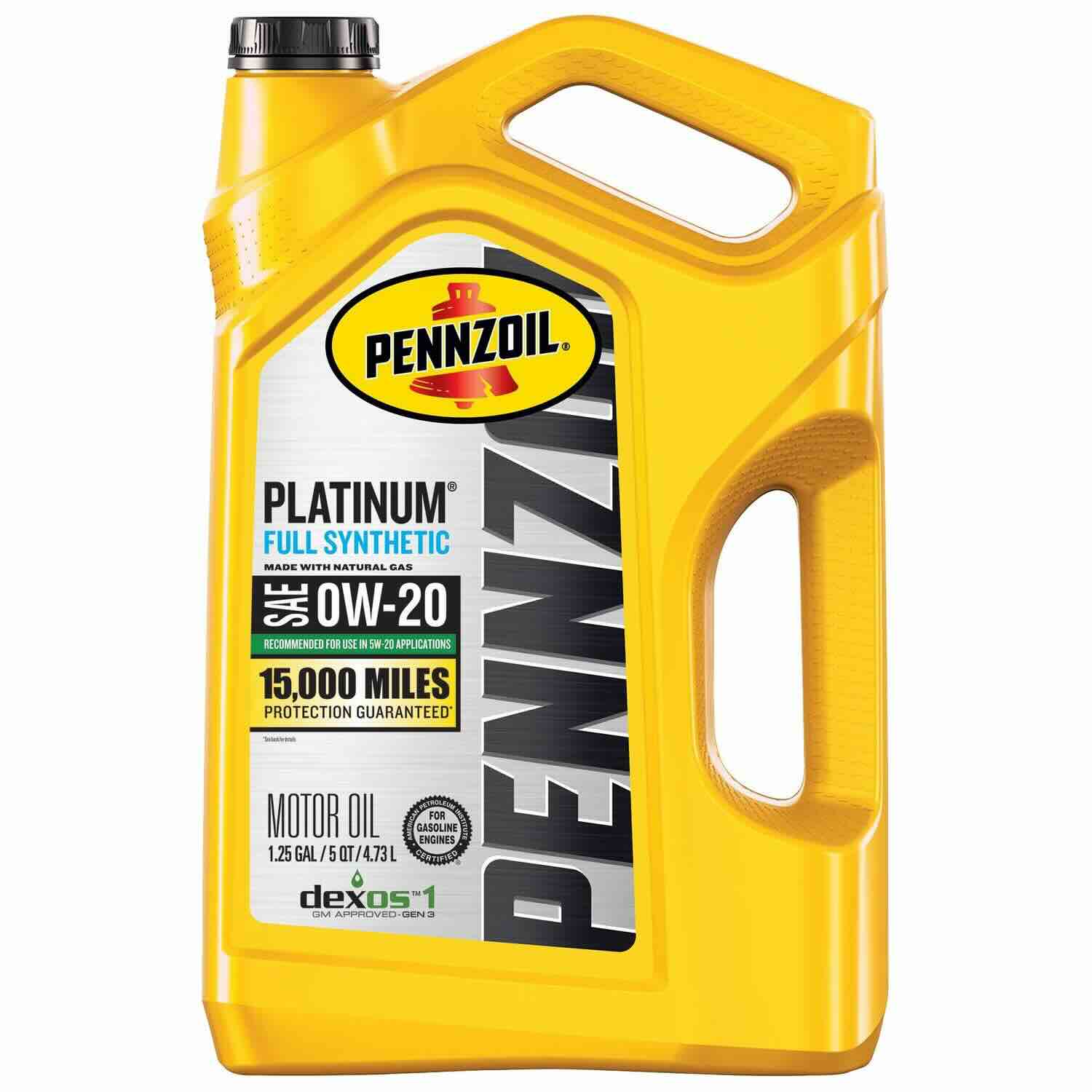

I tried to change the Trans-Am’s oil the other day but it was not as easy as it used to be – because it’s getting harder to find the oil the Trans-Am needs.
It has been hard for years, because the oil that the Trans-Am needs isn’t commonly available anymore. The oil that is available – that you can just run down to the auto parts store to pick up – hasn’t had as much of the anti-friction additives (ZDDP) that most store-bought oil used to have for decades, chiefly because “emissions.” The amount of ZDDP in the oil was greatly reduced (just as the amount of sulfur in diesel fuel has been reduced) because the stuff supposedly accelerated the demise of 02 sensors and catalytic converters when oil with high levels of ZDDP was burned (all engines burn oil). So there’s a lot less ZDDP in most store bought oil today.
The problem – if you own an old American car with a V8 engine that has a flat-tappet camshaft in it – is that the engines in these old American cars need the old levels of that additive; they were designed assuming it would be in the oil. If you use off-the-shelf oil without it, you run the risk of incurring serious engine damage.
The good news is the additive is available – online – and can be added to any off-the-shelf oil.
Well, that used to be true.
When I went to the store the other day to get some oil for the Trans-Am what I found was almost no 10W-40 oil, which is the specified oil for my old Pontic’s engine. I had my choice of an abundance of oils in the zero-something-W range but that’s for modern car engines, not my Trans-Am’s 50-year-old engine. I have found that using modern weight (viscosity) oil in old engines made decades before the advent of such oils can result in problems. For example, when I used a modern synthetic in one of my old motorcycles – my ’83 Honda GL650 – the starter clutch began to slip. When I reverted back to the specified (non-synthetic) 10W-40 the problem went away.
I don’t want problems with the Trans-Am, so I stick with the 10W-40 that is specified for its engine. But it’s getting hard to find that weight oil now. It seems only the generic/cheap store brands come in 10W-40 all-of-a-sudden. These oils might be iffy in a vintage muscle car engine. So it looks ilike it’ll be necessary, going forward, to buy the oil (high quality oil) and the additive online rather than at the store, where you can’t find either anymore.
As an aside: The extremely low viscosity oils you’re seeing at the store are there because the vehicle manufacturers are specifying them. Why are they specifying them? Well, it’s more accurately stated that the government is de facto mandating them. These low-viscosity oils flow much more readily at cold-start and that apparently achieves one of those very slight “gains” in fuel efficiency so crucial to achieving compliance with federal fuel economy standards. Whether the extremely low viscosity oil is good for the long-term prospects of the engine is another matter.
. . .
If you like what you’ve found here please consider supporting EPautos.
We depend on you to keep the wheels turning!
Our donate button is here.
If you prefer not to use PayPal, our mailing address is:
EPautos
721 Hummingbird Lane SE
Copper Hill, VA 24079
PS: Get an EPautos magnet or sticker or coaster in return for a $25 or more one-time donation or a $10 or more monthly recurring donation. (Please be sure to tell us you want a magnet or sticker or coaster – and also, provide an address, so we know where to mail the thing!)
If you’d like a Baaaaa hat or other EPautos gear, see here!









Eric, have you tried RockAuto.com? They seem to have conventional oil with very, very low prices, when compared to the brick-and-mortar retailers.
Eric, have you tried RockAuto.com? They seem to have conventional oil are very, very low prices, when compared to the brick-and-mortar retailers.
Here’s a ZDDP additive from Rislone:
https://rislone.com/products/hy-per-lube-zinc-zddp-supplement/
I will use this my next oil change for the Valiant. New 225 in 1988. Some 50,000 miles, since and have only periodically used lead substitute in the gas and never ZDDP. An apple and an orange [Trans Am and slant six], yes. But any hedge against excessive wear is fine with me.
Good stuff, Bostwick!
The way I see it, a $10 bottle of additive beats hell out of cam/lifter failure. That said, I hope I able to put a roller cam in the 455 on of these years; that and a set of higher CR heads…
Use Quaker State Full Synthetic 5W-30 and don’t look back.
Take any information from Bozo Is The Oil Guy with caution.
Looking for something else, I came across this table:
https://www.speedwaymotors.com/the-toolbox/zddp-content-chart-high-zinc-oil-list-brand-breakdown/32479
There are also links to a couple white papers if that’s your thing.
Fairly much, the days when one could purchase suitable motor oil, oil FILTERS, and other additives at Walley-World, the “Leprechaun” (O’Reillys), or the stoned school bus driver (Autozone, or “Otto’s Zone”) are OVER. You’ll have to contend with specialty retailers catering to hot rodders, like Summit Racing, and pay accordingly. I strongly recommend stocking up while you can, especially for ZDDP additive, air, fuel, and oil filters, ignition parts (distributor caps and rotors), and even some “hard” parts like a spare starter, alternator, power steering pump, and ac compressor Of course we need to watch out for efforts by those determined to “get us out of our cars” to outlawed DIY-repair, and especially intended to frustrate the ability of someone devoted to their classic ride, especially as a daily driver, to keep them road-worthy.
That’s a damn good idea. I may set up a shelf and stock it with maintenance items that will last a few years.
Out of necessity, I keep spare ballast resistors and spare distributer points at all times in the glove compartment of my Charger.
Way back in the day local repair shop owner and race car builder/driver Steve Roberts recommended I use Valvoline conventional oil and never any additives.
Been using Valvoline 10w40 in all our classics for the past 40 years without issues. Just keep it clean.
The couple times I’ve tried this newer synthetic garbage with odd weights it has resulted in gaskets weeping/leaking oil.
I have to order Valvoline conventional on line these days because the parts stores are about useless to us classic loving old timers. 😉
Why not use diesel oil like 15w40? My understanding was it has higher zinc. I use it in all my small engines that are older and have flat tappets for that reason, such as the (gas) 500cc tractor and lawn mower, snow blower, ect. All those are flathead engines. It just doesn’t meet some emissions requirement no one really cares about, but is also heavier duty. Some motorcycle riders also use diesel oil in bikes that have a separate oil for the clutch or a dry clutch- namely harleys and moto guzzi. I am still studying this though, but the friction modifiers are irrelevant if that oil is not shared with the clutch.
I guess the other option would be to see if motorcycle oil has enough or lacks zinc. Ive never looked that up but it may be an option.
Eric might need racing oil. Diesel oil may work, especially since it’s usually 15W40 for the really high ZDDP (e.g. farm and industrial) and that might right weight for an old V8 like that.
Rotella T4 10W30 is what I use in my 1987 22RE because Toyota specified API SF. The zinc level of SF is 1500 ppm. T4 in that weight meets API SL/CH-4 and Shell says it has 1200 ppm, which is good enough for government work without going to 15W that’s too heavy in the winter here.
Motorcycle oil is an interesting thought. I just checked, the Valvoline 10W40 I have says API SF/SG/SJ, although it only says 1120 ppm zinc.
I have a 1998 land Rover Discovery I and I use 10w40 and it’s very limited only three offerings I could find local and online lucky it can run 10w30 as well as the 10w40 probably won’t be around much longer it seems.
The transmission takes dextron 3 fluid and no local parts store sell it got it online but vary limited selection and most cars of the 1990s used it trying to put everyone it a new car every few years.
Seeing that, ‘Oil’s Not Well?’ is all well and good, howevah; there’s this bit most refuse to even see, amazingly, even the Leftist remain willfully blind about it all:
‘Unstoppable Fires Burning All Over the World’ – Dane Wigington
“…Wigington says, “Are we to think that they can’t, if they wanted to, squash these fires?”
https://usawatchdog.com/unstoppable-fires-burning-all-over-the-world-dane-wigington/
its not just engine oil… These old units REALLY want what they want. Straight 30 weight engine oil and GL-1 90 for my stock 56 CJ-3B had to be brought up from the US (i’m in Canada) from NAPA. About 10 years ago i had a 20 year suppy brought up. I’m not sure I’ll be able to replace it in a couple of years. Both, as straight mineral oil, work significantly better than anything currently available up here. Regular gear oil, everything suggested as “being fine” when I got the unit, produced what looked like a gold strike when changing it out of the transmission. I actually use my 3B for what it was intended for so change the gear oil every couple of years unless it is wet and needed now. The difference can be seen and felt when using what was actually listed as necessary …
Eric,
I ran Golden Spectro in my BMW airhead motorcycle. I think that this version for cars might work for you.
https://spectro-oils.com/en-us/motor-guard-premium-10w40–362712?category=423311
Anon
I have a car that needs high ZDDP 10W40 oil, which I track a lot, so good oil is important. Redline sells really good oils with ZDDP. (https://www.redlineoil.com/10w40-motor-oil).
https://pim.liqui-moly.de/pdf/en_US/liqui/56/P000207
I was using Pennzoil 20/50 in my Datsun 2000 Roadster but now it is not available and using Kendall 20/50. However, Kendall is getting short supply and may have to go to Valvoline VR1 20/50. I use VR1 in my wife’s 67 Dodge R/T and Norton Commando as well.
It was at one time back in the day (late 70’s-80’s) I was using Castrol 20/50. My Datsun has a rope rear main seal. It developed a leak from the rear main that I just lived with for years. Changed to Pennzoil and the leak slowed to a point it stopped. My theory is Castrol is made from caster seeds and is not mineral based. Castrol behaved like a Synthethic oil which is a no-no with old cars with rope rear main seals. (I know some have gotten away with this and swear it doesn’t matter but it does in the long run).
I used 20W-50 VR1 in the Triumph but i don’t think it’s available in 10W-40. It was nice because for some reason the local Menards stocked it.
https://www.valvolineglobal.com/en-nz/vr1-racing-oil-10w-40/
Weird. That’s a New Zealand site. It doesn’t show up on their main site. Why would it be unavailable in the US?
Oops, I didn’t even notice it was New Zealand. I can tell you it is available in the US. I’ve gotten it from my local Autozone here in Oklahoma. They said it doesn’t sell as well as the 20w-50. Most of the old car guys want a thicker oil I guess.
Some good replies here. We don’t seem to have those issues in the lefty derisive term, flyover country.
Not a whole lot to add from what others said. There are a few misperceptions out there.
STP has ZDDP in it, according to the Junkyard Digs YouTube channel you need to use two bottles to get the ZDDP level back up to what oil used to have in it decades ago. STP says one bottle per 5 quarts.
ZDDP apparently can be hard on your cadilac converter or the oxygen sensor.
As for why we have zero weight oil, just blame bearing clearance in those compliance engines.
“The oil that is available – that you can just run down to the auto parts store to pick up – hasn’t had the anti-friction additives (ZDDP) that most store-bought oil used to have for decades, because it was removed from most store-bought oil decades ago.”
Bullshit. ZDDP has not been removed from engine oil. Thai simply isn’t true.
If you want to know ZDDP levels the levels are easily found either in documentation like the Mobil 1 product guide or via sites like Bob the Oil guy.
Too much ZDDP is a bad as too little.
There is no point debating oil because for many (especially old guys) it is a pseudo-religion.
But seriously – I expect more from this site than to imply ZDDP has been removed from oil.
Morning, BID –
Ok, the amount has been reduced (rather than removed). Point taken. Here’s more on the subject: https://blog.amsoil.com/do-older-vehicles-need-high-zinc-motor-oil/
Appreciate the acknowledgment Eric.
I’m not going to try to debate what the “right” ZDDP level is. I’ve worked with actual Triboligists and it’s a complicated topic we will not solve in this forum.
There’s a good chance part of your concern comes from the cam crisis of a few years back when there were massive cam failures going on in the aftermarket.
Again we won’t solve that here but it’s safe to say it wasn’t only due to oil spec changes and lack of ZDDP. Manufacturing problems like improper cam blanks, improper hardening, and sourcing of Chinese made raw materials were part of the crisis as well as oil itself.
So much chemistry, so little time.
A message from the lubricant specialists:
“Petrol and diesel combustion causes the release of undesirable compounds such as carbon monoxide, nitrogen oxides and soot. Catalytic converters are an effective way to transform these into relatively harmless carbon dioxide and nitrogen. Still, the process requires rare earth metals in the converter to be exposed to exhaust gases.
The exact property of ZDDPs that make them ideal antiwear components (affinity for metals and formation of glassy films at high temperatures) makes them a nightmare for these converters. In particular, the formation of zinc pyrophosphate irreversibly deactivates catalyst metals. This has necessitated a reduction in the ZDDP treat rate for engine oils, with new ACEA and API categories specifically limiting phosphorous levels in the formulations.”
Precision Lubrication
Oh, you “expect more”? What a doof.
I did some research on O’Reilly brand oil because it’s cheap. From what I could find, it’s more than likely to be a major brand like Valvoline, just relabeled for O’Reilly to sell. And it’s readily available non-synthetic 10w-30 and 10w-40. Just add your zinc.
In my 440 flat tappet car, I use Valvoline VR-1 (expensive!) just to be on the safe side, but my Firebird with a new crate engine with a roller cam, I use the O’Reilly’s brand.
Hi Philo,
I have wanted to install a roller cam in the 455 – and maybe swap the heads for earlier ones with chambers sized to give me something like 9.5:1 CR – but it’s had to wait because of Biden and now Trump … I fart in both their directions.
After my flat tappet 350 destroyed the lifters and cam and sent shards of metal throughout the engine, I swore I’m never going to build another. I blame Chinese aftermarket lifters (from reputable brands!).
When I ever get around to rebuilding my 440, I’m going to do a roller cam and lifters. Too risky to keep it flat tappet today.
P.S. That head swap will make a night and day difference!
“ Chinese aftermarket lifters “
The Harley crowd is now lifter shy as well. Factory roller lifters sourced from Mexico it’s a crap shoot on quality. My 2018 was noisy at certain RPMs. My upgrade to the oil pump and a mild aftermarket cam, decided to spend about double on lifters. USA made, special selection during production for slow leak down and added passage for direct pin oiling in the rollers. Now it’s a quiet motor well worth the extra money on those lifters.
Yep. LOTS of Chinesium engine build parts out there. When they’re selling entire rebuild parts kits out there on eBay for $100 you KNOW it has to be Chinese shit and you’re a fool to spend the time installing it.
Problem is a lot of reputable brands also source stuff to China. Ostensibly their QC is better, but… ya never know until ya know.
If I HAVE to install foreign-made aftermarket engine parts, I try to get Taiwanese or Korean stuff, I trust it a bit more.
Here is the AI generated answer to thicknesses of 0W40 vs 10W40. Based on my prior readings, this is accurate.
0w40 vs 10w40 Thickness
The viscosity of 0W40 and 10W40 oils differs significantly at low temperatures but is similar at high operating temperatures. At cold temperatures, specifically at -35°C, 0W40 is designed to be thinner than 10W40, which is rated for -25°C, allowing for easier cold starts in colder climates.
However, at high temperatures, such as 100°C, both oils are rated as 40-weight, meaning they have similar viscosity under hot operating conditions.
Despite this, the actual viscosity can vary between brands due to differences in base oils and viscosity index (VI) improvers. For example, a 0W40 may contain a higher percentage of VI improvers to achieve its low-temperature rating, which can lead to greater shear down over time compared to a 10W40, potentially resulting in a thinner oil after extended use.
Therefore, while 0W40 is thinner when cold and similar when hot, the long-term performance and stability can differ, with 10W40 often being more shear-stable due to its thicker base oil.
I wish I could delete replies to this. Actually the AI is only showing part of the story. https://bobistheoilguy.com/forums/threads/is-0w40-slightly-thicker-than-5w30.253045/
NAPA should have plenty of 10w-40. Walmart, too. The guys on the forums who analyze oil say that Supertech is as good as anything else, if not better.
As far as the ZDDP is concerned, I don’t know about that or if it’s still necessary.
When it comes to the bike, you can’t use modern synthetics, you have to use a JASO wet-clutch approved oil. Conventional Rotella 15w-40 is a great oil for this purpose and cheap.
Oil is part of the plan to get the old cars off the road.
You’re free to drive whatever you want. “We’re not coming for your cars.” You just won’t be able to get replacement parts, lubes or gasoline.
Same with guns, no ammo, no good.
It’s also nearly impossible to find any oil that isn’t at least Partially synthetic. Putting full synth in an old, high mileage, engine is a surefire way to get leaks.
Solutions to non-existent problems are the bane of our existence.
Synthetic oil won’t cause an engine to leak any worse.
If putting an oil causes new leaks it was because your seals were already bad and the detergent or additive package dislodged dirt that was slowing it. The same thing could have happened regardless of the oil, it’s brand dependent.
Meeting the API specification for 0W requires a synthetic or semi-synthetic base stock. Couple that with changing the definition of what base oils can be used to make “synthetic” just means the traditional oils aren’t marketed.