


It is interesting – because it tells us a lot about what’s changed and why – to glance back in the rearview mirror sometimes and have a look at what was, in order to compare it with what is.
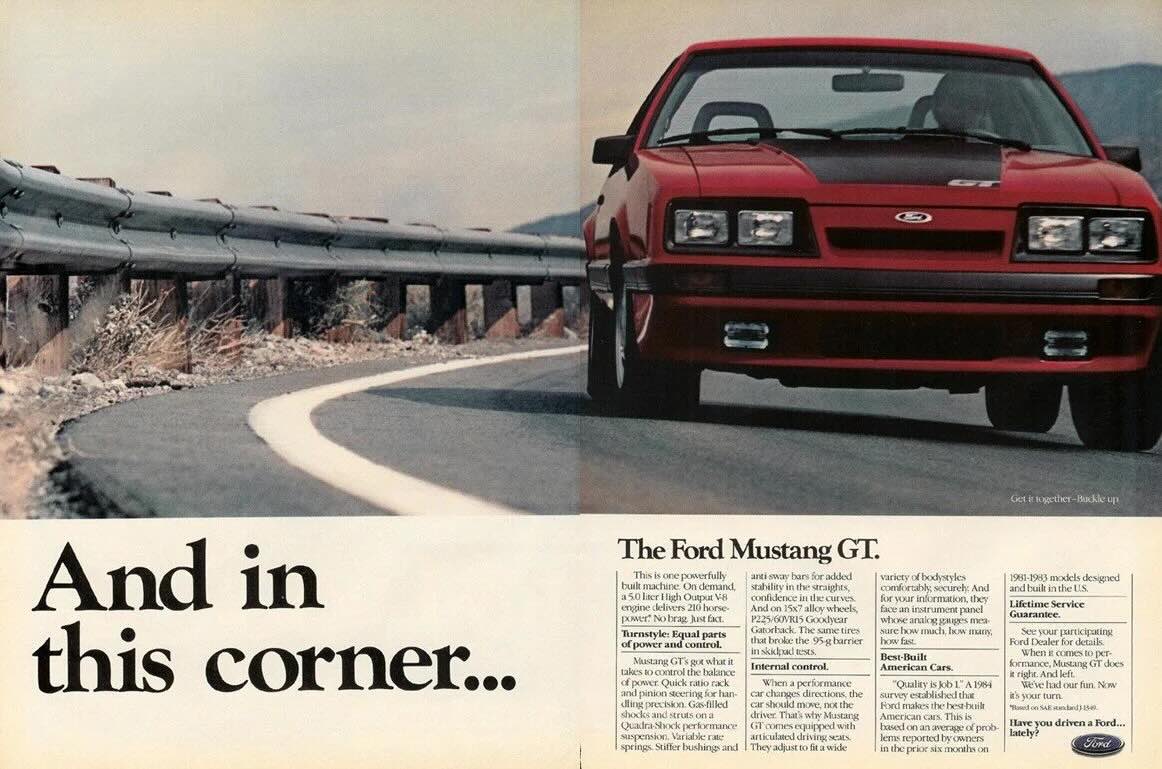
Have a look at this well-preserved 1985 Mustang GT – and then look closer:
Did you see that it lacks power windows? Power seats? These were optional, which meant you were not effectively compelled to pay for them – assuming you wanted to buy the car. You could – back in ’85 – just buy the car, equipped with the essential things that made a Mustang GT the performance version of the Mustang. You got the hot engine, the five speed manual and the performance equipment that defined the GT.
The rest was available.
How much did Ford want for a brand-new Mustang GT back in 1985? The sticker read $9,885 – or the equivalent, so the federal government’s inflation calculator tells us, of just under $30k today.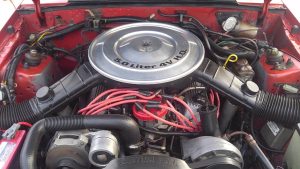
It was actually less than that, back in ’85 – because the cost of other things was also less. Middle and working income people had more buying power – not just the dollar.
A 2026 Mustang GT stickers for $45,900 – and most working and middle income Americans are having trouble paying for everyday necessities such as groceries. It leaves not much room for indulgences.
You could almost have bought two 1985 Mustangs with the difference in price between the 2026 and a 1985 GT. Perhaps more relevant, the additional $15k you didn’t have to spend to get a 1985 GT meant you had that money in hand to pay for insurance and gas – for years. Plus food.
This is a big part of the reason why the 1985 GT was so much more affordable and that is why – some will remember – you used to see them everywhere.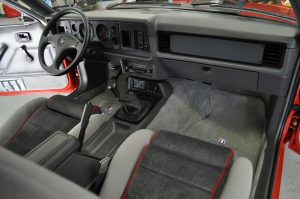
You see new Mustang GTs much less often today because there are far fewer of them in circulation – because the new Mustang GT is an exotic performance car in everything but name. It has twice the power of the ’85 and its performance stats – zero to 60 and quarter mile times – make the ’85 look almost Prius-like in comparison. But it also comes standard with power windows and locks, climate control, power (and heated) seats, a booming stereo system, a digital dashboard and an array of “safety technologies” that the ’85 GT completely lacked. In part because such “technology” was not available back then but also because back then, such things weren’t forced on people by the government, via the car companies.
Speaking of which.
Did you see the ’85 does not have any air bags? That is a big part of the reason why its base price back then was under $10k. It is not commonly understood just how much air bags have added to the ownership costs of vehicles equipped with them, because many people assume it is just the cost of the air bags and those don’t seem to be very expensive. The expense encompasses much more than that, including the cost of integrating them into the vehicle. The steering wheel is no longer just a hub with a rim. It is a much more involved assembly, with many small parts connecting to it. The passenger side air bag has to be integrated with the dash and that requires designing the dash around the bag. Then there are the air bags built into the doors – or the seats – plus the ones built into the upper roof rails and A and B pillars, too. 
The entire vehicle has to be designed around the air bags (plural) system. Italics to emphasize the comprehensive nature of the system.
You also pay a fortune to insure an air bag-equipped vehicle because of the cost of replacing the air bag-equipped vehicle if the bags ever deploy. Plus the cost of plastic everything that is fragile and easily damaged but hugely expensive to replace (because it’s usually not feasible to fix it).
Things were simpler back in ’85.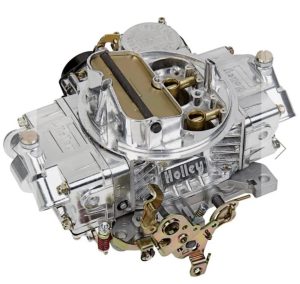
That ’85 GT’s 5.0 liter HO V8 didn’t even have fuel injection, if you can imagine that. Under that dual snorkel air cleaner – so much more pleasing to the eye than the ugly swath of black plastic that covers up the engines in new cars today – sat a Holley four barrel carburetor. This simple, mechanical device constituted basically the entirety of the ’85 GT’s fuel system. The only other parts being the fuel pump, the fuel lines and the gas tank.
That carb probably cost Ford $100.
It is a big part of the reason why the ’85 cost less than $10k. Even today, you can buy a brand-new replacement for that carb for less than $500 – and it can be installed by anyone who can undo four easy to reach bolts. That plus a new fuel pump and you have basically replaced all of the ’85 GT’s major fuel system components.
The 2026 GT’s 5.0 V8 is of course fitted with a direct engine system that is many times more expensive than $500. Individual small components cost more than $500. What is the great benefit? Chiefly, marginally improved exhaust emissions vs. the ’85.
Many people believe – because they have been hectored into believing it – that cars such as the ’85 GT were “dirty.” Keep in mind this comes from the same people who insist that CO2 is a pollutant – and like to post cartoon images of clouds of C02 emanating from the tailpipes of new cars such as the 2026 GT, despite it having direct injection and elaborate additional countermeasures, such as variable valve timing and computer controlled, drive-by-wire throttle plus electric power steering, too.
In fact, the ’85 GT was clean enough – if the measure is most of the meaningfully harmful combustion byproducts were taken care of by the catalytic converters and engine tuning. Certainly, the ’26 GT is “cleaner” – but is the difference meaningful, or is it just a kind of mania to make further reductions for the sake of making further reductions, no matter what it costs and irrespective of any meaningful benefit?
Put another way, what has been gained over the past 41 years? More power/performance, certainly – but of what use are either if you’re priced out of the showroom?
Try to imagine what it was like to visit a Ford showroom back in ’85 and take a seat behind the non-air-bag’d wheel of a brand-new Mustang GT that you could drive home for $250 per month and have it paid off in four years. Today, a new Mustang GT will cost you around $600 per month for the next six years – and that’s not counting what you’ll have to pay the insurance mafia to “cover it.”
If – as Cher sings – you could turn back time, would you?
Hell yeah, I would.
. . .
If you like what you’ve found here please consider supporting EPautos.
We depend on you to keep the wheels turning!
Our donate button is here.
If you prefer not to use PayPal, our mailing address is:
EPautos
721 Hummingbird Lane SE
Copper Hill, VA 24079
PS: Get an EPautos magnet or sticker or coaster in return for a $25 or more one-time donation or a $10 or more monthly recurring donation. (Please be sure to tell us you want a magnet or sticker or coaster – and also, provide an address, so we know where to mail the thing!)
If you’d like a Baaaaa hat or other EPautos gear, see here!










In 1984, if you were in the market for a fun, somewhat practical car, you could buy a nicely optioned new Mustang GT, or Camaro, or Firebird for under 10 grand. If you wanted supercar performance, you could get a Ferarri 308 for about 40 grand. The Mustang and the Camaro and the Firebird were legitimate options for Americans who didn’t want to piss away that much disposable income.
Also while the raw proportion of car price to median income is similar between 1984 and today, the cost of everything else has gone up dramatically, especially taxes and fees. So disposable income is down, gross prices are up, and due to the ongoing communist/femmunist revolution, enthusiastic driving is heavily punished. So why not drive a comfortable, flashy pickup or sport ute?
I drive a 14 year old town and country for daily use, and have my collection of antiques for fun. I simply couldn’t justify a new Mustang GT with its 7 year payment schedule and $300/month insurance, not to mention the anal raping of the state tax on a new (and new-ish) car.
I didn’t get wealthy, on minimal cash flow, by being stupid.
You didn’t get wealthy. You have some rusted junk out back you call your collection.
Jealousy will get you nowhere around here.
Just except the fact that most people on this site prefer older vehicles on this site rather than be massively in debt on a depreciating “asset”.
The ever succinct intellectual meanderings of the typical envious and angry leftist. He/she angry at the world, especially at the hard working, wealth accumulating man who invalidates his/her religion by simply living a good life.
In 1986, as a high school graduation gift to self, cousin Johnny, God rest his soul, dropped between 12 to 13 G’s, all cash, on a brand new Pontiac Firebird. He’d earned it all from part time jobs throughout school. There’s no sporty car, or any new car,that I’m aware of, that an 18 year old, or anyone for that matter, can buy with part time job earnings, after a 3 ir 4 years of savings.
Inflation is theft from us all…(((the federal reserve))) won’t rest until we live in the Weimar republic all over again!!!
YMMV….
Absolutely.
My high school parking lot was full of second hand muscle cars – a buddy owned a ’71 GTX – and newish Mustangs/Camaros and Firebirds. Teenagers commonly drove such cars back then. Not just teens who had rich parents. A teenager working an after school fast food job for two years could save up enough cash to buy a second hand muscle car. I know because I did and so did a number of my friends. But never mind. I’m just an old guy yelling at the clouds!
I’m 47… so I don’t know if I’m around your age… but I’m tail-end Gen-X. I went to high school in the mid 90s, and it was a kind of wealthy high school in Northern Virginia.
There were some classic 60s Mustangs (just a couple), and a LOT… I mean a LOT of 80s cars… like Celicas, RX-7s, Daytonas, etc. I had an 87 Pontiac Fiero and thought I was like the coolest kid in the world. Everyone wanted to drive it because the engine was in the back. There were also a lot of BMWs and brand new Camaros / Firebirds. Oddly enough, they were almost all early 4th gen Firebirds and Camaros… like, all brand new. There were very few 3rd gens in my high school… I don’t really know why, likely just coincidence.
I had a friend with basically a brand new 1992 Mustang LX 5.0 that was so nice… it was like a greyish blue, with a grey interior. I look at it now and remember how immaculate it was, but of course, it was literally only a year old.
In my last year, one of my friends was a diplomat’s son from some Arab country, can’t remember, and his dad bought him a 300 ZX Twin Turbo w/ TTops… it was pretty sweet. And this other kid, who’s name was literally Mohammed Ali, his dad bought him a 1996 Mustang Shelby Cobra convertible. I’ll never forget how sweet that thing sounded. I think it was one of the newer 4.6L engines at the time, but I didn’t know a whole lot about cars back then.
When I pick up my daughter from high school… most of the cars are super lame. She’s 17, so she’s driving now, and will be allowed to drive to school next year. She’ll have her pick between a 1985 Pontiac Fiero, a 1984 Chevrolet Corvette, and a 2007 Pontiac Solstice GXP. None of the kids in her school know what any of those cars are. They all have like hand-me-down Buick micro-SUVs or some kind of Hyundai. The only car that the girls know about are Jeeps, and that’s what everyone wants… or if you have a Bronco, you’re extra cool.
I am convinced that kids aren’t interested in cars, because the cars just suck so badly. Cash for Clunkers made sure a lot of the cheap gas guzzlers wouldn’t be around either (over 800k cars crushed). I probably shouldn’t say this… but having worked for a three-letter agency for over a decade of my life… I’m convinced that this is almost intentional. Young adults drive what becomes successful… if they aren’t interested in it, it’s going to fail. There have been many attempts to utterly destroy and reshape the car industry into something contrived, rather than naturally produced… and my tinfoil hat tells me this is all intentional.
Kids around here in rural Oklahoma love their older lifted full size pick-ups. They replaced cool cars from our youth because that’s what they can afford and they are highly customizable. It’s different, but the same, and I like seeing it. Both of my girls drive 90’s pick-ups.
Old folks like to complain and sneer at the rubber band tires, or the squatted stance, or all the LED lights underneath, but we were doing similar stupid shit in the 90’s, and loving every snide comment from the oldsters. I got a ticket once for loud music emanating from my car, and for one of those neon license plate surrounds.
Things are cyclic.
Old man yells at clouds.
Well, I’m not an old man – yet.
And yelling at clouds is not the same as pointing our facts and making comparisons.
Look at the current Mustang’s terrible sales stats. Ford is considering cancelling it. Not because it’s a bad car; far from it. It’s just not making money because Ford can’t sell enough of them to make money selling them. What does that tell you?
Meanwhile, the ’85 profiled in the article sold extremely well. Consider that.
Per FRED link below
Car sales across the industry have collapsed in favor of Trucks and SUVs.
Why are you so intent on insisting that cost is the factor leading to a decrease in Mustang sales. Sheesh! Keep yelling at the clouds.
Maybe instead of badgering your readers you might want to do some analysis of industry trends that you ought to be well aware of.
Jeeves,
I’ve taken pains to explain the effect that cost has on sales and to draw a direct comparison of two iterations of the same model, separated by 41 years. The Mustang was for decades a mass market vehicle. It is now a near-exotic niche vehicle.
Yes, cars sales in general have been in decline, relative to trucks and SUVs. Do you know why? It is because people can only afford one practical vehicle nowadays. Back in ’85, a guy could afford a new GT and a family car for the wife to drive the kids around in. But what do I know? I’m just yelling at the clouds.
You say I am “badgering” my readers. Well, I leave that for them to decide.
“ Back in ’85, a guy could afford a new GT and a family car for the wife to drive the kids around in. But what do I know?”
Clearly not economics.
If you made the median household income ($26k) in 1985 you were no more or less able to buy two vehicles as a percentage of your income than you are today making 2025 median income ($84k).
You cannot seem to grasp that if people choose to buy more expensive housing, or to spend their money on cell phones, tablets, laptops, and subscriptions that might actually decrease how much money they have to spend on a sporty performance car.
Your old man assumption that young men want to spend their money on sporty performance cars is also flawed. The industry data is telling you that. But you know better as a supposed expert huh? Keep shaking that fist.
The Internet is the only place in the world where someone like Eric is literally providing YOU a platform for free to yell at him with your Millennial victimhood.
Nah. Eric repeatedly bemoans that he gets shadow banned on X when trying to use that platform to spread his messaging about Musk & Tesla grifting.
I do agree it is nice of him to allow me to post here but if you’re going to say you’re a free speech absolutist you’ve gotta’ walk the walk.
In the past (especially COVID) era I used to support the site. Lately I just can’t bring myself to do it.
Jeeves,
Are you Mr. Some Bullshit? Of late a poster here?
I do support free speech, proof of which is that I do not expect you to pay for it (here). You also have the same reach as everyone else, me included. X is run by an oily rent seeker who expects people to pay for reach and claims this is “free speech.” I do not see it that way.
Of course, your mileage may vary.
Jeeves,
You keep ad homining me – I’m an “old man” – even though I’m not and even though it’s a non sequitur. The cost of everything that matters, save shitty electronica such as dey sail fawns and flat screen TeeVees – is much higher. The cost of the average single family home is now $400k and the average first-time buyer is pushing 50. When I was still in my 20s back in the ’90s I was able to buy a modest single family home in Northern Virginia for about $150k on a journalist’s take-home pay. Today, my old house is a $650k house. It is the same house. My dad the doctor could not afford that house today. The house he bought in the ’70s is now a $2-plus million dollar house. It is also the same house. Just not the same price.
Cars are trending in the same direction.
Jeeves,
You just asserted that a person with an income of $84k today can afford to buy two new vehicles. Well, if one of those is a new Mustang GT, it amounts to more than half of that sum. Add the cost of the least expensive new vehicle you can buy right now (about $22k) on top of that – as the “family” car -and you have just spent about two thirds of the total on just cars. Never mind the insurance and taxes, plus the rent/mortgage and food.
And they ask me why I drink.
“You keep ad homining me – I’m an “old man” – even though I’m not”
Lol. Everyone is and old man as compared to someone. Glad you don’t think you’re old though. That’s the spirit!
“ You just asserted that a person with an income of $84k today can afford to buy two new vehicles.”
Does it not dawn on you that you were asserting that in 1985 a person could buy two new vehicles with a median income of $26k?
Just keep on proving my point that you’re being driven by emotion rather than logic.
Jeeves,
The fact is that multi-new-car households were much more common in the ’80s. Because people could afford them. Because things like food and rent/mortgages cost less. Because insurance cost less. Because cars cost a lot less. Example: In ’85, a new Chevy Chevette was about $5,400. Equivalent in today’s dollars to about $16k today. The least expensive new vehicle you can buy right now is about $22k. Plus the necessarily higher insurance costs.
Oy meets vey.
“ Because things like food and rent/mortgages cost less. Because insurance cost less.”
Yes.
“ Because cars cost a lot less”
No.
Your Mustang GT is still approximately 1/2 of median household income!!
“ Oy meets vey.”
My thoughts exactly – see we agree!!
“ The fact is that multi-new-car households were much more common in the ’80s.”
You’re really going to have to up your game. This BS of journalists just asserting things that aren’t true – those days are numbered. Lean to use AI to your benefit before you are replaced by it.
“ Household vehicle ownership has changed over the last six decades. In 1960, over twenty percent of households did not own a vehicle, but by 2010, that number fell to less than 10%. The number of households with three or more vehicles grew from 2% in 1960 to nearly 20% in 2010. Before 1990, the most common number of vehicles per household was one, but since 1990, the most common number of vehicles is two.”
The quote above is from energy.gov
https://www.energy.gov/eere/vehicles/fact-727-may-14-2012-nearly-twenty-percent-households-own-three-or-more-vehicles
From a generic AI inquiry of multi car ownership 1985 vs 2025:
1985 Ownership: In the mid-1980s, approximately 51–54% of U.S. households owned two or more vehicles. During this era, owning a single car was still a very common configuration for American families, though the transition toward multi-car households was well underway.
2025 Ownership (Projected/Current): As of early 2025, approximately 59–60% of U.S. households own two or more vehicles. Recent data indicates that 37% of households own exactly two vehicles, while 22% own three or more
For your own sake… you shouldn’t always have complete trust in AI. AI, especially for things like this, use what’s called Retrieval Augmented Generation, which means they’re pulling information from different links (which may or may not be correct), or in some cases, because it’s an LLM, it’ll just literally make up numbers based on what it thinks it knows. So always validate the information you get from AI.
Bull on the 10 grand too. My anemic fail injected 86 LX 5.0 was $13,680 on planet Utah with outrageous 14% usery tacked onto that. State Farm full coverage was 39 a month. 205 hp was just enuf to cruise at 100. The hatchback made it a useful and affordable family car.
Less than a week old w 150 miles on it the TPS failed. Drove it another 40k without a problem.
Foxy was a good car. The 45k version is boomers last stand
Hi Rain,
I understand you paid $13,680 for your ’86. I merely quoted the advertised base price of the ’85.
“Back in ’85, a guy could afford a new GT and a family car for the wife to drive the kids around in. But what do I know?”
That’s not true. I -am- an old man, 73 now, and I did not have a Mustang GT for me and a family car for the family in the 1980’s.
When I was a young man in the late 1960’s I did have a string of fun cars. An Austin-Healy 300 (British sports cars were cheap then but I still had to buy it on time, although just 12 payments), followed by a Mustang convertible and then a Ford pickup (this was because I got stationed in Alaska where you bought a local car and sold it when you left).
Then I was discharged from the service in the early 1970’s, met someone and started a family, went to college and had to deal with reality. That’s when we got a 10 year old Dodge 4-door Dart, a string of VWs I used to commute, boring Fords and Chevys station wagons and finally a minivan. When the kids moved out in the early 1990’s we kept the mini van and I got a Camry to drive until I retired. That’s when I might have considered a “fun” car again but we went a different way with a class A pusher and traveled instead.
We never had nice 3-car kind of money. We prioritized paying off the house (remembering that mortgage rates back then were double digits, ours being 16.75%), saving for the kid’s college and doing summer vacations with them.
The boy did buy his own car in high school and we had him on our insurance. But that was a worn out 1977 Corolla, nothing fancy. Our daughter never had her own car until she finished college and she bought her own.
We’re in the Midwest and our experience seems fairly typical. Some people had money, most of us made due, not too many people were dirt poor.
Badgering his readers? What give, Jeeves?
“Why are you so intent on insisting that cost is the factor leading to a decrease in Mustang sales.” – Jeeves.
You might consider the economic law of demand, which is that there’s an inverse relationship between price and quantity demanded. In other words, all things being equal, as the price of a good increases, quantity demanded will decrease, and conversely, as the price of a good decreases, quantity demanded will increase.
“ Badgering his readers? What give, Jeeves?”
Yeah – that was shitty of me to say. My bad.
“In other words, all things being equal, as the price of a good increases, quantity demanded will decrease, and conversely, as the price of a good decreases, quantity demanded will increase.”
And where is the price increase? As was previously shown, the cost of a Mustang GT is approximately 1/2 of median household income in 1985 and it’s still approximately 1/2 of median household income in 2025.
Mustang sales volume is not decreasing due to cost increases.
Next argument?
Next Argument… there’s a 1983 Mustang GT fox-body convertible hiding under a temporary enclosure. It’s completely rust-free, but the interior is trashed. It’ll need paint, all new rubber everywhere (hoses, boots, ball joints, bushings), and a complete rebuild… and a new top. It’s also a manual transmission. I think I can get it for $500… should I do it? Wife will be pissed, but I can restore it in a year with Rock Auto parts, have some fun for a few months, and make a killing… thoughts?
Buy it.
99.9% of people will never make a killing restoring an old jalopy. Fact.
Lots of fun though!
Hi Todd,
If you can do the mechanical work yourself, it could be worth doing. Is the 302 rebuildable? How about the condition of the trans? If the trans is good, you could prolly go through the engine for $2k or so and then the drivetrain’s pretty much done. The suspension stuff is pretty basic – just a knuckle buster. The main expense I see is the paint and new top. But if the body just needs to be stripped, you could do that – and then have a shop spray it and then you put all the glass/trim back on. This can cut the price of a good paint job in half (I have done it several times).
Yup… I can do it all myself, except body paint. Never been really good at that, mostly because I just don’t have a good enough compressor for that. But other than machine work… which I would farm out to a machine shop, I can do everything else. Unless there’s broken rods or oversized bearings on a crank, I can rebuild all that stuff. It looks to be original. It’s white with a gold GT sticker package that goes over the hood and over that engine bump. Pretty awesome… though gold and white isn’t exactly my favorite color. I also have a guy for upholstery, but I’m sure CJ Pony Parts sells all new seat upholstery too…
I might get it… but the wife won’t be too thrilled.
It sounds like a great project, Todd!
Especially for $500. That’s basically free. It reminds me of the last motorcycle re-do I did. My buddy Graves – a regular here – had this old ’75 Kawasaki S1 among his fleet of old Hondas. It last ran in 1983. I gave him $50 for – and took it down to the frame and rebuilt the whole mo ‘fo. Little Stinker is now a garage queen and she’s very pretty!
If your daughter helps out and puts it on her channel, which is pretty neat by the way, that might convince your wife.
Absolutely buy. It’ll be your car in a way that 99.97% of people will never know…because you took it apart, fixed it, and rebuilt it yourself . Will it cost you more than expected? Yup, but you’ll never forget it.
ENJOY!!!!
“And where is the price increase? As was previously shown, the cost of a Mustang GT is approximately 1/2 of median household income in 1985 and it’s still approximately 1/2 of median household income in 2025.” -Jeeves
Nope. 42.49% in 1985 vs. 54.61 in 2025. That’s The my post below. There’s no need for a “next argument,” because your premise of the approximate equality of HH income is just wrong.
Uhmm. . . You really believe the whole argument of “approximately 1/2 of household income” swings on 4-7% of household income one way or another?
Be honest.
It’s not a 4%-7% swing. It’s a difference of 12.12%, or over $10k in 2025 money. That’s a big difference.
I really didn’t want to get into hedonic adjustment theory but I guess you’re going to force it.
First off. From others on this forum and from Eric himself – it should be clear that a sub $10k transaction price was MSRP for the 1985 Mustang GT and actual transaction pricing may not have been at the sub $10k number you used to derive your percentages.
Then we get to horsepower and performance per dollar. Again per Eric, the 2025 Mustang vastly outperforms a 1985 GT. Go ahead and try to back that performance increase out of your math.
Again per Eric, you now get AC, power windows, ESC, air bags, better crash safety, etc for that 12% difference that you’re so hung up on. Though you many not perceive value in any of those things, many people do and are willing to pay for them.
Well, now you’ve changed your argument from it costs the same as it did in 1985 dollars to, it costs 25% more now, but you’re getting more car. I can certainly understand that argument, but it’s tough to calculate what the additional value or cost should be.
However, this argument underscores Eric’s point, which he summarizes as: “[T]he new Mustang GT is an exotic performance car in everything but name. . .More power/performance, certainly – but of what use are either if you’re priced out of the showroom?”
His point remains valid.
Boy this article speaks directly to me. After getting out of college and getting a job that was “real” (IE not being a cook at a restaurant lol) I bought my 1st brand new car. A 1986 Mustang GT. Other than mine was black, almost a 100 % identical to the car shown above. The 86 had EFI that increased the HP slightly. I recall it had power windows. But still I paid 10,500 OTD with my brothers Ford discount. It was a wonderful car. The manual transmission was like buttery smooth. That Mustang had a definite European “flavor” compared to the more expensive Z28
I know at least two people who also bought new Mustangs back in the mid-1980s!
Those who are too young to remember have no sense of how common these cars – Mustangs, Camaros and Firebirds were – back then. More finely, how common it was for people in their 20s to be driving them. I was there, so I do remember. And I think it’s important to try not to forget.
Yep I remember clearly that almost exclusively (here in metro Detroit anyways) Mustang GT’s, Camaro Z28’s and Iroc’s, and a little later on the Dodge Daytona’s all being driven by guys like me. In our early 20’s and few older friends who were early 30’s. Lots of comments above basically saying that’s a lie. It is not!
Indeed, Rob!
The numbers also speak volumes. A car like my ’70s Trans-Am is as practical as a bikini – and yet GM sold nearly a quarter million of them circa 1978, when the population of the country was much less than it is today. Proportionately, sales of the ’78 Firebird alone (not adding in Camaro sales) were as strong or even stronger than sales of the F-150 pick-up, which is the best selling vehicle today. In other words, that many people – back then – could afford to buy an impractical performance car. Many of them had to have another car – because a Firebird is not going to work as a family car.
As a “libertarian” you need to spend some more time learning basic economics, logic, and reason.
The harpy “journalist” routine is getting old.
Here’s a news flash. The things you may have been accustomed to as the son of a doctor in 1985 weren’t exactly universal. Mustang GT’s were not everywhere or abundant where I lived.
$10k in 1985 was about 1/2 of median household income in 1985. A $10k Mustang GT’s wasn’t affordable for a lot of people in 1985. $45k is about 1/2 of median household income in 2025.
Back then people weren’t spending disposable income on $1k cell phones, broadband internet, streaming subscriptions, and $6 coffee. Times change. People’s spending preference change. So yeah maybe there aren’t as many Mustang GT’s around. There sure are plenty of $60k pick up trucks though.
It’s a shame that your chosen profession doesn’t pay well and that you can’t afford the things you took for granted as the son of a doctor. Grow up. Get a side hustle. Go make some money and maybe then you will be able to afford the things you were accustomed to as a child and can stop the endless crying about the things you can’t afford as an adult that has chosen a poorly paying profession.
When you share your personal problems you should know that 90% of people don’t care, and the other 10% are glad you have them.
Well, Jeeves – let’s see.
In 1985, Ford sold something around 150,000 Mustangs and GTs were about 50,000 of that total. See here: https://www.mustangspecs.com/1985-ford-mustang/
In 2025 – last year for full-year data – Ford sold about 43,000 Mustangs, including GTs. Most were not. See here: https://carfigures.com/us-market-brand/ford/mustang
It seems evident that it’s the cost of Mustangs today that primarily accounts for the much lower sales figures. Especially given the current Mustang’s much higher performance, etc.
Did you know that in the late ’70s, Pontiac sold nearly 190,000 Firebirds? I guess there were lots of doctors sons back then.
But what do I know? I’m just a guy who has been covering the business for 30 years.
PS: To address your general point/abuse –
I was able to afford more circa 2000 making about the same money that I am today. It’s not a “side hustle” I need. It’s a Dollar that’s not rendered increasingly worthless by the “Fed.” I think there are plenty of people who have the same concerns. Maybe you’re not among them; of so, good for you. But to dismiss the obvious (to most of us) galloping increase in the cost of cars – as well as food and so many other necessary things – and tell people to just earn more money is the sort of thing Pam Bondi would say.
“ It seems evident that it’s the cost of Mustangs today that primarily accounts for the much lower sales figures. Especially given the current Mustang’s much higher performance, etc.”
Doubling down on flawed logic again? Tastes change. People now want trucks and SUVs.
Car sales volumes have collapsed across the board. Last time I checked the Mustang GT is a car. Sales of the Toyota Camry are also way down. So what? One would think you if all people would know this after 30 years in the business.
https://fredblog.stlouisfed.org/2021/03/long-term-trends-in-car-and-light-truck-sales/?utm_source=series_page&utm_medium=related_content&utm_term=related_resources&utm_campaign=fredblog
Jeeves,
It is not “doubling down” to make a direct/relevant comparison of sales and cost. To point out that, back in ’85, the GT was much more affordable in real (adjusted) dollars than it is now.
The current GT is a car that most definitely appeals to performance car fans – of which there are many. There are lots of guys in their 20s who’d love to own one, just as there were back in ’85. The difference is that, today, you need to be earning much more money to be able to afford a GT than back in ’85. That acts as a disincentive.
The Corvette provides another example. It was once a young man’s car; the typical owner was under 40. The guy who traded up from a Camaro. Now? He’s a Social Security recipient.
By the way: Trucks and SUVs are having the same problem. Do you know what the average monthly payment is? Are you aware how many are upside down/in default? Yes, they sell a lot of these. But I expect that to wilt because there are dwindling number of working and middle income people who can make $800/month vehicle payments for six years – plus insurance.
“ It is not “doubling down” to make a direct/relevant comparison of sales and cost. To point out that, back in ’85, the GT was much more affordable in real (adjusted) dollars than it is now.”
All you’ve shown is that for the same price (1/2 of household median income) a new Mustang GT is faster, and better equipped then what the same 1/2 of median income would have bought in 1985.
1/2 of household income for both you say, Jeeves? Not so much.
1985:
Median HH Income: $23,260
Mustang GT MSRP: $9,885
% of HH Income: 42.49%
2025:
Median HH Income: $85,257
Mustang GT MSRP: $46,560
% of HH Income: 54.61%
The 2025 costs an additional 12.12% of HH Income. If the 2025 were priced at 42.49% of HH Income (like the 1985), the current Mustang MSRP would be $36,225. At that price, I suspect demand would increase, no?
Demand would only increase slightly at $36k.
Eric is constantly writing about how $36k is not affordable.
Both of you are neglecting the trend that passenger cars as a percentage of industry sales volume has crashed and that trend has nothing to do with cost.
So a 25% drop in the price of a Mustang GT would only increase demand slightly? How do you know this?
I get it that SUVs seem to be much preferred in the market because of their, well, utility. But to say cost (i.e. price) has NOTHING to do with demand is totally at odds with economic law? I beg you to educate yourself of the fundamental economic law of demand.
https://en.wikipedia.org/wiki/Law_of_demand
If demand for Mustang GTs is so price inelastic, why not charge $100k for them? Ford would make a killing. Why sell the 43,333 mustangs (for 2025) at say an average of $50k for a total income of $2.166 billion, when they could sell the same number at $100k, for a total income of $4.33 billion?
Ah . . . Here it comes the logically fallacious arguments.
“ If demand for Mustang GTs is so price inelastic, why not charge $100k for them?”
$100k is child’s play. Perhaps you’re not aware of the Mustang GTD at $300k or so?
And please do tell how you know that if Ford were to reduce its Mustang GT price to let’s say $36k as you proposed, that would result in enough of a volume and profits increase to offset the penalty that Ford would incur producing those units at that pricing?
I have not argued that it would result in enough of a volume and profits increase to offset the penalty that Ford would incur producing those units at that pricing. That determination probably can’t be done on a chat like this. It would require marketing and production analyses that are well beyond the scope of this. That’s one of the arts of the automobile business.
By the way, it was a question intended to challenge your disregard of the law of demand, not an argument.
If you’re doing the analysis are you sure the market demand didn’t just change?
Cars are just as much transport devices now and they were then. But the Mustang never was a utility vehicle. It was an enthusiast vehicle.
People’s tastes change. Fender was sold by CBS in 1985 because it wasn’t worth their time as was only a $12 million annual sales company. Moved to 2025 funny money that’s a $36.2 million company. But in reality in 2025 Fender is a $500 million company.
A run of the mill Strat in 1985 was $700 to $1000, was made most likely in Japan (it was a transitional time). Moved to inflated 2025 money that’s $2,560. In 2025 a US-made Strat costs, interestingly enough, $2,500. They just sell 10 times as many of them now.
Martin sold about 7,000 guitars in 1985 and in 2025 they sold something like 125,000. A decent Martin is going to set you back anywhere from $600 for a Mexican-made entry level to $3,000 for a standard D28 made in the roughly 190 year-old Nazareth factory.
Disposable cash is still there but an economist who’s not hyper focused on cars could argue it’s moved from cars to music. Or it could be computers. Lots of people are willing to spend insane amounts of money to build a gaming computer and that market did not exist at all in 1985. Or recreational vehicles. There’s a huge market for RVs and side-by-sides and snowmobiles.
Hi Kyle,
I think part of it is that to an unprecedented degree, the young of today are just not “into” cars the way people of Gen X age (me) and older were. Supposedly – last time I checked – about a fourth of people in the 16-21 age range haven’t even got a driver’s license.
Part of this is due to incessant demonization of cars as dangerous as well as a threat to the “climate.” These kids grew up in saaaaaaaaaafety seats and being hectored to be “green.” They never developed the love for cars we (Gen X) had. We champed at the bit to get off our bicycles and get our first cars. I knew no one my age when I was in high school who didn’t drive.
But I think the more fundamental reason is the massive increase in costs – not just of the cars themselves but also of peripherals such as insurance. It probably costs $4k a year to “cover” a car such as the 2026 GT. That’d amount to more than the cost of an ’85 GT itself after four or five years. There are not many who can afford that – plus the monthly payment on a $45k car.
There is also the compounding effect – I think – of the new stuff being forbiddingly complex. Aside from oil and filter changes, most people will have to take a car like the GT to the dealer and the repairs are haltingly expensive, even for what ought to be relatively minor things.
I think people today are still into cars. I mean they are willing to take seven year loans to buy vehicles they can’t really afford. That shows a desire (as well as stupidity.) The difference is back then if you wanted performance your only choice was a sporty car like the GT. Today, pretty much every car is a performance car. Cars today are way faster and handle better than that Ford. And you don’t have to make a tradeoff with regards to space.
That’s valid, Klink!
Still, a RWD/V8 performance car does have a particular appeal that a FWD/AWD performance does not. I also think insurance costs have done a number on performance cars as well. Even so, they’re all effectively luxury-performance cars now – and the price reflects the fact.
True. I don’t know how people can afford to insure any new car today. My brother in law and his wife both bought new cars in the past year. Low end F series and a base CR-V. And they have a teen driver with an old car. They are paying almost $6k a year. It’s insane.
Some reference… I have 6 cars currently registered and insured, in the state of Florida (Tampa).
They include a 2024 Bronco (the big one), a 2009 Ford Explorer Sport, a 2007 Pontiac Solstice, a 2002 Ford Crown Victoria LX, a 1985 Pontiac Fiero, a 1984 Chevrolet Corvette.
It includes my wife and I (both Gen-X) and a teenage daughter with a full driver’s license. We pay $3,200 a year for insurance. Mostly, adding her to the insurance increased the amount by about $900 a year. The Bronco is fully insured, and the Crown Vic has collector car insurance (don’t ask). The others just have normal plates and normal insurance. It’s not bad, but it’s not great. None of us have accidents in the past decade… and no tickets.
Kyle, it’s not that people’s tastes changed, it’s that the Government manipulated the market through regulation. I don’t want to spend an hour typing up stuff that people won’t read, but in effect… cars are overregulated while trucks, to a great extent, have been deregulated (commercial lobby). This results in cars being overregulated to compensate for the fact that trucks aren’t regulated (insurance lobby). You have climbing costs for cars, and the “affordable” vehicles today are now compact FWD SUVs. This is what most people buy. Mustangs sell quite well, considering. It’s not that people don’t want cars like they had, it’s that trucks have become so massive, and the regulations so insane for cars, that people just “CAN’T” buy cars like this anymore.
Trump just deregulated the “microtruck” segment… with a stroke of the pen. And now, there is overwhelming demand for these little trucks once they hit the market in 2027.
“ Kyle, it’s not that people’s tastes changed, it’s that the Government manipulated the market through regulation.”
This is true. Not only of cars but of housing as well. The cost to build a code compliant house or apartment has increased tremendously since 1985.
This in turn makes housing less affordable (another story we hear endlessly) but more importantly it forces people to make hard choices. Spend money on a Mustang GT, or housing? For the sane among us, prioritizing housing usually wins.
Isn’t this Eric’s point? If the Mustang GT were cheaper (perhaps it would have to move a bit down market to shed costs), the less people would have to make that “hard choice.”
Certainly broad media manipulation and government regulation of cars has a significant effect on their demand. The pressure of just surviving economically has an impact.
Although I would argue that no one is forcing you to buy a 5 bedroom, 3 bath McMansion. If you want to avoid being house poor it’s still possible to some extent. We bought a small 1960s ranch in an older suburb for our first house in 1995. It was small but we kept the payments within our budget and paid it off in 19 years instead of 30. I don’t know that it’s still possible for young couples now, no argument on that point.
But tastes have moved even within the auto world. Back in the 80s people wanted fast cars in the 2020s people buy big numbers of 4wd Toyotas and Jeeps, into which they pour big dollars.
If you want to get a sense of it look into the “overlanding” world. A person will not blink at buying a $50K Tacoma, putting a $20K slide-in camper, $10K in lift and tires. It’s kinda insane. I still have my old Toyota pickup and use the same old tent. Instead of “overlanding” it’s just camping for us.
But one thing is for sure the number of people I see out in the backcountry (I live near Laramie, Wyoming) has gone up significantly in the last 20 years. We used to have no trouble finding solitude but now it’s nuts. Some locals but mostly hipsters coming up from Colorado every weekend. I can only imagine the zoo it must be closer to Denver.
Oh man… this one feels personal, haha… the wife made me buy a 5 bedroom 3 bathroom house for our family of 3.
No one made you buy anything.
You chose to do what you did. Man up.
To quote a psychologist who spent his career studying marriage and relationships “Guys, if you want your marriage to last, just do what she wants.”
Given the ruinous costs (for men) of divorce, I’d say Todd has a point.
She also “made me” buy a house in Fort Lauderdale back in the early 2000s that was right at what I could afford. We still own it and lease it out. But, it’s now worth about 4 times what I paid for it… so she’s not wrong! Haha…
Kyle – thank you for being a voice of reason !!
For perspective, Toyota sold 193,000 Tacos in 2024.
Throwing dollar bills out of a helicopter would be a far better solution than what we’re getting.
Because at least then Joe Average has a decent shot at getting some of the new money before it percolates its way through the system.
Instead it gets pumped into defense contractors, politically connected pseudo-monopolies, and the stock market. Wages get hit dead last. By the time they increase, everything else has already gone up even more. It’s a gigantic ripoff. To pretend otherwise is highly disingenuous.
I bought a 4 banger notch back mustang in 1992 when I was a senior in college. Inflation and a mandatory airbag meant the out the price was around $9k but my payment was $135 a month. Didn’t even have a/c. So when my first job took me to Florida I went to the dealer and bought a kit to add a/c.
We really need back the entry level stuff to get the new adults into the game. If not, who’s buying your GTDs and Dark Horses in the future?
The kids are getting into older cars… if they can find them: https://www.youtube.com/watch?v=ncdFpwGOoHQ
I respect journalism like this that attempts to make people realize where we’ve gone. I wanted to add to this though that the reason why we can’t have cars like this anymore, has a LOT more to do with the NTSHA regulations that mandate all of these things, like the 60/40 rule… which states that no rear glass can be lower than 60% of the height of the vehicle. That’s why all new cars today have huge butts. All of this comes directly from the insurance lobby. People think it has to do with saving lives… but it actually has to do with insurance companies doing everything they can to regulate not having to pay out liability payments. If the cars all have a huge rear butt… it will lessen the chance that someone will say they have back problems and sue. Part of this is also because trucks aren’t regulated (due to the commercial lobby), so cars have to be extra regulated to make up for the fact that trucks aren’t.
There needs to be changes to the law that allow people to drive cars they want to drive. I know we can never go back too far… but if people are allowed to ride a motorcycle, we should be allowed to drive a smaller car. You can make them safe, without making them stupid looking.
Thanks, Todd – and thanks for mentioning the 60/40 rule. I need to harp on that more often!
Eric, are you working with SEMA? My daughter (who’s only 17) is a huge fan of classic cars… I swear I had nothing to do with it, and she’s been supporting the SEMA Action Network, the group working hard to roll back some of these ridiculous regulations on the hobby. She was invited (along with a small group) to go up to Washington D.C. and meet with Congress to help pass the right to repair act, and the protection of race tracks law. If you have time, check out the SEMA Action Network (I have a feeling you are already well aware). Otherwise, give my daughter’s channel a look… she’s young in the hobby, and very impassioned (way more than I ever was) in trying to make a difference. She’s like you, except female, and a lot younger… haha…
https://www.youtube.com/@GenerationZGarage
Anyway, she’s rebuilt the engine in her Pontiac Fiero… which is actually the very last Pontiac engine that continued to be produced (The Iron Duke, haha).
Hi Todd,
No, though I probably ought to be. I’ve been a kind of lone wolf weirdo off the reservation since the early 2000s!
I paid $3,971 for my 1970 Boss 302, the pinnacle of the Gen 1 Mustang. It’s 2x the car at ½ price than the Gen 3 1985 GT. It wasn’t until Gen 4 that the Mustang became an interesting performance car again.
Mustang LX with 302 and manual: 2870 lbs. Lighter than the latest non-hybrid Toyota Corolla.
Knocking on the door, I told the lady of the house I was responding to an ad for the convertible. When she replied, ‘the 2004 Thunderbird or the 86,?’ I of course asked if I could see the 86. There, sitting in an old one stall garage was the Mustang’s weird Mercury cousin – a white ASC McLaren convertible. Its 5L started first try because it had that first year of the Bosch air density fuel injection. It twists with every bump on the road, the panel gaps are terrible, it has a lot of 80s plastic, but what a car! Yeah, everyone wants a Mustang, but almost no one has a factory-engineered Capri where Ford told McLaren to chop the top, lean back the windshield, and we don’t need no damn roll bar.
Side note: I always thought it was weird that Cher’s boy playing “guitar” in the video, had to watch his mommy shake her turd slicer in front of 100s of Horney sailors?
Hi Cow,
I’d never thought about that; you’re right! I love anything with battleships, though…
I love the first gen mustang after 1970 they went to shit looks white but still blow away the new cars all look the same when I was a kid there was a 1970 mustang for sale looked like something from mad Max but so cool was dirt cheap tried getting my mother to buy it would have been worth a lot today but as always she pisses away her money and has nothing to show wanted that car so bad .
Even as the 1985 Mustang hit the streets, the ominous writing was on the wall:
‘The Controller Area Network (CAN bus) was developed by Robert Bosch GmbH in 1983 to reduce wiring complexity in vehicles. It officially launched the protocol in 1986 at the SAE Congress in Detroit. Designed for high-reliability, multi-master communication, it was later adopted by Mercedes-Benz in 1991 and formalized as an ISO standard.’ — AI overview
A chip-controlled, coded data stream no longer can be read or diagnosed by simple tools like a volt-ohmmeter or continuity tester. It introduces an inscrutable black-box element, which auto makers soon exploited to make proprietary diagnostic equipment, and repair parts that must be ‘paired’ to the system to function.
Cars look the same on the outside, but their technology has completely changed. If this had brought some great benefit, maybe it would be worth it. Yet a 1985 vehicle can deliver you where you want to go in style and comfort, just the same as a 2025 model.
Piling a cellphone-inspired user interface atop the CANbus black box is where auto makers truly jumped the shark. Unlike the tiny screen of a phone, an automotive dash has plenty of space for physical controls of all needed functions. Touchscreens and nested menus are unnecessary, inappropriate and distracting in a vehicle. Cars today are designed for ‘phony’ people. I shun them like rat poison.
The CANBUS is why we got the electrification of everything. Especially after airbag “systems” came into being. You’re already running network cables anyway, so why not add a few more? And at first there’s a lot of neat things you can do, like use the door key to crack the windows. How often do you do that after that first summer? In theory set up memories for each driver so that when you get in you don’t have to reset everything from how the wife likes it -although that trick is usually reserved for the higher end vehicles, despite the fact that all cars are capable of it. But again, how often is that feature used? Do people bother to set that up or make changes over time? And once you have the standard motors and connectors in place, it’s easier to design a power window than it is a manual crank window since there’s no need to place the crank somewhere where the driver/passengers can reach them. Just slap a button on the door panel and done.
And what about your dealer getting diagnostic data? In theory it should be a great value-add feature. The service department can see that you’ve been driving in hot weather and recommend a shorter oil change interval. Or that the battery voltage is dropping further than it should overnight so time for a new battery. In reality, the dealer will just spam you with extra information harvested and stored on some insecure server ad infinitum, just waiting for someone who would love to DOX you for personal gain or LULZ. Because no one has the time (or is assigned) to parse all that data, they don’t. I’m reminded of the old Dilbert strip where the sales department was given laptops without training. The last frame is a guy on a sales call telling the customer that if they sign up today he’ll throw in this black plastic slab.
Back when I still had hair, Cars Illustrated magazine (sadly long gone) regaled us of the benefits of street racing the Mustang LX as it was a couple hundred pounds lighter than the GT. Heck they even managed to order one with the radio deleted at the factory even though that was not “officially” possible to save the weight of the radio and speakers.
I suspect the 50’s would have been a better time than the 80’s but either way a lot less dystopian sh*t from GovCo back then. Duck and cover scares me less than see something/ say something if you know what I mean. Of course if you say something they now call you a racist.
https://www.zerohedge.com/geopolitical/defense-sir-jim-ratcliffe
Either way a V8 and a four or five speed manual beats a turbo 4 with a CVT. 🙂
100 percent, Landru!
I have said this before, but it bears saying again: My ’76 TA (and cars like it) are no match in terms of 0-60 and quarter mile for a new performance car – at least not without a lot of mods. But the Fun Factor is no contest. This includes intangible things such as the gear whine emanating from a Super T10 and the glorious moan of a big four barrel carb and the total absence of any insipid saaaaaaaaaaaaaaaaaaaaaaaaaaaaaaaaaaaaaaaety “technology.”
I’ll add “comfort” to the old rig list. Never gave a second thought to spending all day in the 70 Firebird or the 79 Gran Prix. The last gasp of comfortable seats was our 05 Grand Cherokee, I drove that from central WA to Sioux Falls SD several long days, never seat tired. The 2018 GC which, like you say, was designed around the air bags system – 40 minutes I’m a squirmin’ Herman. Wife and daughter both hate the 2018 Grand Cherokee seats.
I’m glad you brought up comfort, Sparkey!
As you know, I had to take out the driver’s seat to deal with the pedals (and also the driveshaft tunnel hole for the shifter, etc.) and I got to thinking that it’d make a great office chair for me. I am going to seriously look into finding a spare somewhere for my office!
Hey, unless it’s not worth of a post, do you think you can make a post on this? I have a spare Pontiac Fiero seat, and I’m kind of interested in doing the same thing… turning it into an office chair. I’m not sure what direction to take… if I want to make it a fixed seat, or one that bolts to an office chair bottom.
Interested in what you decide to do…
Roger that, Todd – it’s a fine idea for a column!