

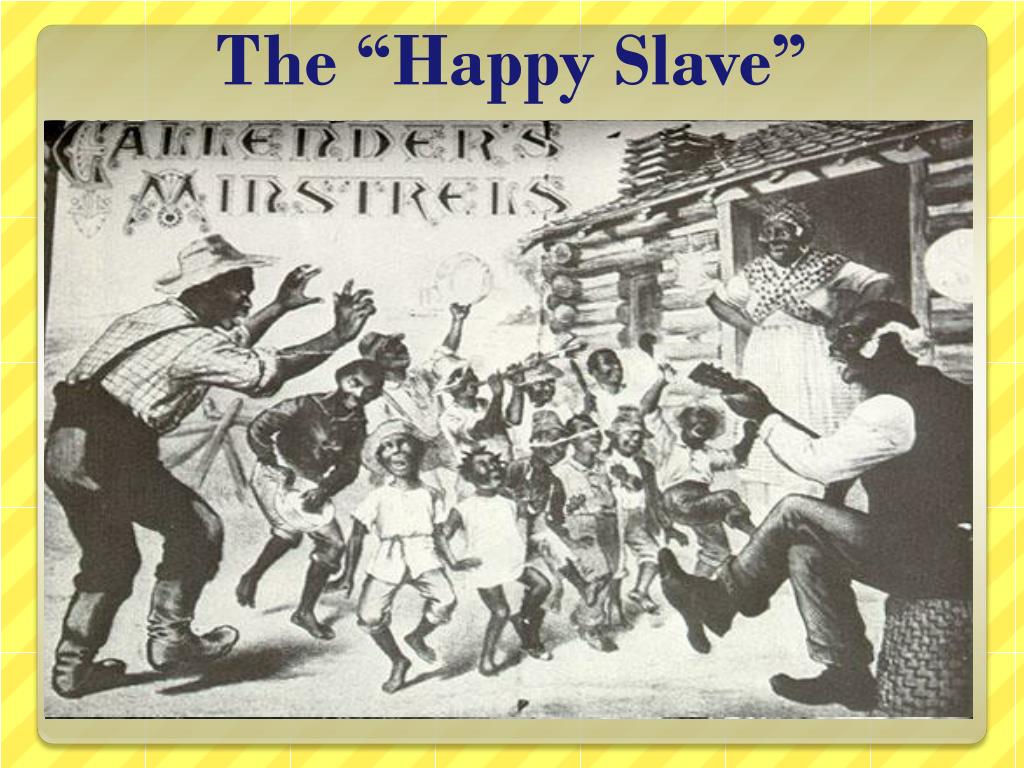

What defines a slave?
The question is interesting because while it is reflexively answered, it is not understood. If it were understood, people would recognize that they are in fact slaves. Most people think they aren’t because they are free to work – and to pay taxes. Black slaves in the antebellum South actually had it better in some ways. They didn’t have to pay taxes, for one thing. The more important thing, though, is that they were aware they were enslaved. Put another way, they were not living under the sway of a delusion they were “free.” This caused them to want to be free. It prompted many to try ti escape their enslavement. Hence the importance of keeping slaves deluded about their status – by allowing them the “freedom” to work and pay taxes.
A person not enslaved is free to work without needing to ask permission and gets to keep what he earns. He is not told he “owes” money on things he’s bought and paid for, such as his home.
By this measure, there isn’t a single free man (or woman) in this country. Just workers. Which is another way of saying slaves.
It is an important thing to understand . Which is why those who own us do not want us to understand it. That is why they allow us the illusion of ownership. The slave in the Antebellum South was under no such illusion. He understood the hut he was allowed to live in wasn’t his – but at least he wasn’t obliged to pay property taxes on his massa’s hut. There is a sort of honest dignity in this. As opposed to the intellectually dishonest degradation that attends believing you “own” a home you must nevertheless pay those who actually do own it a large sum of money every year – forever – in order to avoid those who actually do own it asserting their ownership, by evicting you from the home that isn’t and never can be yours in any meaningful sense. No so long as you are obliged to pay what amounts to rent in order to avoid eviction.
It is more than just our homes we don’t really own.
The hideous truth is we own nothing at all – because we do not own ourselves. How can a man (or woman) say they own themselves with a straight face when they know that if they go to work, a claim will be made (and enforced) by their owners to a portion of what they earn by working? It is not merely that they are told they “owe” a portion of what they worked to earn. It is what is implicit in this “owing.” If someone else has the power to compel you to hand over even once cent out of $100 then he has the power to take the entire $100. There is no principle to stop him; it is merely a question of haggling over how much more you will inevitably “owe” and how soon you will “owe” it.
If you own yourself, then you own your body and your mind and all that is created by the work your body (and brain) does. If someone else can lay claim to the least part of that, then you are owned to that extent and to a greater extent that will inevitably be asserted. Think about it. If you have a fence line marking the boundary of your property and you find one day that your neighbor has moved the fence line a foot over what used to be the line into what used to be your property and your are legally powerless to do anything about it, what is to prevent him from moving the fence line ten yards more into what used to be your property?
Your asking him not to?
A slave might summon the temerity to ask his massa to allow him to do something. Is that not our state? We must ask the state’s permission (literally; it is called a building permit) to build a home on land we bought and are taught to think we own. We must beg its permission again if we wish to build an addition – and then we are told how much more we “owe” in property taxes on account of the “assessment” having increased. We are required to register what we are conditioned to think of as the vehicles we don’t really own -and (in many states) these are also subject to regular property taxation, too.
We cannot even get married – legally – without massa’s permission.
What are we allowed to do just because we want to do it? Incidentals, mostly. We are still free to go for a walk but if we go for a drive, we might be required to produce the permissions we are required to have to be allowed to drive. What do we actually (really) own? The answer is – not much. We are free to keep the clothes we buy with the money left over after taxes are extracted and even then, the clothes are taxed and the clothing manufactured only by permission according to “standards” laid down by the state. There is almost nothing we are at liberty to do.
Perhaps it does not feel as bad as it is because we are still allowed to choose which field on the plantation we’re allowed to work and we’re allowed to pick which of massa’s huts we’d prefer to live in (assuming we can afford the rent). Massa also allows us the choice of which “approved” stores to shop in (but only if we “mask up”) and we’re allowed to buy the various things massa says we’re allowed to buy that massa has approved for purchase. But that is not the same thing as being at liberty to buy what we want, to transact business without massa’s permission or involvement or being the true owner of things.
Most particularly, of ourselves.
That is the fundamental right that must be recovered. Self ownership. Without it, we own nothing that cannot in principle be taken away, in whole or part. Rights are either inalienable – to use a word not much used in our time – or they are not really rights, are they? It took a long time to alienate our rights from us. It was done gradually, a little at a time, over a period of many lifetimes. We have been conditioned to regard them as privileges, granted by the state – the massa less visible.
But our rights remain.
They have merely to be re-asserted, implacably.
. . .
If you like what you’ve found here please consider supporting EPautos.
We depend on you to keep the wheels turning!
Our donate button is here.
If you prefer not to use PayPal, our mailing address is: EPautos 721 Hummingbird Lane SE Copper Hill, VA 24079










I read or heard somewhere that being compelled to work for someone else’s economic benefit is the essence of slavery. By that definition, we’re all slaves.
Hi Mark,
Yes, but there is a slight/pedantic distinction. No one is forced to work. It’s just that if we chose to work, the state will assert ownership over a portion of what we work to earn./
How are we not forced to work or hand over the fruits of our work (i.e. savings and investments) if we have to forever pay taxes on the home we putatively own? If you rent, you still pay property tax, but it’s rolled up into the rent; it’s one of the costs the landlord must cover. If you own, you have to forever pay tax on your home-even when you pay off the mortgage.
Even after we retire, our savings and investments are still taxed; there are income and capital gains taxes, among other things. We pay sales taxes on all our purchases. We pay property taxes. And on it goes. Even after we retire, aren’t we being forced to benefit them (the gov’t and its agents) economically?
Hi Mark,
You’re not legally required to work. You could decide to be a homeless vagrant. Slaves had to work. It’s a pedantic difference, I understand.
Our condition is more akin to serfdom. We are allowed to live on the Lord’s land and to “own” our hut – provided we hand over a portion of our earnings to the Lord.
AFAIAC, it’s a distinction without a meaningful difference.
I hear you, Mark!
It’s infuriating to be yoked to someone else’s wagon. I am fine with paying my own way. I deeply resent being made to pay for the “way” of others I don’t even know.
[…] https://www.ericpetersautos.com/2026/08/26/how-can-we-be-free-when-were-not-free-to-own/ […]
I used to think I was a freethinker, until people started telling me different. That is, they told me I was only free to think in ways they approved of.
For instance, according to them, no one who thinks for himself could ever possibly come to the conclusion that there might really be a God after all or that any of the claims of Christianity could be true.
(Didn’t say palatable or comforting, but true, whether anybody *wants *them to be or not.)
Most especially that whole part about someone rising from the dead. Because everyone knows people don’t rise from the dead. Well, except for that one time, which is why it’s kind of a big deal.
Hi David,
I don’t say there is no God; I cannot prove that. I merely say I am not persuaded that there is one. As far as the rising from the dead stuff: This was a commonly made claim in the ancient world. There is no credible evidence I am aware of that such a thing has ever happened. That is why I do not believe it happened.
I am somewhat familiar with other “dying god” myths. There are several. Osiris is the first to spring to mind.
But it always happened no one knows exactly where or how long ago.
The Christian “myth” is different. from those . It can be pinned down, located in time and space, in a particular place during the reign of a particular Caesar and particular provincial governor or whatever his title was. People now deny it but there were people at the time who claimed to be eyewitness and left written accounts. that have survived.
‘ One of the obstacles for C.S. Lewis coming to faith was the similarity between Christian and pagan mythology. Since pagan myths were assumed to be false, he wondered why Christianity should be treated differently.
Later, after a discussion with J.R.R. Tokien, Lewis came to understand that that Jesus was the “myth become fact.”
1 In his book Miracles, Lewis defined myth as, “at its best, a real though unfocused gleam of divine truth falling on human imagination.”
The following is an excerpt from an essay by Lewis, first published in 1944, titled “Myth Became Fact”:
“…What flows into you from the myth is not truth but reality (truth is always about something, but reality is that about which truth is), and, therefore, every myth becomes the father of innumerable truths on the abstract level.
Myth is the mountain whence all the different streams arise which become truths down here in the valley; in hac valle abstractionis.
Or, if you prefer, myth is the isthmus which connects the peninsular world of thought with that vast continent we really belong to. It is not, like truth, abstract; nor is it, like direct experience, bound to the particular.
Now as myth transcends thought, Incarnation transcends myth.
The heart of Christianity is a myth which is also a fact.
The old myth of the Dying God, without ceasing to be myth, comes down from the heaven of legend and imagination to the earth of history.
It happens—at a particular date, in a particular place, followed by definable historical consequences.
We pass from a Balder or an Osiris, dying nobody knows when or where, to a historical Person crucified (it is all in order) under Pontius Pilate.
By becoming fact it does not cease to be myth: that is the miracle.
I suspect that men have sometimes derived more spiritual sustenance from myths they did not believe than from the religion they professed.
To be truly Christian we must both assent to the historical fact and also receive the myth (fact though it has become) with the same imaginative embrace which we accord to all myths. The one is hardly more necessary than the other…
Those who do not know that this great myth became Fact when the Virgin conceived are, indeed, to be pitied. But Christians also need to be reminded … that what became Fact was a Myth, that it carries with it into the world of Fact all the properties of a myth.
God is more than a god, not less; Christ is more than Balder, not less.
We must not be ashamed of the mythical radiance resting on our theology.
We must not be nervous about ‘parallels’ and ‘Pagan Christs’: they *ought *to be there—it would be a stumbling block if they weren’t.
We must not, in false spirituality, withhold our imaginative welcome.
If God chooses to be mythopoeic—and is not the sky itself a myth—shall we refuse to be mythopathic? For this is the marriage of heaven and earth: Perfect Myth and Perfect Fact:
claiming not only our love and our obedience, but also our wonder and delight,
addressed to the savage, the child, and the poet in each one of us no less than to the moralist, the scholar, and the philosopher.’ ”
More C.S. Lewis stuff. Perhaps it is wearying.
‘ Those were difficult years … After boarding school came college, and soon after, they joined the fight in World War One. The harshness of life and the horrors of war led them away from God and the church. J
ack would later say that he was “very angry with God for not existing.”*
Fortunately, during this time, Jack was also introduced to George MacDonald and GK Chesterton, whose Christian worldviews influenced him sometimes without knowing it.
“A young man who wishes to remain an atheist cannot be too careful of his reading.”
‘[ Nor guard his faith too carefully.]
Back at Oxford after the war, one of the most important friendships of the century began when C.S. Lewis met JRR Tolkien. “Jack and Tollers,” as they were known, had a lot in common.
They were both English professors who had a love for Norse mythology. They both lost their mothers at an early age. And they were both veterans who had fought in the Great War.
These shared experiences would bring them together and strengthen their bonds of friendship and fellowship. They quickly became friends and enjoyed walking, talking, smoking, and drinking together. They would later establish the writers’ group known as the “Inklings,” which met at the Eagle and Child Pub in Oxford each week to read and discuss each other’s literary work.
Around this time, [ right after WW I ]
one of the fiercest atheists that Jack [ C.S. Lewis ] knew admitted that the evidence for the Gospels was surprisingly good,
and that it seemed God had indeed entered into human history after all.
“Rum thing. All that stuff about the Dying God. It almost looks as if it really happened once,” he said.
The core of Jack’s atheism began to crumble as friends, acquaintances, and even authors of the books he was reading were all ganging up on him regarding the truth about the existence of God.’
https://www.ericpetersautos.com/2026/08/26/how-can-we-be-free-when-were-not-free-to-own/#comment-1208249
“…but we were talking about the bIble as a moral instruction manual. It clearly is that.”
I don’t agree. I used to think that, until I realized that the only reason I believed that is that I had been repeatedly told that by the priests. Then went on a deep dive, reading the text itself, (well, in Koine Greek, since I learned that in HS, but had no clue about Aramaic) and realized that if anything, it was mostly stories about how failing to adhere to the basic sociological rules (Ten Commandments, plus extensions in largely Deuteronomy and Leviticus) leads to ruin. Not condemnation by Him, but by just the natural consequences. There are exceptions, sure, like the languages being confused at the Tower of Babel, or Sodom/Gomorrah, but supernatural judgement is unusual.
The Law is not about eternal consequences, but secular, temporal ones. Think the Prodigal Son parable. Ties in things like Honor thy Father, plus all 4 Cardinal Virtues. Plus repentance and forgiveness. But the story itself is about how those consequences happen to him as soon as he runs out of money.
Oy vey, Steve –
The Bible is chock full of Thou Shall and Shall nots. It is a religious text and religions posit moral codes. All of it in the context of a book about God – the ultimate (according to the book) giver of moral law.
Thou shalt not kill, steal, bear false witness, etc., are essential sociological rules if you want to build a stable civilization, let alone a high-trust civilization. Every civilization worth the name realized that.
The point to the Hebrews was never to gain eternal life. Everyone got that, in the unenviable form of a shade in Sheol. Since there was no belief in an afterlife as we currently understand it, Hebrews adopted the policy of making a better world. Tiku olam, I believe they call it.
It was only as they started merging beliefs from other cultures that there was any incentive to do right for the sake of your soul. Way after the Torah was supposedly written.
Not that your holy men have ever told you any of this. Most probably don’t know it, simply repeating what they learned from the priests they listened to. I’m sure there are quite a few, though, who have read what Deuteronomy says about tithing, and realized, “Crap, if I start preaching on what the Bible actually says about it, the Church will go broke!”
Thus my cynical nature deepened…
If you want to read between the lines, I’m just saying that it was an ingenious form of social control. You already know the principles that make a civilization survive over time. And, like most contemporary cultures, it’s easiest to inculcate that if you say it was a divine, unerring pronouncement, whether the real form of that “divine” was a supernatural being, a king, a wise man, a council, whatever.
Steve, (1) You ignore the first 3 commandments which are the most important–whole law is oriented toward pleasing God. (2) By Jesus’ time all but the Sadducees believed in an afterlife and a resurrection: (AI) “The majority of Jews in Jesus’ time believed in an afterlife and the future resurrection of the dead.
“Beliefs Among Major Jewish Groups.
“The Pharisees: This was the largest and most influential religious group among the common people. They strongly believed in the immortality of the soul and the physical resurrection of the dead at the end of time.
“The Sadducees: This smaller, elite group consisted mostly of the wealthy priestly class in Jerusalem. They rejected the afterlife and resurrection, arguing that the Torah did not explicitly teach it and that rewards or punishments happen only during a person’s earthly life.
“The Essenes: Another prominent Jewish sect of the era, the Essenes also believed that souls were immortal and would experience an afterlife of eternal reward or punishment.”
[You should know this yourself from reading the Bible since only ones who confronted Jesus were the Sadducees w/their question about seven brothers who all married the same woman and whose wife would she be. The Sadducees confront Jesus about the resurrection in Matthew 22:23–33, Mark 12:18–27, and Luke 20:27–40.]
_________________________
Regarding Tikkun Olam/making a better world (for who? Have you seen Gaza? Southern Lebanon? What the Jews are doing in the West Bank or Iran?). Far from being original to Hebrews, phrase never appeared until 200 years after Jesus’ birth:
(AI) “The phrase “tikkun olam” (meaning “repair of the world”) first appeared in early rabbinic literature around 200 AD in the Mishnah, where it referred to legal and social enactments designed to maintain public order and protect vulnerable people.
“Over the centuries, the meaning and usage of the concept evolved significantly through different eras:
“Early Rabbinic Period (c. 200 AD)
“Social Policy: Used in the Mishnah and Talmud as mipnei tikkun ha-olam (“for the sake of the orderly functioning of society”).
“Practical Laws: Applied to legal rules preventing social confusion or unfairness in family status and business contracts.
“Medieval and Mystical Era (16th Century)
“Kabbalistic Shift: Redefined by the mystic Rabbi Isaac Luria (the Ari) in Safed around 1569.
“Cosmic Repair: Connected to a creation story where divine light shattered cosmic vessels, leaving humans responsible for gathering those scattered sparks through mitzvot (commandments) and spiritual devotion.
“Modern Era (1950s–1980s)
“Social Justice: Re-emerged in the mid-20th century as a shorthand expression for social activism, philanthropy, and political reform.
“Mainstream Adoption: Became a central pillar of American Jewish life and progressive movements during the 1970s and 1980s.”
Yes. The first three Commandments are there to give the divine His bona fides. It doesn’t work if you just say some guy shoveling out a stable said these are some cool rules.
And, yes, I already said the Hebrews later added more complex afterlife beliefs, though these were no longer technically Hebrews. The Jews and Israelites had already distinguished themselves from the fuddy duddies and their archaic Hebrewism. This happens largely between Babylon and early Second Temple period.
Tikkun olam (thanks, BTW) is what it is called now. The idea goes back to at least early Torah period, because, hey, if the righteous and non-righteous have the same afterlife, what’s the point in being righteous? Their answer was it made a better world. You follow the rules not for your sake, but for others, especially your kids and grandkids.
So what is the purpose of the temple/tent, the tabernacle, the sacrificing priesthood, sin offerings and sacrifice, celebration of the passover, the scapegoat? Why were they expecting a Messiah? What do you think it means to be rescued out of slavery from Egypt and led by God (pillar of smoke/cloud of fire) day and night to journey to a promised land flowing with milk and honey?
__________________________
It’s funny how you are such an expert on Judaism and you can tell us everything about the Iranians seeking a Mahdi, but you can’t us nuthin’ about what’s driving Israel to take the world to Armageddon.
Here’s TOI echoing you and saying Carlson’s incorrect:
https://blogs.timesofisrael.com/chabad-jared-kushner-tucker-carlson-and-the-third-temple/
Here’s the rebbe sayin’ time for deeds of goodness nd kindness
https://asknoah.org/video/the-rebbes-message-about-bringing-moshiach
So how to explain 911, 25 years of unconditional war with no end in sight, and the genocide of the Palestinians? Not sure what type of messiah those kinds of deeds bring, but seems more like the anti-Christ.
https://archivegenocide.com/
Well-said, AJC –
I cannot fathom Steve’s arguing that the Bible isn’t a religious text that contains moral injunctions; that it is something like a Power of Positive Thinking manual or organizational rules for Boy Scouts. I was once one of the latter, by the way – and I do not recall Scouts being a religious organization.
This essay caused me to think and rank the taxes from most to least egregious:
1) Gift tax. Sheesh! You’re giving something to somebody else and the govt has to get their cut!!! Outrageous.
2) Estate tax: You’ve paid tax all you life in the building of your estate. Then it’s taxed to your heirs. Common example is the family farm: PawPaw dies and leaves the farm. The kids dont have the cash to pay the estate tax, so it goes up for sale. Blackrock tract housing company buys it up and puts in urban sprawl…
3) Property tax: You paid for the property from income that has been firstly taxed. And they never go away like Eric says. If no property tax, then one could live very cheaply at their homestead. Just need cash for diesel and doctors
4) Capital Gains tax: So I took cash, which you taxed from my income, then made a capital investment, which when profitable helps society, and I made some $$ along the way.
5) Income tax: Slavery to a portion, like Eric says.
6) Consumption taxes: Excise taxes, Sin taxes, Sales taxes. Avoidable by not consuming what is taxed.
7) Usage taxes (to include fees) tolls, building permits, traffic tickets. Avoidable.
There were regions trying to end property taxes and such. They were voted down by substantial margins. The RIP OFF “schools” were the excuse. Home of the brave, land of the FREE no longer exists. What a joke. Kiddies today are graduating High School with a 5th to 6th grade equivalence and the responsible government is hot on facebook for writing addictive apps. They’ll take the money and buy more weapon’s. With jackass imbeciles like Donny and clown-gress we are guaranteed wars.
“Kiddies today are graduating High School with a 5th to 6th grade equivalence and the responsible government is hot on facebook for writing addictive apps”
It depends what children you are talking about.
Hear, hear, Eric!
When we had honest $, gold and silver we were an entrepreneurial, self sufficient , productive society. Since the establishment of jew babylonian $ magic in 1913, we’ve descended into Hell. Monopolized, corporatized, corrupted with endless war and a mountain of debt for your great grandchildren. Corrupt $ leads to corrupt government, laws, medicine, schools, entertainment , etc. Here we are, slaves on a plantation.
I’m as big a believer in gold and silver as anyone, but I would caution you from getting too sentimental about the gold standard. Gold standards always have serious limitations — mainly in the way of being unable to keep pace with the growth of commerce — and the dollar can still lose purchasing power even under a gold or silver standard. In point of fact, the U.S. dollar has been steadily losing purchasing power since at least 1820: with or without a gold standard, it made no difference. As long as there are humans there will be corrupt money and there’s really no way to fix it. Besides, money is what you make of it.
Gold redeemable $ can’t be printed to infinity. 1820 to 1971 was nothing compared to 71 till now. It shit the bed and we’re heading for Weimar territory.
Hi Celticbiker, et al,
I think it was Lawrence Wilkerson who recently compared the U.S. to Weimar Germany circa 1932….just before the wheelbarrow of cash phase….I read a book called When Money Dies….it described from the experiences of Germans who went through this and what the reality was….in great detail…it’s a reality no American has ever known, living or dead, yet.
The U.S. feral gubmint is so thoroughly corrupted that no reform is possible…only the collapse and the future rising from the ashes. Our problem is that from the perspective of the RotW, the U.S. regime has outdone the turd reich in it’s tyrannical actions…may Crom have mercy on our barbarian souls….(obligatory Conan reference)
The hyperinflation ended in 1924
https://www.britannica.com/event/hyperinflation-in-the-Weimar-Republic
Because it proved to be actually quite difficult to pay for everyday items using actual gold and silver, the bankers ‘helped’ by creating paper certificates which were ‘as good as gold’.
Until the bankers realized they could issue more of those certificates than the amount of actual gold they had in their vaults.
Fractional lending was thus born and that allowed for actual monetary inflation to occur despite the gold standard.
Even so, before the establishment of the Fed and then later the pure fiat standard, the banks were kept at least somewhat honest, because if they overdid it with the paper certificates, a run would eventually ensue and the bank would go belly up.
One of the specific reasons for getting the Fed up and running was to prevent just that, by being the ‘lender of last resort’.
Which, coupled with the Nixon gold default, led to the monetary system abomination we have now, with 7-10% average annual inflation baked in.
“Well colonel, I hope they can remain soldiers. As for me, I’m just a slave, a living slave.”
All governments are inherently evil. They assume the authority to KILL you if you disobey, and of late, if you disagree. This does not attract sane people. Leaving us with the Psychopaths In Charge. They are all mentally ill.
We’ve never ONCE been free, since at least 1913, when the reserve act was passed.
We ALL lost our freedom, blacks included, when (((FEDGOV))) won the war of Northern Aggression, in 1865.
We’re all slaves to the (((fed bux))) now.
But we can still fight, and escape…
knowledge is power…learn your enemy…
Asymmetrical warfare is our future….
If you’re seeing this, you are The Resistance…
YMMV….
Your first sentence was correct, SW, since 1913, just gives the illusion that things were better prior to that date…they weren’t.
Taxes have always been implemented. The Stamp Act was just the one that created a revolution. Personal property taxes in the USSA were always here which means even the elite don’t own their assets. I have read GWTW, even the slave owners paid taxes, which is what almost cost Scarlett to lose Tara. Yes, it’s fictional, but taxes, especially ones on real estate is how state and local governments executed fees to pay for their bloated administrations and pork projects.
Is Bill Gates exempt from real estate taxes? Zuckerberg? Musk? Etc. How about sales taxes or withholding? Doesn’t that make us all slaves funding the invisible, but brutal hand of Uncle Sam?
” I have read GWTW, even the slave owners paid taxes, which is what almost cost Scarlett to lose Tara”
Scarlett almost lost Tara AFTER the civil war when the Carpetbaggers raised property taxes (knowing the landowners had no money so they could buy the property at auction at greatly reduced price). Many southerners believe Jews unduly profited from their Civil War misfortune.
AI: “Carpetbaggers” did not intentionally raise property taxes as part of a coordinated conspiracy to evict Southern landowners, though property taxes did rise significantly during the Reconstruction era for different reasons.The idea that Northern migrants orchestrated high taxes specifically to steal or repossess Southern land is a historical myth popularized by 19th-century white Southern politicians (the “Redeemers”) and old-school historians to discredit Reconstruction governments.
“Why Taxes Actually Rose
“Devastated Infrastructure: The Civil War completely wrecked Southern roads, bridges, railways, and public buildings. Rebuilding required immense public spending.
“New Public Services: Reconstruction governments—coalitions of Northern migrants (“carpetbaggers”), white Southern Republicans (“scalawags”), and Black freedmen—established the South’s first tax-funded, statewide public school systems, as well as hospitals and social infrastructure that did not exist before the war.
“Shift from Slave to Property Tax: Before the war, Southern states relied heavily on taxes derived from enslaved people as property. With emancipation, that immense tax base vanished overnight, forcing states to shift the tax burden onto real estate and land to maintain basic governance.
“Economic Collapse: Landowners often struggled to pay taxes not because rates were maliciously astronomical to force evictions, but because the Southern economy was completely bankrupt, cash-poor, and dealing with plummeting cotton prices and credit shortages.
[Long story short] “The Reality of Land Loss
“While malicious eviction via taxation was largely political propaganda, outsiders and speculators did legally purchase land cheaply at tax sales when destitute owners could not pay their overdue back taxes. However, this was driven by a general postwar economic depression and cash shortages rather than a targeted plot to dispossess the traditional land-owning class. Paradoxically, newly freed Black Americans trying to acquire small plots of land often faced severe over assessments and predatory tax practices by local [THESE SAME CARPETBAGGERS] officials.”
____________________________
In GWWT, Scarlett gets her tax money from her sister’s (one) beau who has gone from the Army commissary biz (CSA got their stores for the Army confiscating from the land owners and farmers) to opening a store (probably using left over army stock plus furniture picked up from abandoned houses). He felt guilty charging his friends/neighbors and let them carry huge credit (which Scarlett collected). But the reality was that much peddling in the South was done by Jews. At the end of the civil war they may have had capital like Frank Kennedy. [Since in Europe not allowed to own land, Jews had professions where stored wealth in capital (why they were in banking); treasurer of the CSA was J Benjamin (married to a Catholic).]
“In the Cotton states, after the [American Civil] war…the Jew came down in force [and] set up shop on the plantation,” Mark Twain “Concerning the Jews” (1897)
AI: “Jewish Experiences: Jews in the post-Civil War South had diverse roles. Some Northern Jews or recent immigrants did move south to enter commerce or politics and faced the “carpetbagger” label from hostile local populations. However, many other Southern Jews had long-established roots in the region, and SOME even fought for or supported the Confederacy.”
“Merchants: After the war, a number of Jewish merchants moved into cotton-growing regions of the Gulf South to set up stores and trade networks, taking advantage of new economic openings.
“Political Involvement: A few Jewish individuals participated in Reconstruction-era Republican politics, leading political opponents to target them with the same anti-Northern and antisemitic slurs used against other outsiders.
“General Integration: Long before the war, vibrant Jewish communities already existed in Southern port cities like Charleston and Savannah, meaning the Jewish population in the South could not be broadly categorized as transient Northern political opportunists.”
Hi RG, et al,
From a libertarian standpoint the battle was lost when the Hamiltonians won the gold ring and in the process gave us the U.S. Constitution with all its inherent faults and warts. The goal of the Hamiltonians/”Federalists” was a strong central government, weak states, no seccession, standing army, central bank and cronyism/fascism (though the term did not exist then). FWIW, this group included Washington, Madison et al. The traits that came to fruition in 1913 with the income tax and the Fed had their roots in the 1780s. Much of this information was illuminated by Rothbard and currently has exposition in a pair of books by Patrick Newman: Cronyism: Liberty versus Power in Early America, 1607–1849 and Cronyism: Rise of the Corporatist State, 1849–1929. So t’ain’t nothing new under the sun…..my reaction is to share Lysander Spooner’s take on the Constitution…
“But whether the Constitution really be one thing, or another, this much is certain – that it has either authorized such a government as we have had, or has been powerless to prevent it. In either case it is unfit to exist.”
OK…rant over….
Which is why the bill of rights and especially the first and second are so important. They have to be reminded regularly who the master is and who the hired servants are. And we have failed miserably since ar least 1912 in this duty and privilege.
The second, properly understood is not to fight a revolution or a civil war, by the time that is necessary it’s too late. The real purpose is MAD, the assurance for trying to rule us was supposed to be too high to even try, and the jury was supposed to stand up for freedom fighters forced to extremes. Propaganda/public schooling has done immeasurable harm to us.
“ , the assurance for trying to rule us ” was supposed to read “, the assurance that the proce for trying to rule us”. No idea how these things happen.
Rick and Morty covered this in the “Steps” episode about how his ship’s battery worked. Seasons 1 and 2 stand out as the only openly anti-government show I’ve ever seen on TV. Then the creator got a talking-to, because it became just more degenerate, amoral trash after that, like a Seth McFarland show.
When you find a big jar of Morgan silver dollars left behind by someone who was born in slavery, as a coworker of mine did recently, in the attic of a home she inherited, you can see that in some ways, our slavery is actually worse. Whatever money slaves and freed slaves in the south came across, it was real. Those slaves could actually run away too, as in, go somewhere where no one knows and can see. Free people today cannot do that. Even if you walk to where there are no cameras, a million cameras will see you go there, immediately arousing suspicion.
Slavery (of gentiles) is an integral part of judaism and has never bee repudiated by any jewish sect. According to judaic doctrine, when their “messiah” arrives each jew will have 2800 slaves. Jewish rabbis already talk of gentiles “having it good” under jewish slavery.
The old slave trade of the New World that was thankfully abolished was run lock, stock and barrel by jews. From the ships and crews, insurance covering ships, crews and cargo to operation of the slave auction houses to financing, slavery was exclusively a jewish owned and operated money-making operation.
If today’s jews could get away with it, slavery would be re-introduced as jews consider slavery to be a part of the “human condition” to this very day.
I thought that was an exaggeration or hyperbole about their involvement in the slave trade, until CNBC said Lehman Bros started during the slave trade as the central planners let it go under in September 2008. Given the heavily Christian culture of 17th century Europe, I can imagine the decision to use slaves to exploit the New World was very controversial, and I can see how the fact that the ancient religion of those providing the financing has no problem with slavery, or concept of right and wrong at all, really helped the idea along.
Basically, Kings were offered huge sums of money if they do something really evil, which is something we’re very familiar with these days. In so-called advanced societies, humans are always ruled by the weakest -physically, intellectually and spiritually – among them. Only in indigenous cultures is this not the case.
Read it for yourself:
‘As for the male and female slaves whom you may have, it is from the nations around you that you may acquire male and female slaves. You may also acquire them from among the aliens residing with you, and from their families that are with you, who have been born in your land; and they may be your property. You may keep them as a possession for your children after you, for them to inherit as property. These you may treat as slaves, but as for your fellow Israelites, no one shall rule over the other with harshness.’ — Leviticus 25:44-46
Says it all, don’t it? Special rules for the Chosen! Can you believe some still consider this depraved filth a ‘holy book’? That’s the voice of the Serpent speaking.
And this is why I wear my pagan rune ring, Jim –
Just make sure it’s Crom, and not Set.
Hi Ernie,
Yep. I’m not Egyptian! My ancestors lived in the dark woods that once covered Europe and fought the Roman legions. Many of us were killed and taken as slaves. Where’s my reparations check?
If your ancestors were killed, you wouldn’t be here. If they were taken as slaves, you would have a different heritage than the one you claim (i.e. you’d be Italian).
Crom.
“All that matters is that two stood against many!”
Hi Kmse,
Yup! This opening bit contained great wisdom: https://www.youtube.com/watch?v=tz2DknROaI8
Why is that objectionable? I mean, if you are OK with slavery, and, so far as I know, every civilization in history was, wouldn’t you want the rule to be that only “others” can be slaves, not your people? In Antebellem South, even the Irish were close enough to “us” that they could only be indentured servants, not slaves.
I just don’t see that a culture that had the same rules as pretty much every other culture through time can be called uniquely evil.
The thing that rubs the wrong way, Steve, is that the Bible purports to be a moral manual. A moral manual that gives exact instructions about how to acquire and treat slaves, including how badly they may be beaten and sexually used, too. So says Yahweh, the bestial tribal god of the Good Book.
“the Bible purports to be a moral manual”
What? Where? It purports to be an origin story for a tribe that, to all DNA testing, appears to be run of the mill Levantine, with little difference between them and any of the other residents of Canaan, including modern day Palestinians.
Interestingly, there is little to no trace of “Chaldean” DNA in any jewish population. The best guess science has for us is that a small group of Canaanites began distinguishing themselves from their neighbors, an inference based on the emergence of a different building style and lack of pig bones common in other Canaanite digs, suggesting dietary restrictions.
I get that many people, including Christians, want it to be a moral manual, but that’s simply not true. Never has been, never will be.
Hi Steve,
The bible is the foundational text of a . . . religion. Two of them. Religions lay down moral precepts and injunctions; e.g., the Ten Commandments. They decree what is right – so says the book – and what is not.
A manual of morals, in other words. Whether these “morals” are good or bad is a whole ‘nuther matter.
You’re seriously confused about Christianity.
Zero understanding of New Testament vs Old Testament. You’re confused about what each represents and why the Old Testament is included as the bible even though it pertained to the Jewish religion.
Zero desire to understand.
It’s awfully hard to bring folks over to Libertarianism when you go out of your way to misrepresent and vilify them.
Seth, I agree w/you. I think EP willfully misrepresents the Bible especially ignoring Jesus and his role to perfect the law (same as with marriage (disallowing divorce), expanding the definition of neighbor to include those not in their tribe, but even one’s enemy, that not supposed to condemn sinners but to convert them (let him who is w/out sin throw the first stone; not stoning people to death as Jews picked up rocks many times to stone Him; more joy in heaven over one lost sheep; God is a father; a good shepherd who loves and looks after his children/sheep) and also in regard to servitude/slavery: at the Last Supper Jesus washed his disciples’ feet and said he who would be greatest among them would be the servant of all (Last Supper takes up one fourth of St. John’s gospel C13-17). “You know that the rulers of the Gentiles lord it over them, and their high officials exercise authority over them. Not so with you. Instead, whoever wants to become great among you must be your servant.” Matthew 20:25–26.
In a sense, all Christians are bond servants of Jesus Christ our redeemer: Titus 1:1; Romans 1:1 “Paul, a bondservant of Jesus Christ, called to be an apostle”
Unfortunately, EP has been taught to value “thinking for himself” (free thinker) [who says this about cars/chemistry/cooking — I’m going to rethink it for myself; I need to reinvent the wheel; and meanwhile our society is going to hell in a handbasket]; thinks the worst thing one could be is a sheep; and, of course, thinks to be free he has to own things which is in great contrast to what Jesus said: “Jesus looked at him, loved him, and said to him, “There is one thing you lack: Go, sell everything you own and give to the poor, and you will have treasure in heaven. Then come, follow Me.” Mark 10:21
How would not eating shellfish or pork have anything to do with religion or morality? Clothes made of more than one material?
There may be religious explanations, sure, but the simpler explanation is practical. For example, when cooking pig flesh over a campfire, there’s no good way to know what temperature the interior reached, so whether you have to worry about trichinosis.
If you think about it, there is very little religious content. It is instead sociological. The rules that should guide your society. There are strong overlaps with Plato’s societal ideas, and both have even more parallels with the stories unearthed in Ugarit. (Syria.)
Steve,
There is very little religious content in the Bible? You mean besides all that stuff about Yahweh and how to worship him? That stuff about the “father” who is in heaven? The “kingdom” to come? Oy vey.
It’s not much of a religion if you are constantly surrounded by miracles. There’s absolutely no faith required if He keeps supplying mana from heaven, or they follow a pillar of smoke/flame, or if merely walking around a city for 7 days, blowing trumpets makes the walls fall down.
The reason you see it as religion is this is not your experience, nor that of anyone you trust. Seriously, if you experienced miracles like this, or were visited by angels, would it be a matter of belief, or of simply accepting that reality extends beyond materialism?
Now I’m not saying this is real. I think it’s largely easily-remembered stories borrowed heavily from other cultures in the region, particularly the Ugaritic culture. Did they happen? Probably not, at least not the way they are written.
But I think that’s why the stories throughout the OT keep invoking the supernatural. To make that seem normal. And the cynic in me believes it was flogged by the priesthood. If you never witnessed a miracle, it was because you lacked faith.
That’s all fine, Steve – but we were talking about the bIble as a moral instruction manual. It clearly is that. How you can’t see this puzzles me as it is self-evident. It is also a religious manual by defintion. Judaism and Christianity are religions and the OT and NT are their foundational texts. You’re arguing that Christianity and Judaism aren’t religions is . . . strange.
Incidentally, the Hebrew conception of the “afterlife” prior to about Daniel was nothing like is commonly thought now. It was a shady, underworld place called Sheol, where the dead wandered around mostly heedless of anything around them in the form of shades. Sound familiar? Lots of cultures had that same idea, particularly in the Fertile Crescent, but you also see it in Greek myth, which pretty strongly suggests contact with the pre-classical Greeks.
Starting with about Daniel, the Hebrews added a better version of resurrection, which closely parallels Babylonian myth, and makes some sense, as Daniel was held captive in Babylon at the time. There’s also the “bosom of Abraham”, which, clearly, had to have been developed AFTER the time of Abraham, and which also has a lot of similarity with other nearby cultures.
I leave theological discussions to those who find it interesting. I’d rather discuss carburetor jetting.
Zio-Steve defending the indefensible. They’re all Amelek, right?
The words “Israel” or “Leviticus” probably alert you on your Hasabara computer to intervene in the conversation.
Who is Amalek?
And what is wrong with studying history? I get that slavery is now a bad thing, but that is a very recent development in human history.
Some of the local contributors would significantly expand their knowledge by studying the concept of dhimmitude.
But that puts the shoe on another foot, with neither the Joos nor the Christians being the slavers, so few want to even talk about it.
You might think it is evil to have a law saying you cannot enslave your own people, but isn’t it a step up from not making the distinction? Many pagan populations made no such distinction.
AI: “Hebrew Servants (Eved Ivri): This status applied to Israelites who sold themselves due to poverty or as restitution for a crime. It was temporary, lasting a maximum of six years or until the Jubilee year, and was strictly non-hereditary. Non-Israelite Slaves (Eved Kena’ani): Under biblical law (such as Leviticus 25), non-Israelite slaves acquired from foreign nations or local non-Israelites were treated as permanent property, and their children inherited that enslaved status.”
AI: “How Native Egyptians Became Enslaved: Debt: Very poor farmers or peasants could sell themselves or their children into servitude to pay off overwhelming debts or secure food and shelter. Crime: Enslavement was occasionally handed down as a legal punishment for committing serious crimes against society. Hereditary Status: If a child was born to an enslaved person within this system, that child also inherited the enslaved status.”
AI: “Ancient Greece and Rome: Citizens could be enslaved for unpaid debts (debt bondage) or as punishment for certain crimes. [AND it was hereditary: AI: “The Mother’s Status: If a free man had a child with an enslaved woman, the child usually inherited the mother’s enslaved status. Master’s Property: Masters owned the offspring of their enslaved people just like any other property or livestock”] “Early Germanic and Celtic societies: People frequently sold themselves or their family members into slavery to survive severe poverty or pay off debts. Early African and Asian kingdoms: War captives were often enslaved regardless of shared cultural or ethnic backgrounds, and judicial enslavement of citizens or tribal members occurred in various legal traditions.”
Before modern conveniences like electricity, phones, central heating, tap water, plumbing, cars, farm equipment, washing machines, vacuums, dishwashers, stoves, power tools and steam/combustion engines slaves were necessary because you didn’t have machines. If you buy machines, if you had the money, you would buy slaves/servants. We think we’re so into liberty, but we’re really into sloth and luxury. Everyone of us has more liberty than the slave-owners who were dependent on the slave to chop the wood and make the fire to get the room warm in the morning or to empty their chamber pot (if you’re waiting for your wife/mother to wash your clothes or cook your dinner you know what I mean–imagine if she had to go down to the stream and use a washboard or wring the chicken’s neck and pluck it, make bread from scratch etc.). Now imagine if you had to do all that.
Would you lay off the AI? Don’t you realize all an LLM does is crawl through various sites, including X and Faceborg, and figure out which words commonly follow other words, then establish rules for creating grammar to avoid things like run-on sentences.
That is, anything “AI” tells you is likely just things commonly shared on Faceborg, and the more “Likes”, the more “truthiness” there is.
At the very least, go to the references or footnotes section and check to see if the source is even remotely authoritative.
At least make the feeble effort of looking into the Germanic peoples that the Legions dragged back to Rome in bondage. They didn’t sell themselves into slavery; they were in every sense, war prisoners. The same was true of Viking culture; in fact, their rise coincides with Muslim slave markets placing a premium on “yellow” women, i.e., blondes.
Steve, I didn’t say Germanic tribes enslaved more people than Romans; nor did I say Romans didn’t like blonde women. All I did was quote AI that “Early Germanic and Celtic societies: People frequently sold themselves or their family members into slavery to survive severe poverty or pay off debts.”
Viking slaves were called thralls and when conditions were bad, i.e. not enough food or the slaves were old, the Vikings killed them.
Both Celtic and Germanic tribes sacrificed humans to their Gods.
I have commented here before with citations for bothclaims. The source I’m going to provide to you is one that shows the VIKINGS (and I’ve seen this before) like the Africans captured other Vikings to sell:
“Those who ventured outside their local society, and the laws that applied there, risked losing their freedom – and in the worst case, their lives. In foreign territories, it was therefore essential to ally oneself with a protector.
Written sources attest that thralls were captured by Norsemen during raids and sold to Europe, the Byzantine Empire, and the Islamic world. Important centres for the slave trade included Regensburg, Prague, Venice, Constantinople, and Alexandria.
Viking towns themselves functioned not only as trading and production centres, but also as slave markets. In Hedeby, in what is now northern Germany, Rimbert, Archbishop of Bremen, witnessed “a large group of Christian captives in chains”. He managed to ransom a nun in exchange for his horse. Similarly, Birka is mentioned as having “many Christian captives” present.
Thrallship in the Nordic countries during the Viking Age seems to have differed in some respects from, for example, slavery in antiquity. Even a free person could voluntarily enter temporary thrallship to another due to poverty or to settle a debt. As a warrior, one could give up personal freedom by oath to join the king’s household troop, and as a thrall one could rise to become the king’s representative….In some graves with two interments, so-called double graves, there is sometimes suspicion that a thrall was allowed to accompany their owner in death. Evidence of such a cruel practice is found in the account of the Arab traveller Ibn Fadlan along the Volga River.
According to his narrative, he witnessed a burial among a group of Rus, probably Norsemen on a journey. During the funeral of one of the group’s leaders, a thrall was drugged and raped, then killed and buried with their master in a boat.
“A very large number of Islamic silver coins, known as dirhams, have been found in Viking Age contexts in Scandinavia. These may partly reflect the extensive slave trade with the Islamic world.”
https://historiska.se/en/explore-history/history-hub/free-and-unfree-in-the-viking-age/
The Germanics were not about how they ran their societies, but rather how the Romans ran theirs. The Hebrew text that JimH cited is really no different than many Hellenistic cultures. The huge difference is that unlike any other slave-holding cultures I’m aware of, Hebrews were unique in having a Jubilee.
And, yeah, the Vikings were not very nice to slaves. But as you said, it’s well established that they trafficked slaves to Andalus and the Abbasids. And since the Muslims paid such a premium for fair skinned blonde women, it’s a fair bet that was what the Vikings preferred to sell there.
What text are you reading this 2800 thing from? I mean, I’ve never been interested enough to read either of the Talmuds, one of them being some 2.5 million words, making Unz look downright Laconic. But I’m sure someone has and could point out where to look.
For context, War and Peace is only around a half million words and Rise and Fall of the Third Reich is a svelte ~300k..
Slaves usually had fairly decent quarters, were fed (although probably bottom of the cow meat, the choice cuts were sold -just like today), and in general if they worked weren’t usually overworked or beaten. Many slave owners even understood that sometimes a slave just needs to get away for a while, but they would almost always come back. The owners took care of their property. Indeed even Moses had to deal with angry people complaining that they had it better in Egypt. There are always bad owners, just like people never change the oil on their cars or don’t clean out the gutters. For those owners’ slaves it probably was a pretty tough life.
That’s what people seem to want. Nice quarters, adequate provisions, occasional downtime. Being an owner is hard. You have to do the work. Not just what Master wants, you have to do all that other unpaid work too. Like changing the oil. Or keeping the downspouts clear. You have to do that hour a day of weights and cardio, and find time to do it. Wouldn’t you rather be doomscrolling and binge-watching? Of course, but you do the work because it pays off later.
The alternative is more of Master taking care of his property.
Metal Queen said it very succinctly a few weeks back in a comment here: The goal has always been feudalism.
Could be, and with the latest technology and digital stuff that sociopaths wish to use to CONTROL the masses, we could be seeing techno-feudalism.
During COVID, the federal government under the Biden regime, along with many state governments, blatantly attempted to decree that THEY owned our own bodies via imposition of MANDATES for people to take that then experimental COVID vaxx. However, the past few years also exposed that vaccine mandates period are effectively a government declaration that they OWN our own bodies (and that of any children we have), as many states have had vaccine mandates for children to go to government school for decades. But, too many Americans have been propagandized into thinking that vaccine mandates are NECESSARY for “Protecting Public Health” and/ or “Saaaaaaaaaaafety”. For years, government, likely with help from Big Pharma, has also tried to EXPAND such mandates to ADULTS.
More “food for thought”…
Another aspect of slavery in which governments and others still attempt to exercise “ownership” of us is that of vaccines (now renamed biologics) which contain strands of artificially created DNA sequences.
The U. S. “Supreme Court” has ruled that these artificially sequenced DNA strands and could receive patent protection as they do not naturally occur in nature.
Fast forward to mRNA “vaccines” (biologics). Any person who has received or been coerced into receiving these “vaccines” (biologics) is now OWNED by the patent holder of said “vaccines” (biologics).
anarchist, Dr. Francis Boyle, author of the biological weapons treaty which the U.S. signed, said Fauci should be tried for crimes against humanity. He died in 2025 but don’t hold your breath waiting for it to happen.
The rat faced bastard was already pardoned by pant shitter I.
Can’t recall the title but Robin Cook, who writes medical thrillers (‘Coma’ for one), wrote a novel with that exact scenario. Scary as hell, he also wrote one about swarms of miniature drones attacking people, and another one about cellphone apps killing their customers, guy is a bit of a prophet.
Who is James Dalton Bell?
A loser who proposes murder for hire but doesn’t have the balls to do it himself.
Well, he did spend over a decade in prison for stalking a federal agent. More balls than anyone I’ve seen posting here, including me. We talk, we never act.
Hey, Zio-Steve, you sound a lot like Ray Epps: “Let’s all go into the Capitol!”
Agent provocateur much?
Just statement of fact. I’ve never followed up on, say, impaling politicians, and I’d wager neither have you. Bell at least did something in furtherance of his words.
WHO FUCKING CARES
To baby killer not you ML
As the late Walter E. Williams observed, “what percentage of a slave are you if a percentage of your earnings belongs to others?”
I would contend Slavery is like pregnancy. You either are or are not? Or, to put it in the words of Louis Jordan, “is you is or is you ain’t?”
Slavery maybe. I think (maybe I’m wrong) more like indentured servitude that was forced upon us without our agreement by our overlords posing as “public servants”. That unagreeded to contract on our end becomes fulfilled once our lifespan comes to an end and only after our families are forced to settle final expenses (taxes) on our behalf to the scum of the earth tax collectors.
I’m sure that the family of Dolly Pardon will have to deal with the bloodsuckers that will swoop in from the government to collect their “owed dues”.
Hi Allen,
Well, an indenture is voluntary entered into – and of limited duration. Slavery is imposed – and eternal.
It’s a particularly bad form of slavery. There were conditions that would free a slave, including optional manumission, but the US never gives up its claim. Even if you reject citizenship, the IRS claims a share of your future earnings wherever you end up.
Yes, we all must pay for Israel’s wars, Zio-Steve!
You are the epitome of the kind of person Limbaugh mocked. Jews live rent-free inside your head.
You could banish them from your thoughts, but choose not to. I suspect because without them, you have very few thoughts of your own.
Funny, I didn’t make reference to “Jews,” you did. I mentioned the obligation to pay for Israel’s wars. Do you deny the obvious, that the U.S. has engaged in middle east wars for the benefit of Israel, “our strongest ally”?
Who exactly is the one with Jews living rent free inside his head, Zio-Steve?
You have it really bad, dude.